Organic vs. Direct Traffic: What Small Business Owners Actually Need to Know in 2026
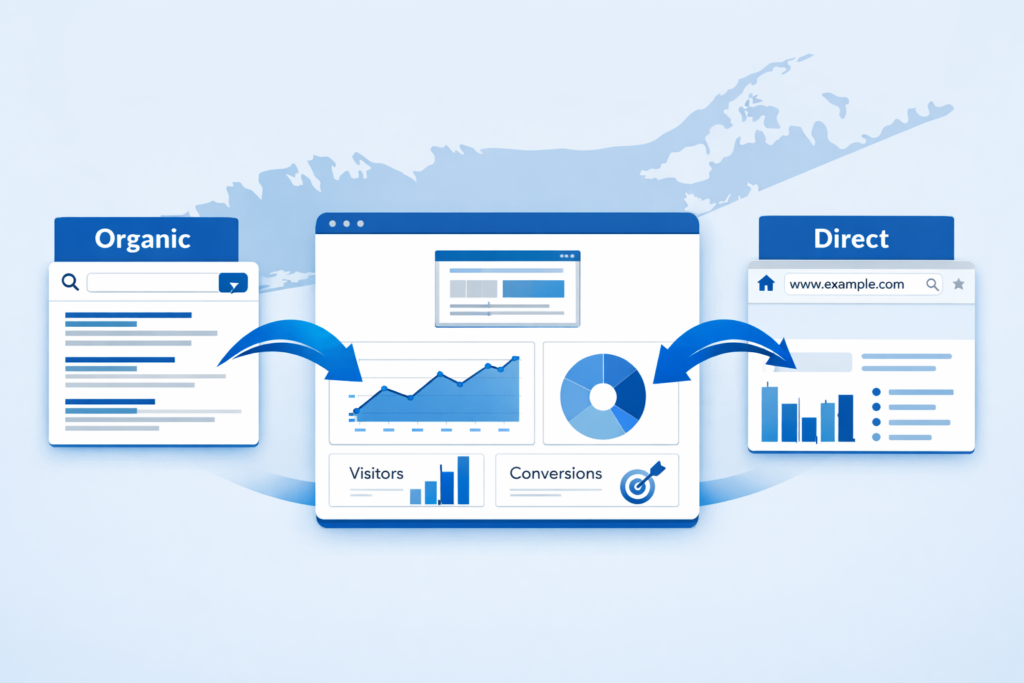
A large share of the visits GA4 labels as direct traffic is actually social traffic that lost its referral data on the way to your site. In-app browsers in TikTok and Instagram, messaging apps like WhatsApp and iMessage, and AI search referrals from ChatGPT and Perplexity all strip referrer headers, so the session lands in (direct)/(none). For small business owners defending a marketing budget in 2026, that misattribution is the difference between getting credit for the funnel you built and looking like you posted into a void.
Why It Matters
The traffic-source report is the single document most marketing teams use to decide where money goes next quarter. When social channels look smaller than they are, social budgets get cut and “brand awareness” gets credited instead. Direct traffic is often a catch-all bucket, and that bucket is where social attribution goes to die. Industry research compiled over the past several years has repeatedly estimated that up to roughly 84% of consumer outbound sharing may happen through dark social channels, the URLs people copy out of TikTok, paste into a DM, and the recipient opens in a new tab. None of that activity is visible in a default analytics setup, which means a meaningful share of the audience your posts are actually reaching never gets counted against the platform that earned the share.
How Direct Traffic Actually Gets Assigned in GA4
Direct traffic isn’t really direct. It’s a default. Per Google’s own GA4 documentation on traffic-source dimensions, any session that arrives without a recognizable referrer, no UTM tags, no recognized referral domain, no campaign parameters, gets attributed to (direct)/(none). That covers the literal case of someone typing a URL by hand, but it also catches a long list of social-driven scenarios:
- Clicks from TikTok, Instagram, and LinkedIn in-app browsers, which often strip referral headers
- iOS Mail and Outlook clients that don’t pass referral data on link clicks
- Apple Messages, WhatsApp, Signal, and other messaging apps where shared links arrive as “direct”
https → httpredirect chains that lose the referrer on the way through- Clicks from AI search results in ChatGPT, Gemini, and Perplexity that arrive without standardized referral data
The 2026 wrinkle: every platform pushing AI-generated answers and in-app browsing is making the dark-social problem worse, not better. The more time your audience spends inside apps that don’t pass referrals, the more of that social-driven traffic gets misfiled as direct, and the more your reports underrepresent what your channels are actually doing.
The Numbers
Most marketers miss this when they pull a traffic-source report:
- Some industry analyses put the share of social-driven traffic attributed to dark social at 60-80%, the share that lands in direct because referral data was stripped.
- Mobile sessions are disproportionately affected; in-app browsers on iOS and Android lose referrer data far more often than desktop browsers
- A single uncampaigned link shared into a Slack DM or iMessage can drive hundreds of “direct” visits with zero attribution back to the platform that started the chain
- AI search referrals from Google’s AI Overviews, ChatGPT, and Perplexity frequently arrive without clean source data, compounding the misattribution
“Marketing professionals sometimes call this ‘dark traffic’ because its true origin is hidden. This distinction matters because if you’re making decisions based on your traffic reports, an inflated direct traffic number can mask how well, or how poorly, your other marketing channels are performing.”
What Comes Next
The attribution problem is going to get worse before it gets better. AI search engines, ChatGPT browsing, Gemini’s web mode, Perplexity’s source citations, are starting to drive real traffic to brand sites, and almost none of those clicks arrive with clean referral data. Some land as direct. Some land with referrer headers like chatgpt.com or perplexity.ai that older GA setups haven’t mapped as channels yet. Meanwhile, iOS continues to tighten its privacy posture, and major social platforms keep pushing users to stay inside their native app environments, which means referrer data isn’t coming back. The fix isn’t waiting for analytics tooling to catch up. The fix is tagging everything that leaves your stack so attribution doesn’t depend on the receiving platform doing the right thing.
If social drives conversions but direct traffic gets the credit, the reporting decks you build misrepresent what actually happened.
What This Means for You
The action list is short and ruthless.
First, every link you post, every TikTok bio link, every Instagram story sticker, every LinkedIn share, every X reply, gets a UTM. Source = the platform. Medium = social. Campaign = whatever you’re testing this week. No exceptions. If you’re scheduling posts through Feedsta, an AI-powered social media platform, build UTM patterns into your post templates so the tags are added automatically and consistently across every brand you manage. Manual tagging is where attribution dies; templated tagging is where it survives.
Second, route your links through a tracking-capable shortener so you have a parallel set of click numbers that don’t depend on the receiving platform’s referrer policy. A good shortener gives you per-link click counts and source data even when GA4 drops the referrer entirely. That second source of truth is what you bring to the meeting when finance asks why Instagram “isn’t driving traffic.”
Third, recognize that AI search is reshaping the attribution game on top of all this. The AI search visibility playbook for 2026 walks through how to earn visibility in ChatGPT, Gemini, and Perplexity, and why social content increasingly shapes what those engines cite. The 2026 SEO trends breakdown covers how citation-based discovery sits alongside traditional search, so you can tell which side of the funnel any given post is actually feeding.
The Bigger Picture
The traffic-source report has always been an imperfect document, but in 2026 the gap between what social actually drives and what analytics can prove is wider than it’s ever been. The marketers who win this year aren’t the ones with the biggest follower counts, they’re the ones who can walk into a budget meeting with clean attribution data and show, link by link, what each platform contributed. Tag every link, shorten through a tool you control, and stop letting “direct” take credit for work your channels did.
FAQ
What is dark social in analytics?
Dark social refers to traffic that originates from social media but arrives at your site without identifiable referral data, so analytics tools file it as direct traffic. Common sources include in-app browsers in TikTok and Instagram, messaging apps like WhatsApp and iMessage, and copy-paste link sharing. Consistent UTM tagging and link shortening fix the problem by making the source survive even when the platform strips referrer headers.
Why does my direct traffic spike on days I post on Instagram?
Because Instagram’s in-app browser frequently strips referral data when users click links from posts, stories, or bios. When that happens, GA4 has no source to attribute the visit to, so it lands in (direct)/(none). If direct traffic visibly correlates with your posting cadence, that’s a strong signal you have a dark-social attribution problem, not a sudden boost in branded type-in visits. Adding UTM parameters to every Instagram link, including bio links and story stickers, pulls those visits out of direct and back into the social channel.
How much of my direct traffic is actually from social?
It varies by industry and audience, but for brands with active social programs, a meaningful portion (often a third or more) of what GA4 labels as direct is actually dark social. Some industry analyses have estimated that 60-80% of social-driven traffic may come from dark social because referral data was stripped on the way in. The fastest way to estimate it for your own site is to compare direct traffic patterns against your posting calendar; if direct rises on publish days and falls on quiet days, dark social is inflating that number. Running tagged campaigns for two to four weeks shows direct dropping as social rises.