Google’s AI Search Box Made Your Posting Cadence a Ranking Signal
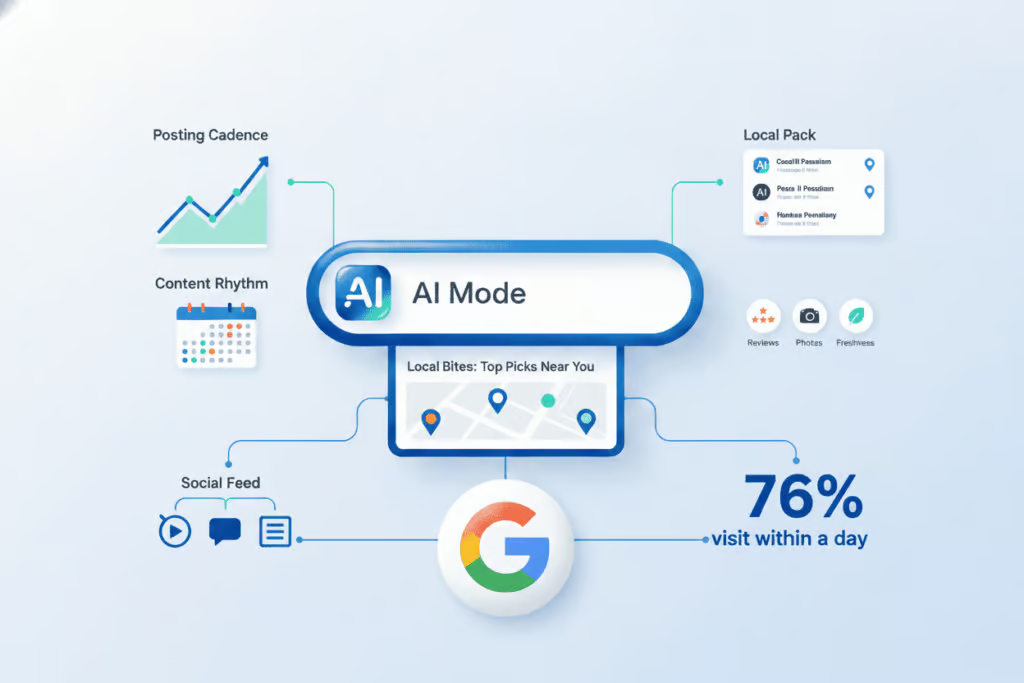
Google quietly shipped a new AI-first search box that sits above local results, and posting cadence is no longer just an engagement lever, it is now part of how AI decides whether to mention your business at all. The new surface synthesizes recommendations from structured listing data, review velocity, and the freshness signals your public profiles broadcast. For anyone posting on behalf of a local business, the implications run deeper than the SEO crowd is yet admitting.
Why It Matters
Local search has always been the front door for service businesses, but the door is being rebuilt. Google’s own Think with Google research shows that 76% of people who search for something nearby visit a related business within a day, and 28% of those searches end in a purchase. That funnel is now being mediated by AI answers that summarize, filter, and recommend, often before a user clicks a single blue link.
The shift to AI-generated results is no longer theoretical. Google has confirmed that AI Overviews are a default surface for billions of queries, and the company has been steadily layering AI experiences across Maps, the local pack, and Chrome’s address bar. For brands that built their visibility on social-first growth, TikTok shop tags, Instagram reels, LinkedIn posts, this is the moment your posting cadence becomes discovery infrastructure, not just engagement.
What’s New: Three Shifts
Three shifts point in the same direction: more AI between the searcher and your business, and fewer chances to be discovered passively.
1. The new AI search box
Google rolled out a redesigned input that takes longer, conversational queries and routes them into AI Mode rather than the classic ten-link page. For local intent like “best brunch spot near me that doesn’t take reservations,” the result is a synthesized answer that may name two or three businesses, typically those with complete profiles, fresh reviews, and active content footprints across platforms.
2. Expanded local sponsorship inventory
Paid local placements are showing up inside AI answers themselves. Critically, those paid slots now compete on listing quality signals, categories, photos, services, posts, and review velocity, not just bid amount. A sparse profile cannot be outspent into prominence.
3. Review ROI weighted by recency
Fresh data shows that review recency and owner response rate are pulling more weight in ranking than raw star count. A 4.6-star business with 80 reviews in the last 90 days will often outperform a 4.9-star competitor that hasn’t collected a review in six months.
AI systems need structured, recent data to recommend a business, and all three rely on that. Your public profiles, including where you post, how often, and how consistent your brand voice reads, are part of that data feed.
The Numbers
Headline figures worth pinning to a Q3 plan:
- 76% of nearby-search users visit a related business within 24 hours (Think with Google).
- 87% of consumers read online reviews for local businesses in 2025, up from 81% the year before (BrightLocal Local Consumer Review Survey).
- Reviews under 90 days old now weigh more heavily in pack-ranking signal mixes than reviews older than a year.
- 40%+ of local queries are projected by some analysts to surface inside an AI-generated answer by the end of 2026.
- Businesses with complete Google Business Profiles may be 2.7x more likely to be selected as a top result in AI Overviews.
“If your profile isn’t structured for AI to read it, you’re not in the consideration set, and you’ll never know why the phone stopped ringing.”
What Comes Next
Three things operators should watch over the next two quarters:
- AI Mode default expansion. Google is expected to make AI Mode the default for more query types, including local intent. Expect more zero-click outcomes where the AI fully resolves the query inside the answer surface.
- Cross-platform pulls into AI answers. AI surfaces are increasingly drawing from Instagram, TikTok, LinkedIn, and YouTube to build trust signals for businesses. A stale grid is now a quiet vote against you.
- Sponsorship attribution and review-platform consolidation. Expect new reporting columns in Performance Max and Local Services Ads dashboards, plus more pressure on third-party review tools to feed structured data directly into Google’s AI surfaces.
AI answer engines read both your website and your posting calendar, and an empty calendar signals that you don’t post regularly.
What This Means for You
If you handle posting for a local business, or for ten of them, here is the practical playbook:
- Audit your listing and your profiles together. AI surfaces look at both. Empty service categories on Google and a six-week-old Instagram feed read the same way to a synthesizer: this business may have moved on. Treat them as a single discovery surface, not two channels. Start by seeing where you actually stand: a free BizScoreAI visibility scan shows how a business appears across AI assistants, including whether ChatGPT, Gemini, and Perplexity name it for searches like yours.
- Set a posting cadence that survives a busy week. The signal Google now rewards across every surface is freshness. A consistent trickle of weekly posts across the platforms you actually serve customers on, Instagram, Facebook, TikTok, LinkedIn, Pinterest, does more than a one-time burst. A scheduler built for a multi-brand, multi-platform rhythm keeps that cadence without demanding your whole morning.
- Don’t pretend you can keep up manually. For agencies running multiple brands or operators juggling four platforms, the answer isn’t more hours, it’s an AI-assisted content workflow that respects each brand voice. Same calendar, different tones.
- Tie your posts back to your Google Business Profile. Cross-link your Google posts, your link-in-bio, and your QR signage so AI systems see a consistent business identity. Inconsistency reads as risk; consistency reads as authority.
- Treat your blog and post archive as a content library. AI answer engines lift context from longer-form content, not just stat fragments. A blog post you can repurpose into ten social posts is now compound interest, not vanity work.
Posting reviews steadily over time leads to better results than posting many of them at once.
The Bigger Picture
These three items aren’t separate news items; they tell one story. Google is rebuilding local discovery around AI, and the businesses that win are the ones whose data, listings, reviews, and social posts are clean and current enough for an AI to confidently mention them by name. For anyone running a brand’s presence, the good news is that this work was already on your roadmap: consistent cadence, fresh content, multi-platform presence. Doing it well doesn’t just grow your audience anymore.
FAQ
How does Google’s new AI search box affect the way I post?
The new AI search box pulls trust signals from across the open web, including your public profiles, when deciding which businesses to surface in conversational answers. That means a stale Instagram grid, an inactive Facebook page, or a dormant LinkedIn presence sends the same signal as an incomplete Google Business Profile: the business may have moved on. The practical shift is that posting cadence and cross-platform consistency are no longer just engagement metrics, they are inputs into AI-driven discovery.
Do my social media profiles really feed into Google’s AI Overviews and AI Mode?
Yes, increasingly so. AI surfaces synthesize answers by pulling from multiple structured and unstructured sources, and active social profiles are part of that mix. Instagram, TikTok, Facebook, LinkedIn, and YouTube are all referenced for freshness, audience signals, and brand consistency. The takeaway: your posting calendar is now part of your discovery infrastructure, not a separate channel.
What posting cadence should I aim for to support AI discovery?
Aim for a minimum of one post per week on each platform your customers actively use, with cross-platform consistency in branding, naming, and contact info. Daily posting is not required, but a steady trickle outperforms sporadic bursts, the same pattern that holds for reviews holds for social content. AI systems weight recency heavily, so a four-month gap on Instagram is a stronger negative signal than no Instagram at all.