Google Business Profile in 2026: Treat It Like a Social Channel
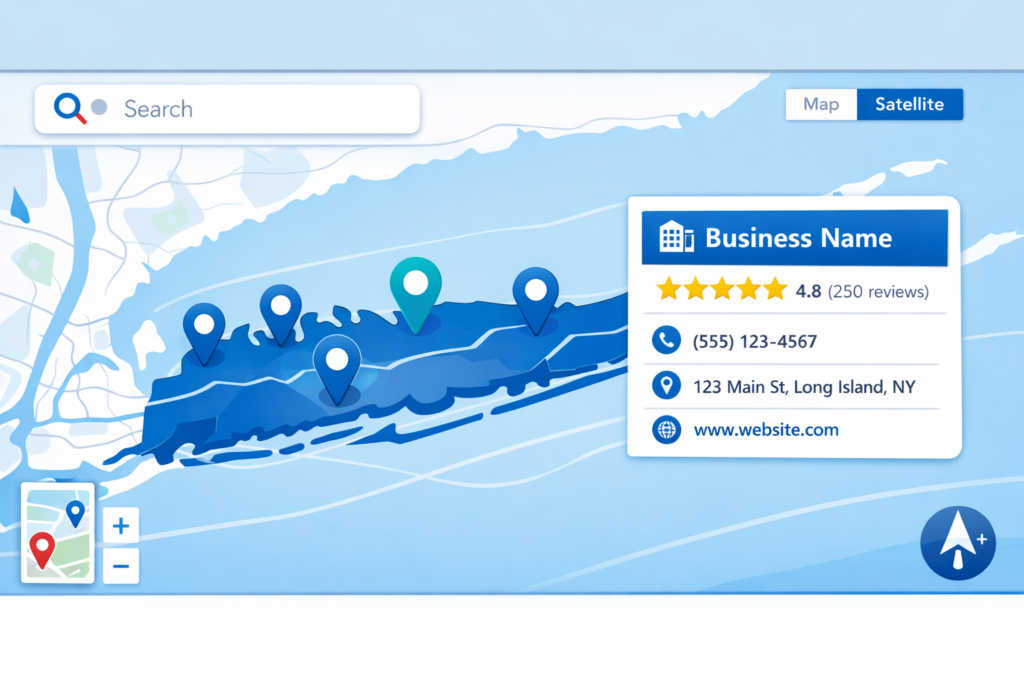
Google’s 2026 local search update has turned every Google Business Profile into a social media channel, one that feeds directly into AI-generated summaries, Maps video carousels, and the local pack. Listings now require the same publishing cadence, visual content, and engagement strategy applied to Instagram and TikTok, and GBP is no longer a set-and-forget SEO task.
Local intent drives revenue, and the top three Maps results capture the majority of clicks, calls, and direction requests for any given query. For SMB clients and multi-location brands, an under-published GBP is a leaking funnel.
Why It Matters
The line between social media and local search has effectively dissolved. Google Business Profile listings now power the local pack, Google Maps results, and the AI-generated summaries that sit above organic links. Every one of those surfaces pulls from the same content levers: photos, short-form video, posts, reviews, and engagement signals.
That shift matters because local intent drives revenue. Listings appearing in the top three Maps results capture the majority of clicks, calls, and direction requests for any given local query. For SMB clients and multi-location brands, an under-optimized GBP isn’t a missed SEO opportunity, it’s a leaking funnel. In 2026, "optimized" means actively published to.
What’s New in 2026 GBP
Changes reshape how to think about Google Business Profile this year.
AI summaries now pull from your content. Google’s AI-organized local results synthesize information from your description, posts, attributes, and review responses to generate the summary a searcher sees before they click. Every public-facing word, including replies to negative reviews, shapes how your business is described in search.
Expanded attribute categories. Google has rolled out new attributes for health, wellness, and professional service businesses, and continues to add filters that power voice and AI-driven recommendations. According to Google’s Maps and local search team, attributes increasingly determine which listings appear in filtered and conversational searches.
Short-form video on GBP. Google now supports clips up to 60 seconds directly on your listing, a format already produced daily for Reels, TikTok, and YouTube Shorts. The reuse opportunity is large, and most competitors aren’t using it yet.
The Numbers
Metrics worth tracking when GBP is folded into the content workflow:
- 60-second video clips now supported natively on GBP listings
- Twice-monthly photo uploads as the minimum cadence for engagement-driven ranking
- 24-hour review request window, the sweet spot for converting completed jobs into fresh reviews
- Dozens of attribute fields per business, each feeding filtered and AI-driven searches
- Three review signals Google evaluates: total volume, keyword relevance, and owner response rate
The engagement signal is doing more work than ever:
Google has confirmed that listings with high-quality, regularly updated photos receive significantly more requests for directions and website clicks than those without.
Posts with specific, locally relevant content are also more likely to be pulled into the AI snapshot that appears above traditional results, a strong argument for moving GBP into the regular content calendar instead of the once-a-quarter "we should update our listing" pile.
Google Business Profile functions as a social channel alongside its directory listing, and Google’s AI reads the posts you publish.
What Comes Next
The trend line is clear: GBP is being absorbed into Google’s broader content and commerce stack. In 2026, Insights integrates with Merchant Center and local ad reporting, giving operators a unified view of organic local presence and paid efforts, and foreshadowing a single dashboard for local visibility across Maps, Search, Shopping, and the AI snapshot.
The programmatic implication is multi-platform parity. The same content brief that produces a Reel, a TikTok, and a LinkedIn carousel should also produce a GBP post and a vertical video clip. Treating GBP as a separate workflow is how it ends up empty for months while a competitor with thinner content outranks you on cadence alone.
Expect Google to keep adding attribute categories, expanding video surfaces, and leaning further into AI-generated summaries. Businesses that publish to GBP weekly will train the AI on their preferred narrative. The ones that don’t will be summarized by whatever Google can scrape from old reviews and a three-year-old description.
What This Means for You
If you’re managing social for a local brand or a multi-location chain, wire GBP into the publishing cadence already running on Instagram, TikTok, and Facebook. The content overlap is large, and the reuse cost is close to zero.
Four moves to make this week:
- Repurpose your short-form video. Any vertical clip under 60 seconds already shot for Reels or Shorts is GBP-ready. Cross-post it the same week it’s published elsewhere. Feedsta, described as an AI-powered social media platform, can keep the asset moving across channels without manual re-uploading or version drift.
- Treat Google Posts like Instagram captions. Same hook, same CTA, same cadence. For local operators, location-specific posts feed directly into local pack visibility. The broader local playbook lives in the small business social media guide.
- Build a review-velocity engine. Reviews are the single most influential local-pack signal, so a request-to-response pipeline running 24-hour windows after every transaction is essential. Pair it with the social-proof reuse system in the social proof playbook for local brands to turn each review into months of converting content.
- Unify the analytics view. GBP Insights pairs neatly with existing social analytics. Search query data from GBP should feed back into the content calendar. If customers are finding a service term that isn’t mentioned anywhere else on social, that’s a content brief, not a tagging fix.
The Bigger Picture
The category called "local SEO" is quietly being absorbed into the category called "social content publishing." Google has built a content surface, GBP, that rewards the exact behaviors busy brands already do all day: publish photos, post short videos, respond to comments, and keep the brand voice consistent. Agencies and creators who recognize that early will own the local pack in 2026. The ones who keep handing GBP to whoever has time will keep watching competitors with weaker profiles outrank them on cadence alone. The work isn’t new. The surface is.
FAQ
Should your marketing team handle Google Business Profile?
Yes. In 2026, GBP is an active content surface that rewards the same publishing cadence, visual content, and engagement strategy already running on Instagram, TikTok, and Facebook. Google’s AI summaries pull from posts, photos, video, and review responses to generate the description searchers see in the local pack. If the team owns the brand voice elsewhere, they should own it here too.
How often should you post to Google Business Profile in 2026?
Post weekly at minimum, with a fresh photo upload at least twice per month and a video clip whenever vertical short-form content is produced for other channels. Consistency matters more than volume. If Reels, TikToks, or Shorts are already produced on a defined cadence, the marginal cost of cross-posting that same asset to GBP is close to zero.
What changed about Google Business Profile in 2026?
Three changes shape the year. AI-generated summaries now pull from description, posts, attributes, and review responses to populate the local search snapshot. Attribute categories have expanded, especially for health, wellness, and professional service businesses. Short-form video up to 60 seconds is now supported directly on listings. Insights also integrates with Merchant Center for unified organic-and-paid local reporting.
Related coverage