How to Get More Online Reviews in 2026: A Social-First Playbook
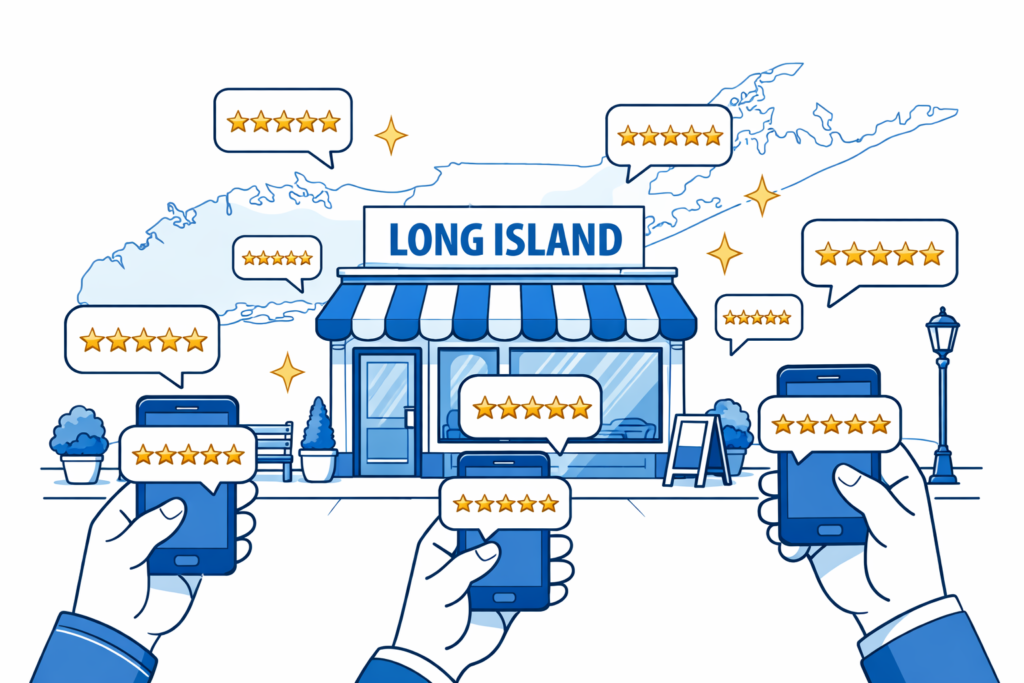
Google’s local search algorithm now uses AI-driven sentiment analysis to evaluate the actual content of your reviews, not just the star rating. For social media managers running multi-location brands and SMBs in 2026, that single change reshapes who owns review generation and how it plugs into the rest of the social calendar. Reviews are no longer a reputation-management afterthought living in someone else’s spreadsheet; they’re the highest-leverage social-proof asset you can ship every week.
Why It Matters
Reviews drive both local pack rankings and the AI Overviews that consumers increasingly trust as a first stop. Consumer research consistently shows that over 90% of buyers read online reviews before choosing a local business, and most won’t consider one with fewer than a handful of recent ratings. If you’re running social for a local dentist, a roofer, or a neighborhood restaurant, the review profile is the first impression any potential customer gets, often before they ever see your Instagram grid or TikTok.
The competitive math is brutal. If your competitors have 150 reviews and you have 12, you’re losing customers before they ever visit your website. And the gap compounds: active profiles attract more contributors because new reviewers feel confident adding to a busy thread, while stagnant profiles lose momentum month after month.
What’s New / How It Works
The shift in 2026 is that Google’s local algorithm now reads the words inside your reviews, not just the stars. AI sentiment analysis surfaces signals like specific service mentions, staff names, and neighborhood-level location details. A local HVAC business with reviews citing “fast response in the neighborhood” or “best AC repair in town” gets a relevance signal that a generic five-star drop simply can’t match.
That has two big implications for social-first operators. First, the content of each review carries SEO weight, so coaching customers toward specifics in your request flow matters more than ever, a one-tap link with a soft prompt like “mention the room or service we helped with” outperforms a bare “leave us a review.” Second, AI search engines, Google’s AI Overviews, ChatGPT browsing, Perplexity, pull from review corpora across multiple platforms to build their composite business answers. A thin review presence means you simply don’t show up in the AI summaries that increasingly mediate local discovery.
The mechanics of a working review engine in 2026 look like this: a direct Google Business Profile review link, a post-service text message at the moment of peak satisfaction, and an automation layer that fires the request without anyone remembering to send it. Google’s own review policies require that every customer go to the same place regardless of likely sentiment, so the workflow has to be uniform. Post-service SMS consistently outperforms email, generating response rates above 20% for service-based brands.
Reviews are content now. They feed AI Overviews, local rankings, and every social-proof asset on your calendar, same audience, same algorithms.
The Numbers
- 90%+ of consumers read online reviews before choosing a local business
- 20%+ response rate on post-service SMS review requests vs. single-digit email rates
- 3 ranking inputs Google confirms: review quantity, quality, and recency
- 24-48 hours is the response window expected by both customers and the algorithm
- Industry sites (Avvo, Healthgrades, Houzz, BBB) generate backlinks and citations alongside consumer trust
“A business with nothing but perfect scores looks suspicious, a mix of ratings with thoughtful responses looks authentic and trustworthy.”
What Comes Next
The next frontier is AI search visibility. As generative search features pull review data from Google, Yelp, Facebook, and industry verticals to build composite summaries, brands with a strong cross-platform review presence get featured. Brands stuck on Google alone get filtered out of the answers that increasingly happen before anyone clicks.
For social media managers, that means treating reviews as a publishing channel, not a customer service ticket. Identify the two or three platforms most relevant to your vertical (Healthgrades for medical, Avvo for legal, Houzz for home services), audit your presence on each, and add them to your monthly social reporting alongside follower growth and engagement. Bake review monitoring into your weekly inbox sweep, Google Business Profile, Yelp, Facebook, and industry sites, and respond within 24 to 48 hours every time. AI-assisted response drafting tools are now widely available and especially valuable for multi-location brands handling dozens of reviews a week across markets.
What This Means for You
If you’re running social for a local brand or agency, reviews belong inside your publishing calendar, not in a separate spreadsheet someone else owns. The same audience that follows you on Instagram is reading your Google reviews, and the same algorithm logic that decides what surfaces in AI Overviews looks at both feeds.
Build the review-request prompt into the same automation stack that handles your scheduling and link tracking. Feedsta’s social management platform handles cross-platform publishing and inbox monitoring alongside link shortening and QR codes, useful for printing a “leave us a review” QR on receipts, packaging, or business cards that lands customers on your Google review form in one tap. Pair that with a link-in-bio on Instagram and TikTok pointing to a review landing page, and every customer touchpoint becomes a review request without adding a single task to anyone’s day.
Two related reads to tighten this up: our social proof playbook covers how to recycle reviews into six months of social content, and our Google Business Profile guide walks through how reviews now feed GBP posts and AI summaries. If you’re evaluating the broader tooling stack, the Feedsta platform overview shows where reviews, scheduling, analytics, and link-in-bio fit together.
The Bigger Picture
Reviews are the most undervalued social-proof asset most local brands own. They’re free, recurring, durable, and now feeding both the local pack and the AI search results that increasingly decide what gets seen. Build the system once, run it forever, and your social calendar gets six months of content from a single quarter of reviews, while your local search and AI visibility quietly compound in the background.