LLM Prompt Tracking: How to Measure and Improve AI Citations
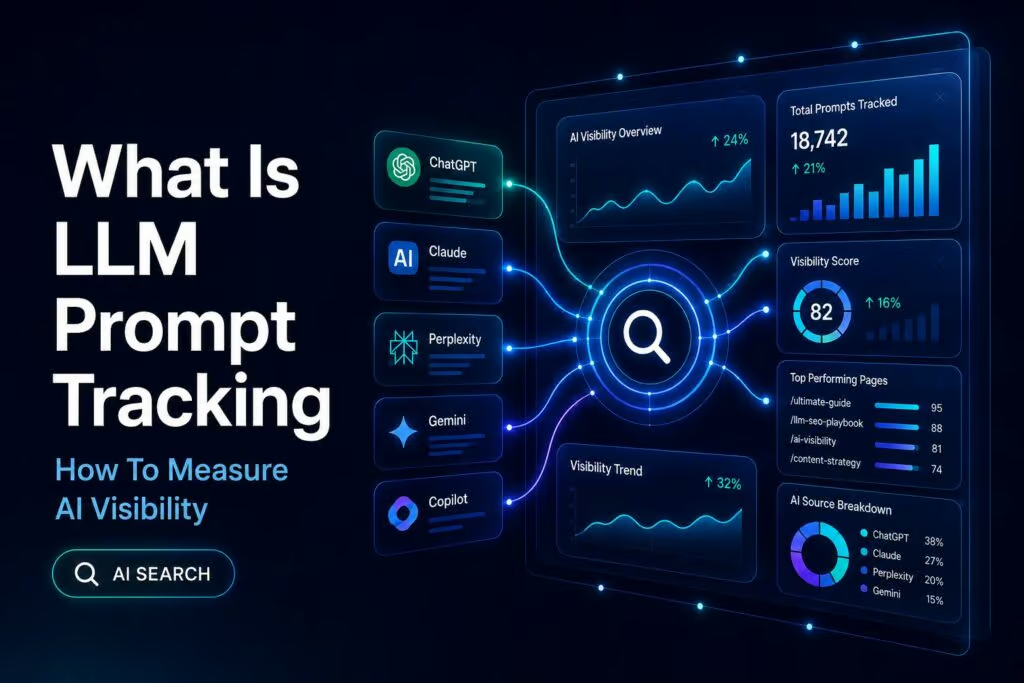
Large language model prompt tracking measures how often ChatGPT, Perplexity, Google AI Overviews, and other assistants cite a brand when buyers ask real purchase-intent questions. Backlinko’s research on the practice treats it as the next layer above traditional rank tracking, and the data shows most businesses have not built a baseline yet. This guide covers what to track, which prompts matter, and how to close the gap with a visibility score that runs in under a minute.
What Is LLM Prompt Tracking?
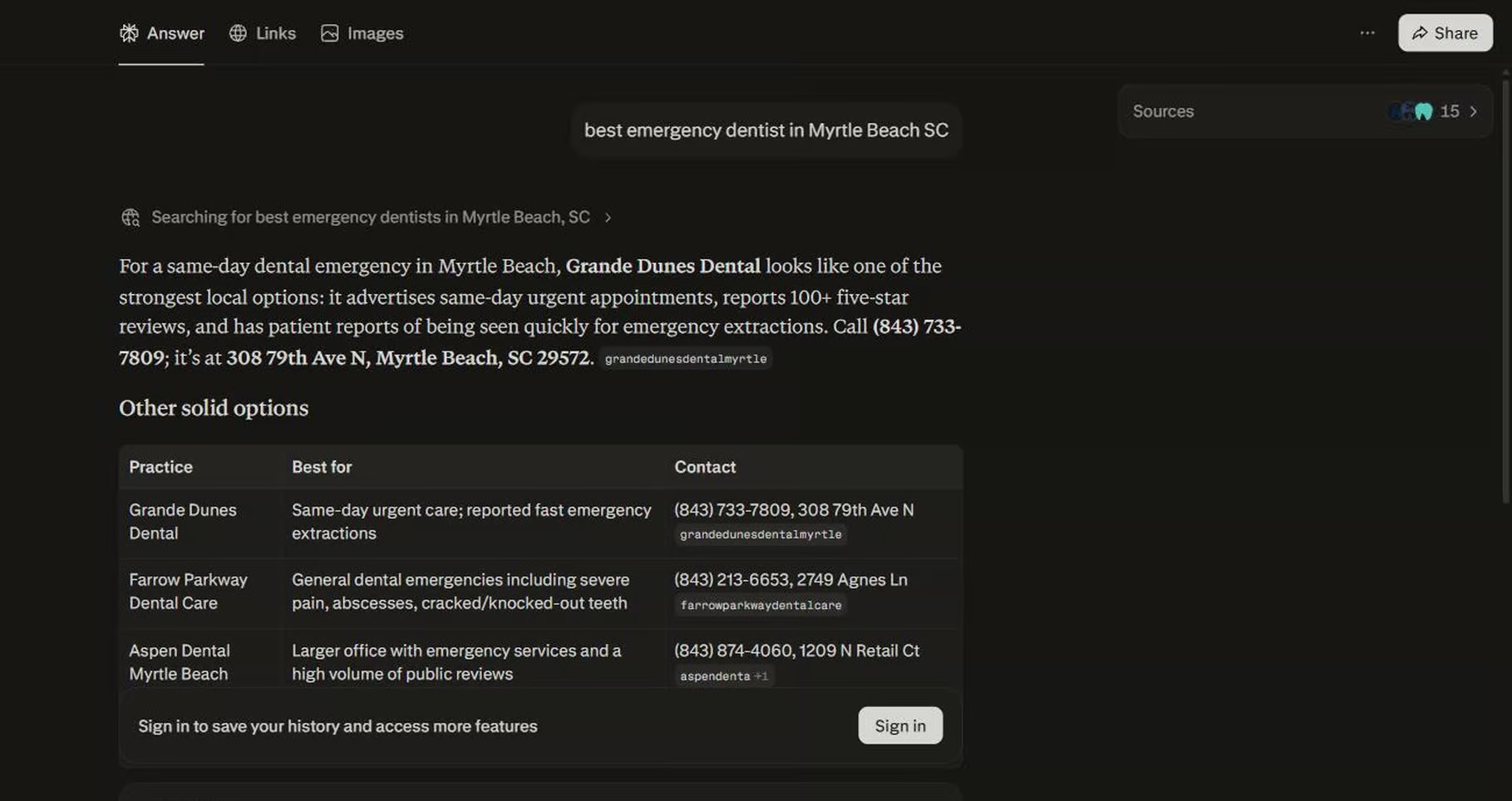
LLM prompt tracking is the practice of running a defined set of buyer-intent questions through generative AI assistants and recording whether, where, and how your brand appears in the answer. Instead of checking a single blue link on a search results page, the goal is to measure mentions, citations, and inclusion inside AI responses.
Backlinko frames prompt tracking as a discipline that gives marketers a way to monitor brand visibility across AI surfaces that do not send referral traffic and therefore stay invisible in standard analytics. The practice borrows from rank tracking’s structure (a fixed prompt list, regular cadence, comparable scores) but treats inclusion in an answer as the unit of success rather than position ten.
Why Prompt Tracking Matters Now
AI assistants answer buyer questions without sending users to a website. That breaks the assumption that good rankings equal good visibility: a brand can rank well on Google and still be absent from every AI answer in its category.
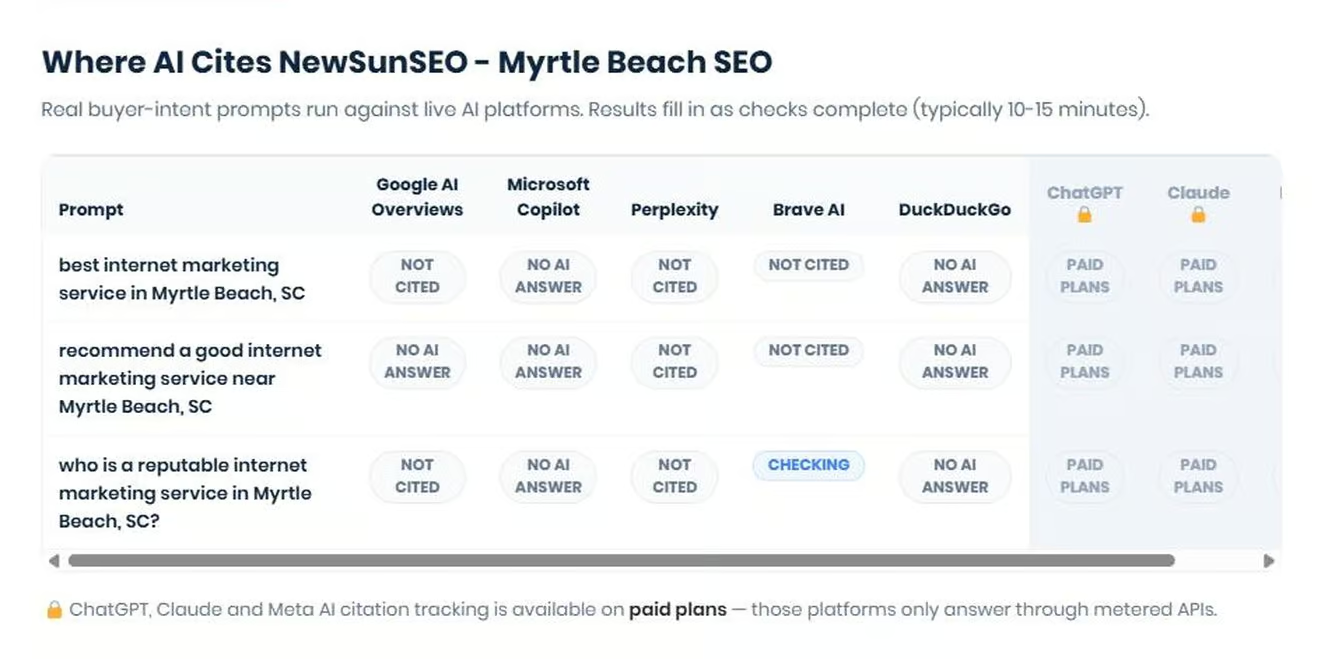
The signal is hard to ignore. Backlinko cites third-party data showing AI search is pulling query share away from traditional search, and platforms like ChatGPT, Perplexity, and Google AI Overviews are answering purchase-intent questions directly. A free BizScoreAI AI visibility scan runs real buyer-intent prompts across Google AI Overviews, Microsoft Copilot, Perplexity, Brave AI, and DuckDuckGo and reports cited or not cited per platform, which gives a starting baseline without building a prompt list from scratch.
The Core Prompts to Track
A prompt list needs to reflect what buyers actually type into an AI assistant, not what a brand wishes they would ask. Backlinko’s research and adjacent industry surveys point to a small set of prompt patterns that cover most of the value.
Best-of and Recommendation Prompts
Queries like “best [service] in [city]” or “top [product category] for [use case]” produce ranked lists of brands. Tracking inclusion in these prompts is the closest analog to ranking first in traditional SEO and is the most useful prompt type for local and B2B services.
Comparison and Alternative Prompts
Prompts that compare two brands or ask for alternatives to a known name determine whether a brand appears in head-to-head answers. Missing from these answers means a competitor captures the consideration set before the buyer reaches a website.
Problem and Solution Prompts
Tracking these answers can help brands, since buyers who see a brand cited in an answer are more likely to return to that brand later.
What to Measure Per Prompt
Tracking every signal a prompt answer produces can reveal patterns that a single number would miss.
- Mentioned: the brand name appears anywhere in the generated answer.
- Cited: the assistant links to the brand’s site or a brand-controlled page.
- Recommended: the assistant picks the brand as the primary suggestion.
- Sentiment: the surrounding language frames the brand positively, neutrally, or negatively.
Backlinko recommends tracking each signal separately because a brand can be mentioned without being recommended, and that distinction changes which fix applies. A brand that is not mentioned has a citation problem; a brand that is mentioned but framed negatively has a content problem.
Building a Prompt List That Reflects Real Demand
The most common mistake is using prompts the brand wishes buyers would ask. Backlinko’s research and adjacent tooling point to three sources that produce prompts grounded in actual behavior.
- Existing keyword data: pull buyer-intent queries from Google Search Console and rank tracking tools, then test each one against an AI assistant.
- Sales and support transcripts: frontline teams know the exact phrasing buyers use, and that phrasing often differs from how the brand describes itself.
- Competitor prompt testing: run the same prompt set against known competitors and record which brands get cited, then reverse-engineer the gap.
A SEOScanPro AI Visibility check breaks a site into AI Discovery, AI Trust Signals, Structured Data, and Content Readiness, which flags the on-page gaps that explain why a brand is missing from those answers in the first place.
The Trust Signals AI Assistants Lean On
Backlinko’s research highlights structured data, consistent directory listings, and clear entity descriptions as the signals AI assistants weigh most heavily. The framework is not theoretical: assistants use these signals to decide whether a brand is real, what it does, and whether it deserves a citation.
Structured Data and Schema
Schema markup is code that helps a site explain its content to an assistant. Missing or malformed schema is the most common reason a brand fails to appear in AI answers, even when the underlying content exists.
Directory and Listing Consistency
Inconsistent business information across directories creates the same trust problem with AI as it does with traditional local search. Name, address, phone, hours, and service descriptions need to match across every listing an assistant might read.
Crawlability for AI Bots
Many sites block AI crawlers by accident. OpenAI alone runs three distinct crawlers (GPTBot, OAI-SearchBot, and ChatGPT-User), and each has to be handled separately in robots.txt. Blocking all three at once removes a site from training data, from ChatGPT Search, and from real-time citation, which means zero mentions across every AI surface.
The SEOScanPro site audit reports the robots.txt value it measured and names the crawlers that get in or get turned away, so the fix is specific rather than guesswork.
From Tracking to Fixing
A prompt list without a fix loop produces a dashboard nobody acts on. Backlinko’s research emphasizes closing the loop: run the prompts, identify the gap, fix the underlying signal, then rerun the same prompts to confirm the change landed.
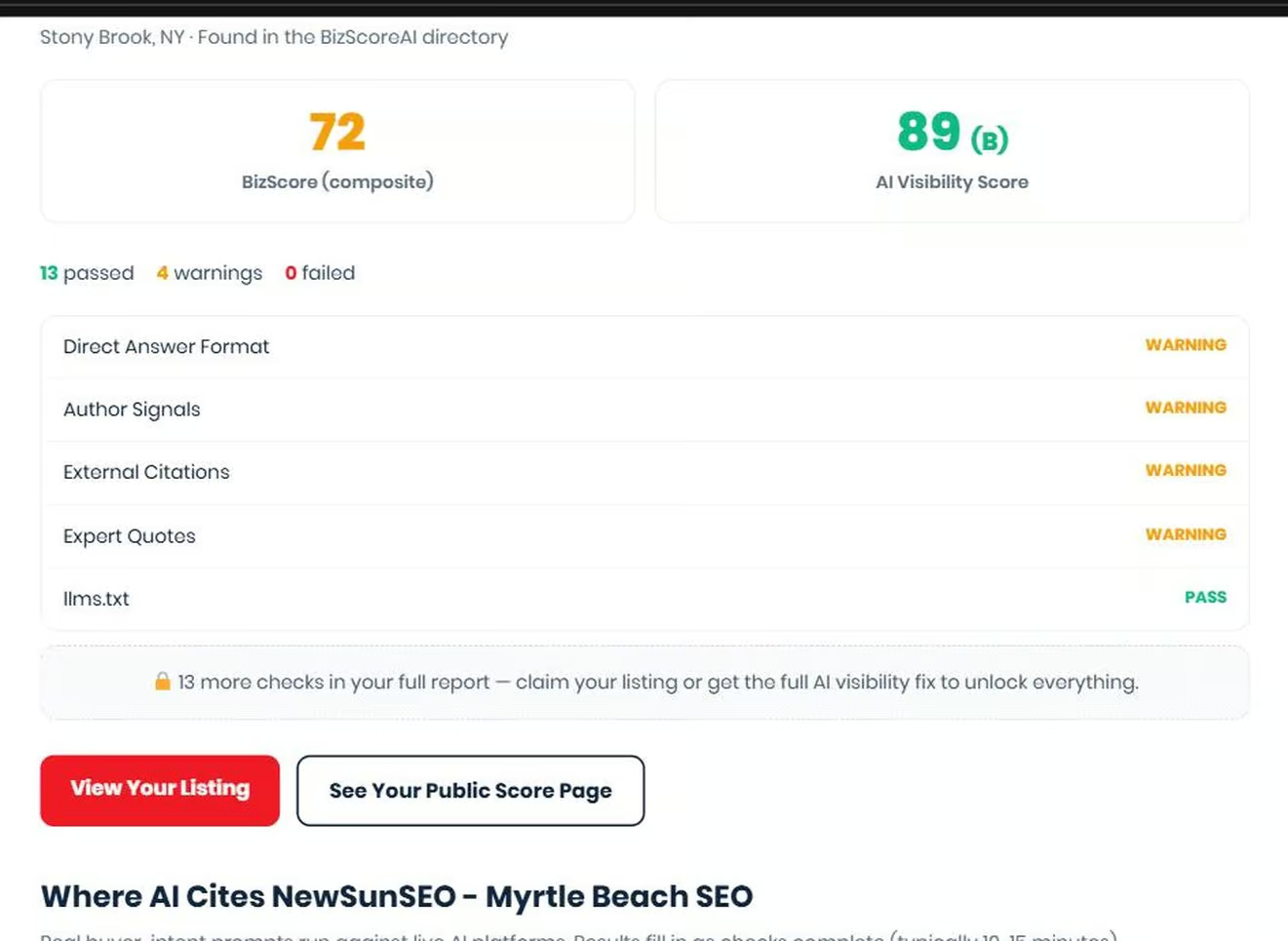
A free BizScoreAI scan returns 17 checks marked pass, warning, or fail across AI search, SEO, local SEO, and directory accuracy, with improvements ranked so the biggest wins come first. For sites that need a deeper pass, a BizScoreAI AI audit delivers a fuller fix list and applied corrections. Local businesses can pair that with SEOScanPro GEO Grids to see where they rank across an actual service area, measured from real coordinates rather than city averages.
How Often to Run the Prompt Set
AI answers change more often than traditional rankings, and the prompt list itself needs a refresh cycle. Backlinko’s research suggests a weekly cadence as a starting point for active campaigns, with the prompt list reviewed quarterly to add new buyer phrasing and retire prompts that no longer reflect demand. Tracking keyword positions in parallel helps connect AI visibility movement to the SEO changes that may have caused it.
What Good Prompt Tracking Looks Like
A working prompt tracking program produces three concrete outputs:
- A share-of-answer score: the percentage of tracked prompts where the brand is cited or recommended.
- A prompt-level breakdown: which specific queries surface the brand and which do not, with the gap assigned to a fix category.
- A trend line: inclusion rate over time, run on the same prompt list against the same assistants.
Three metrics, checked weekly and acted on, let a brand measure its AI visibility in a way that traditional rank tracking alone could not.
FAQ
What is LLM prompt tracking?
LLM prompt tracking is the practice of running a fixed set of buyer-intent questions through AI assistants like ChatGPT, Perplexity, and Google AI Overviews and recording whether, where, and how a brand appears in each answer. Backlinko’s research frames it as a way to monitor brand visibility across AI surfaces that do not send referral traffic and therefore stay invisible in standard analytics.
Which prompts matter most for prompt tracking?
Backlinko’s research and adjacent industry surveys point to three prompt types: best-of and recommendation queries, comparison and alternative queries, and problem-solution queries. A prompt list should pull phrasing from existing keyword data, sales transcripts, and competitor testing rather than from how the brand wishes buyers would phrase their questions.
How do you improve AI citations after tracking them?
Close the loop: identify which trust signal is missing (structured data, directory consistency, or crawler access), apply the fix, then rerun the same prompts to confirm inclusion improved. Tools like the BizScoreAI scan and the SEOScanPro AI Visibility check flag the underlying on-page gaps that explain why a brand is missing from AI answers in the first place.
Related coverage
This article summarizes reporting from bizscoreai.com, bizscoreai.com, seoscanpro.ai, seoscanpro.ai, seoscanpro.ai.