Winning Local SEO Tactics for Small Businesses in 2026
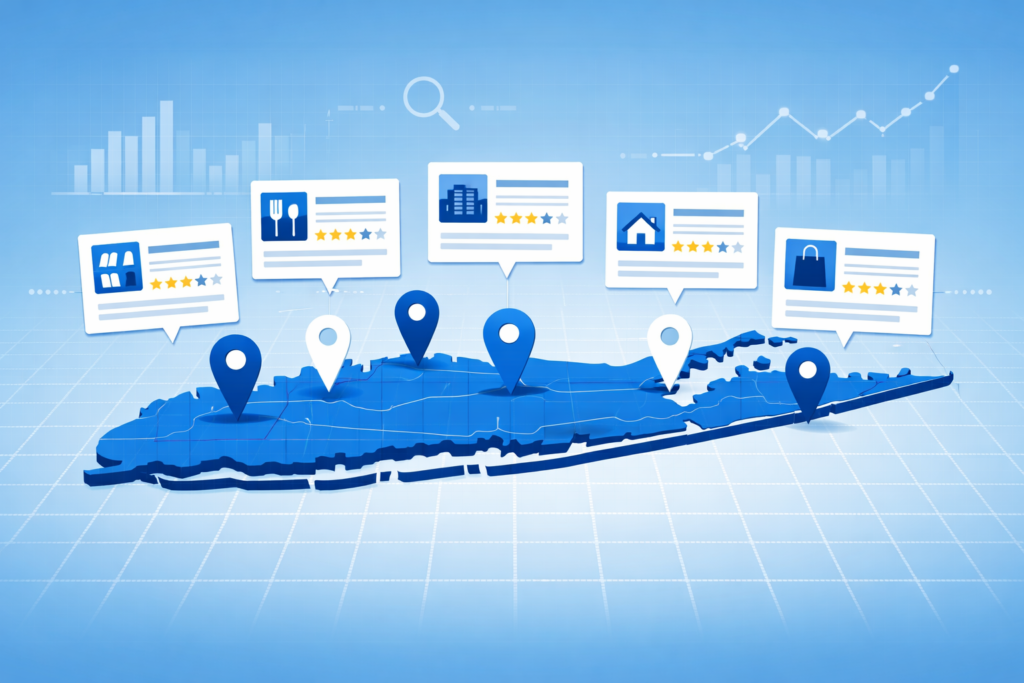
Local search has changed dramatically over the past year, and the local businesses winning Google’s local pack in 2026 are the ones treating Google Business Profile like a publishing platform, not a one-time directory submission. AI Overviews, expanded GBP signals, and review-content analysis now reward brands that post weekly, respond to every review, and keep fresh visual content flowing. For social media managers, that means local SEO has stopped being someone else’s job, it lives in your scheduling tool.
Why It Matters
Local search drives some of the highest-intent traffic available to small and mid-sized businesses. According to Google’s own consumer research, 76% of people who search for something nearby on a smartphone visit a related business within a day, and 28% of those searches end in a purchase. The catch in 2026 is that Google’s ranking systems have shifted hard toward AI Overviews and behavioral signals, which means the static “set it and forget it” GBP listings that ranked in 2024 are sliding off the map.
Local brands competing in saturated verticals, home services, dental, legal, restaurants, are watching newer competitors leapfrog them by treating local SEO as a weekly content discipline rather than an annual checklist. The discipline involved looks far more like social media management than traditional SEO, which is why social teams are increasingly the right group to own it.
What’s New: GBP Is a Publishing Surface Now
The most important shift in 2026 is conceptual: your Google Business Profile is no longer a static record. It’s a feed. Google now factors GBP post frequency, photo recency, Q&A activity, and review responses into local ranking decisions and AI Overview citations. That maps almost perfectly onto skills a social media manager already has, short-form copywriting, image curation, community management, and consistent posting cadence.
Your Google Business Profile is the single most important asset in your local SEO strategy for 2026, and the businesses treating it as such are publishing GBP posts weekly with naturally embedded location keywords.
A local roofer should be publishing seasonal inspection reminders that mention their city and surrounding towns. A neighborhood HVAC company should ask for reviews that mention “HVAC repair in your city,” because Google’s local ranking systems now analyze review content for topic relevance, not just star averages. The good news for social-first teams is that this is content you’re already creating for Instagram and TikTok. Repurposing it into GBP posts is a sub-five-minute addition to an existing workflow.
The Numbers
The 2026 local SEO ranking factors that move the needle most:
- GBP post frequency: Weekly minimum, with location keywords woven in naturally.
- Photo recency: Profiles with recent, high-quality images get significantly more engagement, which Google reads as relevance.
- Review velocity: Detailed, keyword-rich reviews carry more weight than star ratings alone.
- Mobile load time: Sites slower than 3 seconds on mobile lose customers before they read a word.
- Citation consistency: Name, address, and phone must match exactly across every directory.
- Local backlinks: A handful of links from local newspapers, Patch, or area chambers of commerce outperforms hundreds of generic directory submissions.
The difference between ranking in the local three-pack and being buried on page two often comes down to review velocity and quality, and that velocity is something social teams are uniquely positioned to drive through post-job follow-up sequences and at-location QR prompts.
What Comes Next
AI Overviews are expanding into more local query categories, and Google Business Profile is quietly becoming the primary data source the AI pulls from. Expect three trends to accelerate through the rest of 2026.
Schema and structured data become non-negotiable
LocalBusiness schema with exact NAP details, service areas, hours, and payment methods now feeds directly into AI Overviews. Sites without proper structured data markup are increasingly invisible to the AI summary layer, no matter how well their on-page content is written.
Social signals start feeding local rankings
Google has been quiet about it, but platform consistency, same hours, same address, same imagery across Instagram, Facebook, TikTok, and GBP, appears to correlate with stronger local visibility. Multi-platform discipline is no longer just a brand-hygiene concern; it’s a ranking input.
Location-specific landing pages get smarter
Thin “service areas” pages with town-name lists are getting deindexed. Pages that genuinely speak to a community, neighborhood housing styles, regional seasonal pests, local property tax cycles, are what Google’s systems now reward.
Local SEO in 2026 isn’t a separate department, it’s the result of a social media workflow that finally treats Google Business Profile as a publishing surface.
What This Means for You
If you manage social media for a local business or agency, the practical takeaway is that local SEO has collapsed into your weekly publishing rhythm. The same captions, photos, and short videos you’re scheduling for Instagram or TikTok should be repurposed into GBP posts, and that workflow is exactly what Feedsta is built to handle, with cross-platform scheduling, multi-brand management for agencies juggling several local clients, and a built-in social inbox that turns review response into a daily five-minute habit instead of a weekly fire drill.
A few specific moves worth building into your calendar this quarter:
- Add Google Business Profile to your weekly publishing rotation. One post per week, location keywords embedded, a fresh photo attached.
- Use QR codes on receipts, business cards, and storefront signage that link directly to your Google review form, generated and tracked through the Feedsta app so you can attribute review velocity back to the specific campaigns driving it.
- Build location-specific link-in-bio pages for each town you serve, so a lead in one town and a lead in the next each land on a page that speaks their geography rather than a generic homepage.
For a deeper breakdown of how local search ranking signals have shifted, our recent guide to local search ranking signals in 2026 walks through the social-first checklist in detail. If you’re an SMB rather than an agency, the companion piece on how social media drives local SEO discovery for SMBs covers the same ground from the operator’s seat.
The Bigger Picture
The line between social media management and local SEO has effectively disappeared in 2026. Google Business Profile is a publishing platform, reviews are user-generated content, location pages are repurposed social copy, and AI Overviews cite the brands that show up consistently across every surface. The local businesses pulling ahead this year aren’t running separate SEO and social campaigns, they’re running one social-first publishing system that happens to feed Google’s local ranking signals at the same time. If your social workflow doesn’t include GBP, reviews, and location content yet, that’s the gap your competitors are exploiting right now.