Search Everywhere Optimization: Why Google Alone Isn’t Enough in 2026
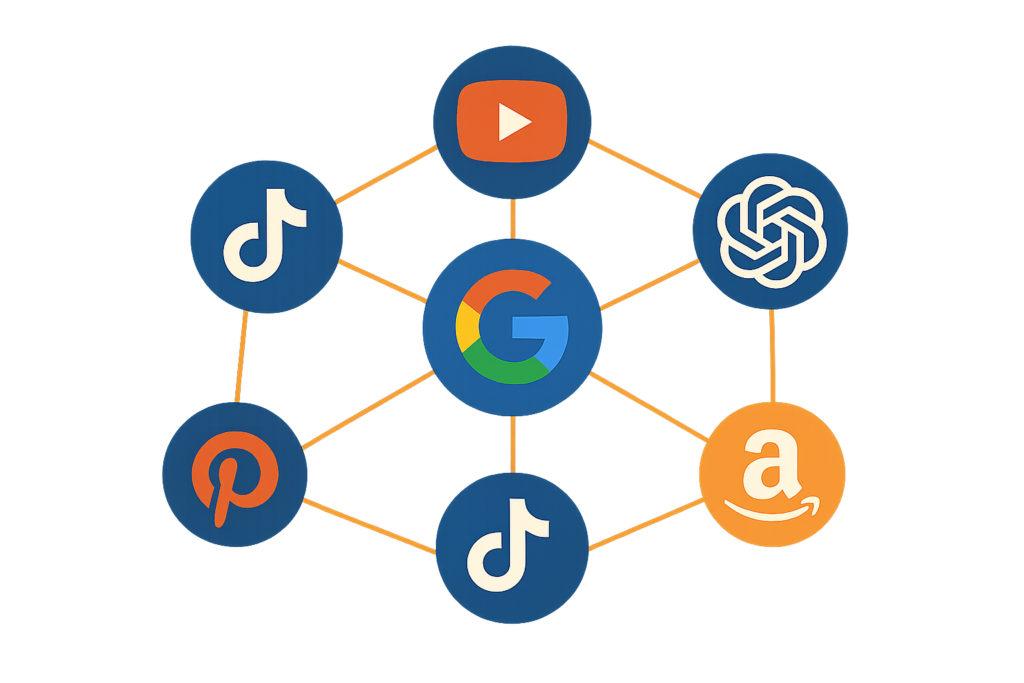
Nearly 40% of Gen Z users open TikTok or Instagram before they ever touch Google when they want a restaurant, product, or service. YouTube fields more than 3 billion searches a month. Reddit’s search traffic jumped 33% year-over-year. The search bar moved, and most of the new ones live inside the platforms your social team already runs.
Why It Matters
For most of the last twenty years, search visibility was the SEO team’s problem. In 2026, it’s a social media problem. The platforms your team posts to every day, TikTok, YouTube, Instagram, Pinterest, and Reddit-adjacent communities, are now first-stop discovery engines for entire customer segments. We call this Search Everywhere Optimization, and the data behind it is the cleanest signal yet that posting strategy and search strategy are no longer separate functions.
According to BrightLocal’s Local Consumer Review Survey, businesses with consistent multi-platform presence convert 27% more online leads than brands that rely on Google alone. That number isn’t theoretical, it’s the compounding effect of being where people actually look, in the language they actually use, on the platforms a social media manager already owns the keys to.
What’s New / How It Works
Search Everywhere Optimization treats every platform a customer might use as part of one discovery surface. Social managers own most of that surface. Here’s how the shift shows up across the platforms you already publish to.
TikTok search behaves more like YouTube than Instagram. Users type “best lash extensions Brooklyn” or “iced matcha hack” and TikTok ranks videos with keyword-optimized captions and readable on-screen text. Neil Patel’s TikTok SEO research found that videos with intentional keyword captions significantly outperform untagged ones inside TikTok’s internal search.
YouTube is still the second-largest search engine in the world. A two-minute Short answering a specific buying question, say, the difference between sealing and refinishing a hardwood floor, can pull qualified searchers for months. Semrush data shows video content earns 157% more organic traffic than text-only content across all channels combined.
Reddit has become a trust engine because peer voice ranks higher than brand voice. Searches like “what plumber should I use near me Reddit” happen constantly, and Google’s content licensing deal with Reddit means those threads now appear high in Google itself, double-dipping the value of a Reddit presence.
Pinterest still routes 450 million monthly active searchers, most of them in early-research mode, looking for ideas before they look for vendors. And then there’s the AI layer: ChatGPT, Perplexity, Claude, and Google’s AI Overviews now answer millions of queries a day, and they cite social profiles, bios, and high-trust brand mentions. If your name isn’t consistent across platforms, AI tools quietly skip you.
The Numbers
A snapshot of the 2026 search landscape from the underlying data:
- Gen Z behavior: ~40% open TikTok or Instagram before Google for product and service queries.
- YouTube search volume: 3+ billion searches per month.
- Reddit growth: 33% year-over-year increase in search traffic.
- Video traffic edge: 157% more organic traffic than text-only content.
- Amazon discovery: 63% of US product searches start on Amazon, not Google.
- Pinterest audience: 450 million monthly active searchers.
- Conversion lift: Multi-platform brands convert 27% better than Google-only brands.
- Google scale: Still 8.5 billion searches per day, large, but no longer the only game.
Here’s the audit question every social media manager should be asking customers this quarter:
“Where did you first hear about us or first search for a service like ours?” The answers may include YouTube, a Facebook group, or even a Reddit thread.
What Comes Next
The next eighteen months of this trend look predictable in two directions. First, AI chat answers will keep absorbing the easy informational queries, the “how do I” and “what’s the difference between” questions that used to drive Google traffic. Brands that show up inside those answers will be the ones with consistent name, address, and phone (NAP) details, repeating bios, and structured content across platforms. Moz’s research on AI search shows that brand mentions and citations across the open web heavily influence whether AI tools recommend a business in their responses.
Second, short-form video will keep absorbing intent. The same 45-second clip, published natively to TikTok, Reels, YouTube Shorts, and Facebook Reels, now does the work a blog post used to do. Multi-platform repurposing isn’t a nice-to-have anymore; it’s the unit economics of modern reach. For social media managers, the job is widening, not narrowing. You’re not just publishing, you’re managing presence across a dozen search surfaces at once.
What This Means for You
This is the moment social media managers stop treating SEO like someone else’s problem. The platforms you already publish to are the ones the customer is searching on. The fix is operational, not philosophical: post to more surfaces, in platform-aware formats, on a consistent cadence, with bios and link-in-bio pages AI tools can actually read.
A practical 30-day starting point looks like this. Pick one search-active platform you’re under-investing in, usually TikTok, YouTube Shorts, or Pinterest. Build a 12-post calendar of question-answer content using the exact phrasing customers type into search. Use a tool that lets you schedule and analyze across every platform from one queue instead of duplicating work three times. Then tighten your bios and link-in-bio pages so the brand reads the same way everywhere, that consistency is what AI tools quote when they cite you.
If you want the deeper play on the AI side, we’ve broken the five highest-leverage moves down in AI Search Visibility for Social Media: 5 Plays That Work. And if your brand still isn’t showing up inside ChatGPT or Perplexity, this guide on AI invisibility walks through the 60-90 day fix, starting from your social profiles.
When Google is one search bar among many, every social platform your team manages becomes a discovery engine, or a dead end.
The Bigger Picture
The teams winning in 2026 aren’t running parallel SEO and social programs that never talk to each other. They’re treating social posting, bio consistency, link-in-bio pages, and short-form video as a single search-visibility system, one that feeds Google, TikTok, YouTube, Reddit, Pinterest, and the AI answer layer at the same time. The social media manager isn’t downstream of search anymore. In a lot of categories, they are search.