Best WordPress SEO Plugins for Small Business Websites in 2026
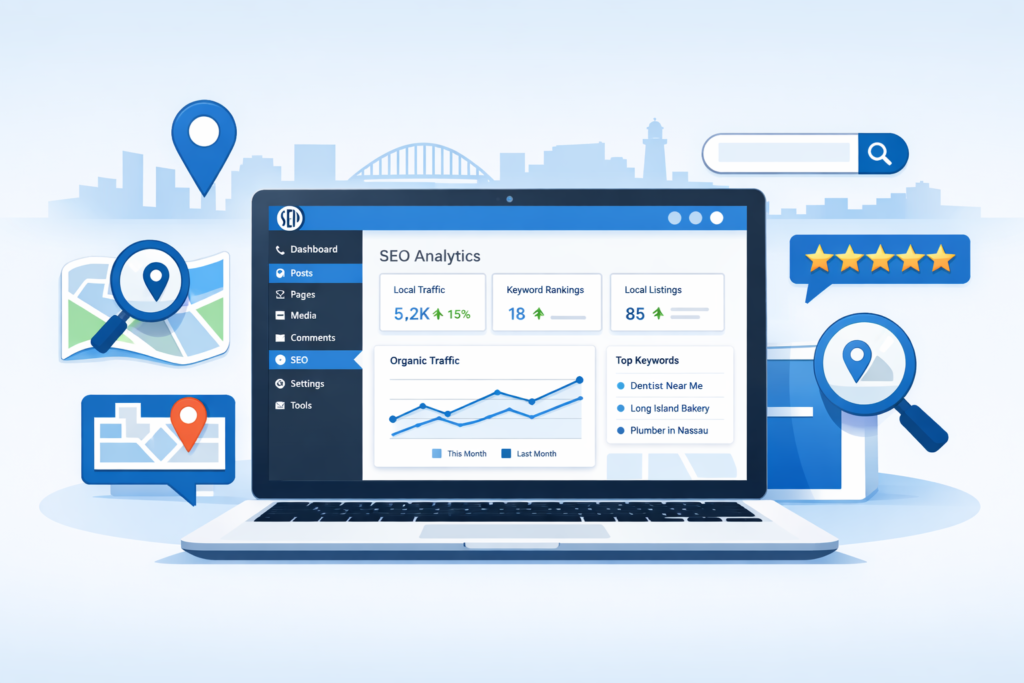
In 2026, four WordPress SEO plugins dominate the small business market: Rank Math (best free tier with native LocalBusiness schema and multi-keyword optimization), Yoast (strongest documentation and WooCommerce compatibility, with a Premium tier around $99/year), AIOSEO (most user-friendly setup wizard, with Plus plans starting at $49.60/year), and SEOPress Pro (single annual fee bundling every feature). The right choice depends on whether you need multi-location schema, Open Graph control, internal link suggestions, or AI-assisted content scoring, and the plugin you pick now decides how social-driven clicks compound into search rankings.
Why the Right SEO Plugin Matters
When a Feedsta-scheduled post or a fsta.li short link sends traffic to your WordPress landing page, the SEO plugin running that page silently decides what happens next, whether the click compounds into a ranking signal, whether your link preview renders correctly on Facebook and LinkedIn, and whether Google’s AI Overviews ever cite the page when prospects research your brand.
The hand-off between social and search has tightened. Open Graph tags, Twitter/X Cards, schema markup, and meta descriptions are all controlled by your SEO plugin, and they decide how every shared link renders across Meta, LinkedIn, X, and search results. Get them wrong and a meticulously planned campaign sends people to blank previews and bare snippets. The plugin you install determines how search engines read your pages, how your local listings appear in Google, and whether your site’s technical foundation helps or hurts your rankings, and that logic now extends to social: if Google can’t parse it, neither can LinkedIn’s preview crawler or Facebook’s share card.
What’s New in the 2026 Plugin Lineup?
The 2026 lineup pulled AI into every major plugin. Rank Math’s Content AI feature, expanded in late 2025, now delivers real-time content suggestions based on competitor analysis and search intent, recommending related terms, optimal content length, and heading structures. Yoast shipped improved AI-generated title and meta description suggestions in early 2026, narrowing the gap. AIOSEO continues to lean on its guided setup wizard and a link assistant that surfaces internal linking opportunities across location pages, useful when you’re publishing dozens of city-specific service variants from a single brand voice.
The practical upshot is consistency. The same AI scoring that grades the long-form blog post can be used to keep social-derived landing pages from drifting off message when you repurpose post copy across platforms. Rank Math’s local SEO module also supports multiple business locations natively, generating LocalBusiness schema without a separate plugin or any custom code.
Plugin Pricing and Feature Comparison
Plugin pricing and feature comparison for 2026:
- Rank Math: free tier includes multi-keyword optimization, advanced schema, redirection management, and Google Search Console integration, see the official WordPress.org listing
- Yoast Premium: roughly $99/year per single site, with the local SEO add-on sold separately
- AIOSEO Plus: starts at $49.60/year for local SEO tools, advanced schema, and the link assistant
- SEOPress Pro: one-time annual fee covering every feature with no upsells or separate add-ons
- Both Rank Math and Yoast now ship AI detection and optimization tools as standard in their 2026 releases
- All four major plugins handle Open Graph and Twitter/X Card markup natively, but only if configured
“No plugin replaces a real SEO strategy. Plugins handle the technical plumbing, schema markup, meta tags, sitemaps, and on-page analysis, but they don’t create content strategies, build local citations, or earn backlinks from authoritative publications and directories.”
When a fsta.li click lands on a WordPress page, the SEO plugin can affect whether it contributes to ranking signals or is logged as a single visit.
Where SEO Plugins Are Heading Next
Expect continued convergence between SEO plugins and AI workflows. As Google’s helpful content evaluations get sharper at separating AI-assisted writing that adds value from generic AI slop, the plugin-side detection tools will matter more, not less. Both Rank Math and Yoast are positioning their AI scoring as quality gates rather than content generators, a direction that suits anyone repurposing post copy into long-form blog content who needs a sanity check before publishing.
Schema is the other near-term battle. As LocalBusiness, Event, and Product schema get pulled into AI Overviews and the new AI search experiences, the plugins shipping the cleanest structured data quietly win citations their competitors can’t reach. Google’s own LocalBusiness structured data documentation spells out the required properties, and every major plugin in this roundup ships them by default. Put bluntly: a plugin is a tool, not a substitute for expertise. That’s especially true when AI assistants are the new gatekeepers between your brand and a discovery query.
What This Means for Your WordPress Site
Four practical takeaways:
- Audit Open Graph rendering on every link-in-bio destination. A great Reel preview that lands on a broken Facebook share card is a wasted impression. All four plugins handle Open Graph, but only if someone configured it.
- Push for LocalBusiness schema on multi-location brands. This is what feeds AI Overviews when someone asks “best [service] near me.” If your brand serves multiple regions, the WordPress plugin shipping that schema is the difference between getting cited and being invisible.
- Use the link assistant features. AIOSEO’s tool and Rank Math’s contextual suggestions turn social-driven landing-page traffic into longer sessions. Our image SEO playbook covers the matching Core Web Vitals piece, slow pages kill social conversions before the user reads a word.
- Don’t fix this in isolation. For the wider view of which SEO tools matter most for small businesses, see our essential SEO tools guide, and our top 2026 SEO moves for small businesses for the strategic frame.
Feedsta, an AI-powered social media platform, handles the publishing layer, scheduling, AI-assisted creation, and analytics across TikTok, Meta, Pinterest, X, LinkedIn, and YouTube, but the WordPress destination needs its own SEO foundation. Pair the right plugin with Feedsta’s link-in-bio and fsta.li shortener and you stop leaking attribution between platforms while social-driven clicks finally start compounding into search visibility.
The Bigger Picture
A WordPress SEO plugin is a destination layer, and a brand that treats it as someone else’s problem leaves rankings, Open Graph previews, and AI Overview citations on the table, every one of them tied to clicks it worked to earn. Pick a plugin that handles schema, meta, and speed cleanly, configure it once, and stop fighting the same preview bugs on every campaign.
FAQ
Which WordPress SEO plugin is best for small businesses in 2026?
Rank Math is the strongest free option in 2026, offering multi-keyword optimization, native LocalBusiness schema, and Open Graph control without any paid tier. Yoast remains a solid choice if you prefer a simpler dashboard and don’t mind paying for Premium, while AIOSEO sits in the middle with the most user-friendly setup wizard. SEOPress is the pick if site speed and Core Web Vitals are your bottleneck. Match the plugin to the operator who will actually maintain it.
Do WordPress SEO plugins control how my links preview on Facebook and LinkedIn?
Yes. All four major SEO plugins generate the Open Graph and Twitter/X Card markup that Facebook, LinkedIn, Threads, and X read when rendering a shared link’s preview card. If a fsta.li or link-in-bio URL is rendering with the wrong image, no title, or a stale description, the fix almost always lives inside your WordPress SEO plugin settings, not the scheduler you posted from.
Is Rank Math really better than Yoast in 2026?
Rank Math’s free tier includes features Yoast charges for, including multi-keyword optimization, advanced schema, and a local SEO module that supports multiple business locations. Yoast still wins on integration breadth, documentation quality, and stability inside complex WooCommerce or multi-author sites, and closed the AI gap in early 2026 with improved title and meta description suggestions. Rank Math is better if you need the most features for free; Yoast is better if you value compatibility and support resources.