Conversational Search Is Reshaping Social Media in 2026
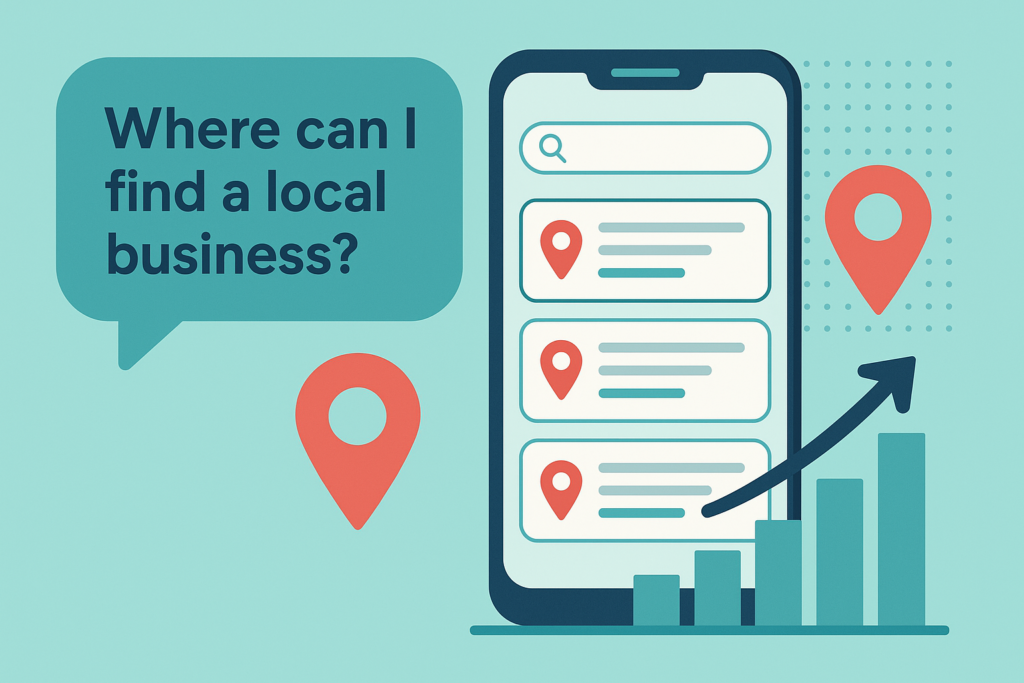
Long-tail, sentence-length searches now convert at nearly 10x the rate of single-word queries, and the profiles, bios, and link-in-bio pages still written for 2018-era search are quietly losing customers. In 2026, the brands winning are the ones whose profiles are structured to answer specific, conversational questions across Google, TikTok, Instagram, and AI assistants.
Why It Matters
The search engine isn’t a separate channel, it’s a downstream consumer of everything your profiles, captions, and landing pages publish. Google has confirmed that searches with five or more words are growing year over year, and AI assistants like ChatGPT, Gemini, and Perplexity are training users to type complete sentences instead of shorthand. That habit carries directly into Google, TikTok search, Instagram search, and even Pinterest’s predictive bar.
The reader who used to type "plumber New York" now types something closer to "best plumber accepting new patients near me that takes Delta Dental." The profiles built to be found in the first world get skipped entirely in the second. According to Google’s own search team, intent-matching has replaced keyword-matching as the underlying ranking signal, meaning every word in your bio, link-in-bio block, and caption is being parsed for meaning, not just match.
How Search Behavior Has Changed
Three forces converged to push search into long-form territory:
Voice search is now smartphone-native. Nearly 90% of voice queries originate on phones, and voice queries are always conversational. A request like "Hey Google, find me a plumber available this weekend nearby" is structured as a sentence, not a keyword, and the listing it surfaces is the one whose copy mirrors that phrasing.
AI chat influence is reshaping query habits. Hundreds of millions of people now use AI assistants daily. The habit of typing full questions in ChatGPT carries directly into how the same people search on Google, TikTok, and Instagram.
Google’s own evolution. Google now interprets intent and context, not just keyword matching. Per Google Search Central, the engine rewards content written in clear, direct language that answers a question outright.
This matters because every platform’s search engine is being trained on the same conversational signal. TikTok’s search bar autocompletes full questions. Instagram’s keyword search returns content that matches phrase intent, not just hashtags. Pinterest’s predictive search surfaces sentence-level queries. The platforms are converging on a single behavior.
The Numbers
Here are the headline figures on conversational search behavior:
- 5+ word searches convert at 1.58-1.94%, versus 0.17-0.35% for 1-2 word searches, roughly a 10x lift in conversion.
- 3-4 word searches sit in the middle at 1.02-1.61% conversion, buyers comparing options before committing.
- 90% of voice searches happen on smartphones, all conversational by structure.
- 5+ word queries are growing year over year on Google, per Google’s own confirmation.
- Long-tail queries have been shown in some studies to skew toward ready-to-buy intent, with these users having already decided to act.
“Long-tail, sentence-length searches convert at nearly 10x the rate of single-word searches. The people using specific queries have already decided they want the service, they’re just picking a provider.”
The implication is direct: the audience landing on your link-in-bio or landing page after a sentence-length search is the most ready-to-buy traffic you can capture in 2026. If they don’t see their exact intent reflected in your copy within two seconds, they bounce.
What Comes Next
Three trends are about to reinforce the shift further over the next 12 months:
AI Overviews and answer engines will source from structured copy. The pattern is consistent across Google’s AI Overviews, Perplexity, and ChatGPT search: clear, conversational, question-formatted copy gets cited. Bios and link-in-bio pages are increasingly part of the candidate pool.
Platform search bars are getting smarter. TikTok and Instagram are both surfacing search ads and trending phrase-level queries, moving closer to Google’s intent-matching model. Pinterest is already there.
Cross-platform consistency will become a stronger ranking signal. AI search engines compare a brand’s bios, Google Business Profile, link-in-bio, and website to validate identity. Inconsistent service descriptions hurt visibility in both classic search and AI Overviews. A "Roof repair contractor serving your metro area" phrasing on your website should match the same phrasing in your Instagram bio.
If your bio, caption, and landing page can’t answer a full-sentence question, you’re invisible to the highest-intent buyers searching right now.
What This Means for You
Identify a topic suitable for alignment with 2026 search trends for your profile and captions.
1. Rewrite every bio with intent phrases. Your Instagram, TikTok, LinkedIn, and YouTube bios are increasingly treated as citations by local and AI search. Don’t write “Plumbing Services.” Write “Emergency pipe repair, water heater installation, and drain cleaning for residential homes in your service area.” Use the same phrasing across every platform; our guide on profiles as local SEO citations walks through the NAP-consistency audit worth running quarterly.
2. Schedule conversational caption content. Instead of caption-as-headline, write captions that answer one specific question your audience asks. "What’s the best time of year to pressure wash a deck?" outperforms "Spring is here!" every time. Feedsta, an AI-powered social media platform, lets you batch these question-answer posts across TikTok, Meta, Pinterest, and LinkedIn in a single pass, so a week of long-tail captions doesn’t cost a week of your time.
3. Rebuild your link-in-bio around long-tail intent. Treat each block as the answer to a specific search query. "Roof repair contractor serving your metro area" will outperform "Our Services" for every voice and AI-search referral. Add click-tracking so you can validate which long-tail phrasings actually convert.
4. Audit against Google’s AI search guidance. Our breakdown of Google’s new AI search rules covers the specific content structures that get cited in AI Overviews, short sentences, plain language, and direct answers without the brochure copy.
The Bigger Picture
The shift from keyword search to conversational search isn’t a Google story, it’s a behavior story. Buyers describe what they want in full sentences across every channel they use, and the profiles, captions, and landing pages that match that phrasing win the click. Small and mid-sized brands have a real opening here: they can’t outrank the directories for "plumber New York," but they can absolutely own "emergency plumber for frozen pipes near me available tonight." Your profiles are the most flexible piece of owned content you have. Use them to answer the exact questions your highest-intent buyers are typing right now.
FAQ
What is conversational search?
Conversational search is the pattern of typing or speaking full-sentence questions into a search engine, AI assistant, or social platform search bar instead of using short keywords. Instead of "dentist New York," a user types "best dentist accepting new patients near me that takes Delta Dental." The shift has been driven by voice search adoption, AI chat tools like ChatGPT training users to type full questions, and Google’s evolution toward understanding intent rather than matching keywords.
Why do long-tail searches convert so much better?
Long-tail, sentence-length searches convert at 1.58-1.94% versus 0.17-0.35% for one or two word queries, roughly a 10x difference. The reason is intent: a buyer typing "emergency plumber for frozen pipes near me available tonight" has already decided to buy and is just picking a provider, while a buyer typing "plumber New York" is still browsing or researching.
How should I adapt my bios for conversational search?
Rewrite each platform bio to describe exactly what you do in customer language, not industry shorthand. Replace "Plumbing Services" with "Emergency pipe repair, water heater installation, and drain cleaning for residential homes in your service area." Include city names, specific services, and qualifying details buyers mention like insurance accepted, hours, and emergency availability, then use the same phrasing across Instagram, TikTok, LinkedIn, YouTube, and your Google Business Profile.
Related coverage