Figure AI’s 200-Hour Robot Run: What AI-Driven Discovery Means for Getting Found
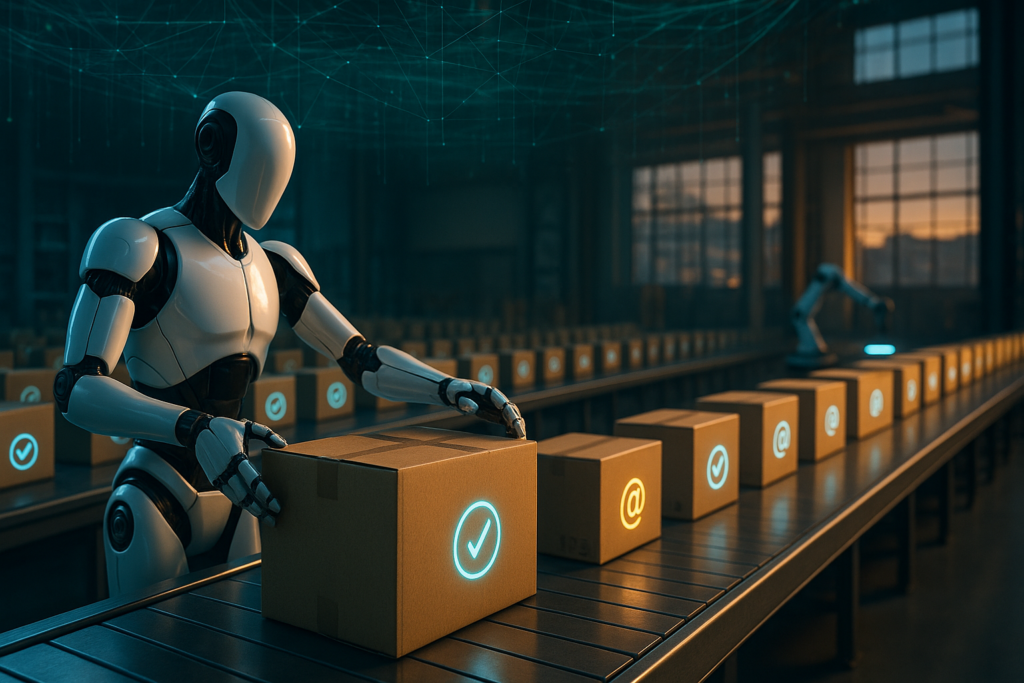
Figure AI’s F.03 humanoid robot sorted 249,560 packages over 200 consecutive hours at near-human speed, with no human intervention, no reset, and zero hardware failures. Three units rotated autonomously at the Sunnyvale facility from May 14 to May 22, 2026, each stepping onto a wireless charging pad while another kept working, and the entire run was livestreamed for anyone to watch. The robot milestone itself is news, but the bigger story is the loop behind it, the same perception-decision-action-retry loop that is now grading which brands get surfaced when AI does the discovery.
Why It Matters
Discovery on social is already AI-mediated. The same investor list backing Figure AI, Microsoft, Nvidia, Amazon, Jeff Bezos, and OpenAI, is also building the agents that increasingly answer “find me a creator for this campaign,” “recommend a brand that does X,” or “who is the best account to follow for Y.” Around 41,000 commercial robots are deployed in warehousing and fulfillment in 2026, per International Federation of Robotics tracking, and the AI procurement systems pointed at those operations pull the same kind of structured data signals when they decide who to trust on social.
For any brand, that means bios, handles, content cadence, and cross-platform consistency are no longer just brand hygiene. They are signals an AI agent uses to score whether you are real, active, and on-topic.
How the 200-Hour Test Worked
Figure AI ran a livestreamed 200-hour stress test on the F.03 humanoid at their Sunnyvale facility from May 14 to May 22, 2026. Three robots rotated autonomously, each stepping onto a wireless charging pad when needed while another kept working, and no human touched them for the entire eight days.
This is not a one-off lab demo. An earlier Figure model spent 11 months at BMW’s Spartanburg plant, loaded more than 90,000 parts, and helped produce more than 30,000 vehicles. Schaeffler signed a deal targeting 1,000 to 2,000 humanoid robots by 2032, and Figure is targeting late 2026 for limited home deployments at around $20,000 per unit.
The autonomy story matters to anyone running a content calendar because it proves the underlying loop, perception, decision, action, retry, works without humans in the chain. That same loop runs an AI agent reading your Instagram bio, parsing your posting history, and deciding whether to surface your brand to a buyer who never types a search query.
The Numbers
- 249,560 packages sorted in 200 consecutive hours
- 2.8 seconds per package, near-human speed
- 8 days of zero human intervention, zero hardware failures
- 90,000+ parts loaded across 11 months at BMW Spartanburg
- 30,000+ vehicles produced with humanoid assistance
- 41,000 commercial robots deployed in warehousing in 2026
- 340+ quick-service restaurant locations running at least one robot, a 61% year-over-year jump
- 1,000-2,000 humanoid robots targeted by Schaeffler by 2032
- $20,000 target unit price for late-2026 home deployments
You did not lose the bid on price or capability.
What Comes Next
Figure is moving from warehouse pilots to limited home deployments by late 2026. Logistics and fulfillment are already the largest vertical for commercial robots, and food service, particularly customer-facing roles in quick-service restaurants, is the fastest-growing category. Hospitals and elder care are evaluating humanoids for supply transport and sanitation.
Every one of those deployments comes with an AI agent layer that handles procurement, scheduling, vendor evaluation, and customer-side recommendations. When a buyer at a Schaeffler-equivalent plant asks an AI agent for a supplier, or when a household with a Figure unit asks “find me a service that does X,” the agent queries structured data, social profiles, business listings, content history, before it surfaces a name.
What This Means for Your Brand
For any brand, agency, or creator portfolio, the checklist now has two new line items.
First, treat your presence as structured data, not just storytelling. Your handle, bio, link, posting cadence, and category positioning need to match across TikTok, Instagram, LinkedIn, X, Pinterest, and YouTube. AI agents reading those profiles handle inconsistency the same way a procurement bot handles two different phone numbers across directories, by lowering your confidence score. A centralized publishing tool lets you push consistent bios, links, and cadence across every platform from one place, which is why multi-brand teams are moving to centralized publishing instead of keeping each platform in its own tab.
Second, your posting cadence is now a discovery signal, not just an engagement metric. We covered this in detail in our breakdown of how Google’s AI search box made posting cadence a ranking signal, and the same logic applies to the agent layer Meta, OpenAI, and others are wiring into search and ads.
A practical AI-readiness checklist:
- Handle and display-name consistency across every platform you actively use
- Bio that names your category in machine-readable language (no clever taglines that hide what you do)
- Link-in-bio with a structured, scannable list, short links, QR codes, and landing pages all win here
- Posting cadence regular enough to register as “active” (the agent layer counts recency)
- Content tagged with consistent topical keywords so the agent can group you correctly
A publishing tool can handle the cadence, multi-platform publishing, link shortening, and landing-page side of that list, freeing the human hours for the part agents cannot replicate yet, the actual creative. To see how you currently read to those systems, run a free BizScoreAI visibility scan: it shows how a business appears across AI assistants, including whether ChatGPT, Gemini, and Perplexity surface it at all.
The 200-hour robot proved autonomous AI works at scale. The next eight days, your public profile gets graded by it.
The Bigger Picture
The 200-hour robot was a demonstration that the underlying AI loop is stable, scalable, and ready for production. The next surface where that loop gets pointed is not another warehouse, it is the discovery layer that decides which social profiles, brands, and creators show up when a human, or an agent, asks an AI for a recommendation. The brands that win the next phase are not necessarily the loudest or the most viral. They are the ones whose presence reads as structured, consistent, and active to the systems doing the surfacing. Get that right now, while the window is open.
FAQ
What did Figure AI’s F.03 robot accomplish in May 2026?
Three F.03 humanoid units rotated autonomously through a livestreamed 200-hour stress test at Figure AI’s Sunnyvale facility from May 14 to May 22, 2026. They sorted 249,560 packages at a pace of one every 2.8 seconds, with zero human intervention and zero hardware failures, using wireless charging pads to swap in and out. An earlier Figure model had already spent 11 months at BMW’s Spartanburg plant, loading more than 90,000 parts and helping produce more than 30,000 vehicles.
Why does a 200-hour warehouse robot test matter for brands and creators?
The same investor list funding Figure AI, Microsoft, Nvidia, Amazon, Jeff Bezos, and OpenAI, is also building the agents that increasingly surface brands, creators, and content on behalf of human users. Those agents query structured data such as bios, handles, posting history, category tags, and link-in-bio destinations. Once the underlying autonomy loop is proven stable in a warehouse, it gets pointed at the next surface, which is consumer-facing discovery, so the data quality of your public profiles directly affects whether AI surfaces you.
What does an AI-ready social presence actually require?
It requires consistent handles, display names, bios, links, and posting cadence across every platform you use, with category positioning stated clearly in machine-readable language. AI agents cross-reference TikTok, Instagram, LinkedIn, X, Pinterest, and YouTube when validating a brand, and they lower confidence scores for inconsistent display names, vague bios, or stale posting cadences. Centralized publishing tools help push uniform bios, links, and cadence across platforms in one workflow, with recency and consistent topical keywords acting as additional trust signals to the agent layer.