Google Business Profile Optimization for Local Businesses: A Complete Guide to Driving Calls and Visits
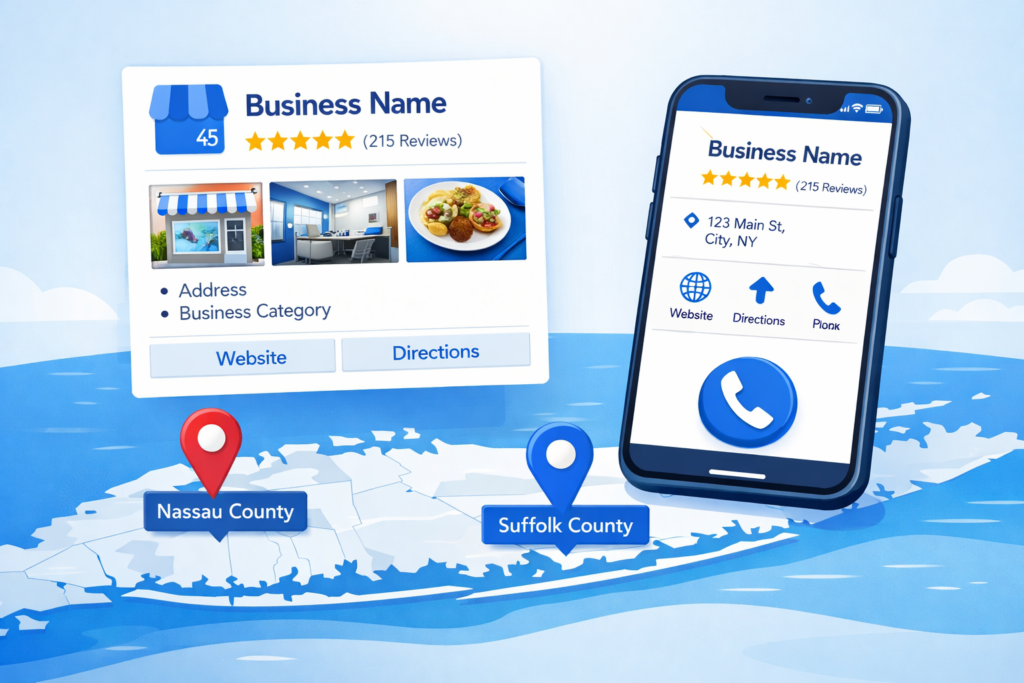
Google’s own behavioral data shows that businesses with more than 100 photos on their Google Business Profile get 520% more calls and 2,717% more direction requests than average. That’s no longer an SEO statistic, it’s a social media statistic. In 2026, your Google Business Profile behaves like a social channel: posts, photos, video, Q&A, reviews, and an AI summary layer sitting above the local pack. It belongs in your publishing calendar, not your annual checklist.
Why It Matters
For most local brands, Google Business Profile (GBP) is the first impression, before the website, before Instagram, before anyone knows the brand name. Google’s AI-powered search results have reshaped how local listings surface, pulling answers directly from GBP posts, attributes, and Q&A. A claimed-and-forgotten profile doesn’t lose ground gradually, it disappears from the AI overview entirely.
The opportunity is real. Local search still drives more calls, direction requests, and walk-ins than any other channel for service-area businesses. The catch: the operators winning the local three-pack are the ones treating GBP like another social platform, same cadence, same content discipline, same review-management muscle. Profiles with thinner reviews are now outranking established names because they publish weekly and respond fast.
What’s New / How It Works
The work that used to belong to “the SEO person” now belongs to whoever owns content cadence, which is the social media manager. GBP’s surface area in 2026 reads like a social platform:
- Weekly posts that behave like a mini-feed, with a 7-day visibility window.
- Photos that need refreshing monthly, the way you’d treat an Instagram grid.
- Video that pulls into the listing the way Reels pull into Instagram search.
- Q&A that mirrors a comment section, anyone can ask, anyone can answer.
- Reviews that function as social proof exactly the way shares and saves do on TikTok.
- An AI summary layer that pulls from your attributes and post copy to answer searcher questions before they ever click.
You don’t optimize a GBP listing once. You publish to it. The businesses that win in local search aren’t necessarily better at their craft, they’re better at consistently asking satisfied customers to share their experience, posting weekly, and refreshing photos. That’s social media discipline applied to a different surface.
Your Google Business Profile is the most underrated social channel your brand owns, and it’s the one feeding every AI overview now.
The Numbers
Here’s what Google’s own data and the 2026 local search landscape say a social media manager should be tracking:
- Profiles with 100+ photos see 520% more calls than average.
- Those same profiles see 2,717% more direction requests.
- Each GBP post stays visible for 7 days, consistency beats a single big drop.
- Google’s updated insights dashboard now tracks how often your business appears in AI-generated search summaries.
- Business descriptions are capped at 750 characters, write for humans first.
- The local three-pack still captures most local clicks, but the AI overview now sits above it.
A natural, confident business description outperforms a keyword-stuffed one every time. Put plainly:
“Family-owned HVAC company serving local homeowners since 2005” works far better than cramming in every possible search term.
That voice, specific, plain, location-anchored, is what feeds Google’s AI overviews. Stuffing keywords now actively hurts; you get filtered out of conversational answers.
What Comes Next
Google’s AI overview is going to keep pulling more from GBP fields and less from generic web pages. Two shifts are already visible in 2026:
- Attribute-driven answers. When someone asks Google “is there a women-owned coffee shop with wheelchair access nearby,” the answer comes from attribute checkboxes, not your website body copy. Every applicable attribute belongs on your profile, including the new AI-pulled summary tags.
- Conversational local search. Voice and chat queries are routing through AI summaries that prefer profiles with recent posts, fresh photos, and active Q&A. Static profiles get skipped. Profiles with weekly cadence get cited.
Expect Google to keep expanding categories, attributes, and post types throughout 2026. Google’s own GBP support docs get updated quietly, review them quarterly. The social media manager who treats GBP like another publishing channel, same cadence, same content templates, compounds advantage. The operator treating it as a yearly maintenance task falls behind.
What This Means for You
If you’re the social media manager for a multi-location brand or an agency running profiles for clients, your job description just got bigger, but the workflow you already have mostly transfers. Repurpose Reels into GBP video. Repurpose Instagram carousels into GBP photo updates. Repurpose review-request templates from your social inbox into GBP review asks. Fold GBP into the same publishing calendar you use for the rest of your channels with Feedsta so the cadence is one workflow, not seven.
The five high-leverage moves for any social media manager taking GBP seriously this quarter:
- Add GBP posts to your weekly content calendar, even short updates, weekly.
- Push fresh photos monthly, ideally pulled from the same shoots you’re producing for Instagram, TikTok, and your link-in-bio.
- Build a review-ask that triggers on every completed job. This exact line works: “If you were happy with the service, a Google review really helps us out.” Don’t overthink the wording.
- Respond to every review within 48 hours, the negative ones especially.
- Seed your Q&A with your top 10 FAQs. If you don’t answer them, a competitor or a stranger will.
We’ve covered the publishing-side of GBP in depth in our Google Business Profile social media manager’s guide, and the review engine that feeds all of this lives in the social-first review playbook. Plug GBP into the same content pipeline as the rest of your channels with Feedsta’s scheduling and analytics, one calendar, one approval flow, one place to see what’s actually producing calls.
The Bigger Picture
Google Business Profile stopped being an SEO task years ago, most operators just didn’t notice. In 2026 it’s the most underrated social channel a local brand owns, sitting at the top of search results, feeding the AI overview, and quietly producing more calls and direction requests than any individual Instagram post ever will. Treat it like the publishing channel it is, run it on the same cadence as the rest of your social, and the calls follow.