What Google Zipper Doodle Teaches Social Media Managers
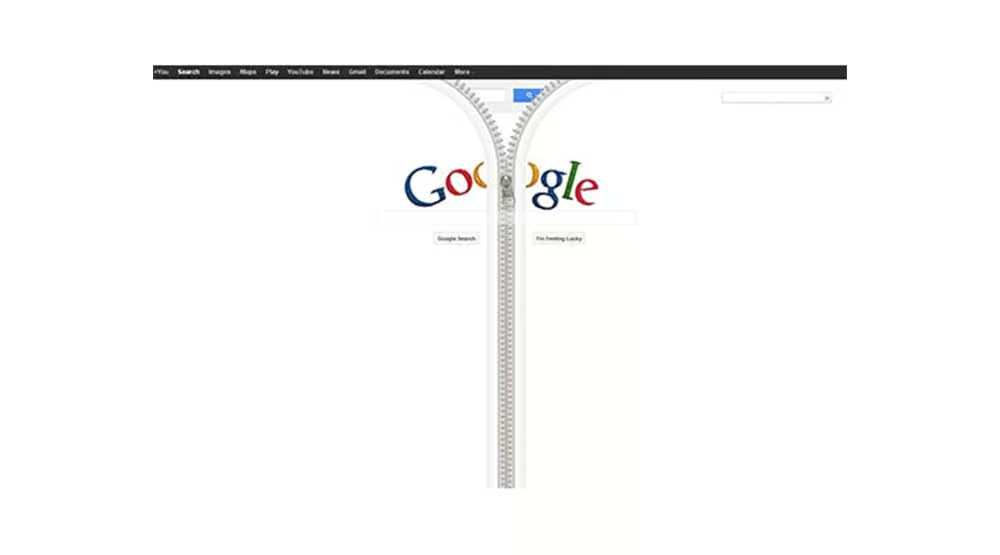
When Google’s homepage greeted users with a giant interactive zipper running down the middle of the screen, the internet collectively stopped scrolling. The illustration, which split open when clicked, marked the 132nd birthday of Gideon Sundback, the Swedish-American engineer who refined the modern zipper in 1913. For social media managers in 2026, the moment is a case study in how a single piece of culturally timed creative can dominate attention without a single dollar of paid media.
Why It Matters
Cultural moment marketing, tying brand creative to anniversaries, observances, and shared cultural memories, remains one of the most efficient ways to earn organic reach on social media. Posts attached to a recognized cultural moment routinely outperform standalone brand content, and AI-driven feed algorithms on platforms like TikTok, Instagram, and X reward content that captures contemporary search and conversation spikes.
Google’s Doodle program, launched in 1998 with a Burning Man-themed homepage logo, has produced thousands of individual artworks honoring scientists, artists, civil rights leaders, and the unsung inventors behind everyday objects, including, in this case, the zipper. As Google’s own Doodle archive documents, the strategy is simple: make a global brand feel personal by celebrating the people most people don’t know they should be celebrating.
For social teams managing multiple brands, the lesson is direct. The moments that win attention aren’t the ones every competitor is targeting, the Super Bowl, the New Year, every major holiday. They’re the obscure anniversaries, the inventor birthdays, the niche cultural touchstones that your audience knows but isn’t being reminded about anywhere else.
The brands winning attention in 2026 aren’t fighting over holidays. They’re owning the obscure anniversaries everyone else forgot to celebrate.
How Google’s Zipper Doodle Worked
The execution had three components worth dissecting.
First, the Doodle was interactive:
“There is a huge zipper running down the middle of the Google home page. When you click on the logo or pull down the zipper part of the logo, it splits open.”
That single mechanic, click and the page unzips to reveal the search bar, turned a passive impression into an active engagement. Users who had never thought about the zipper as a piece of engineering suddenly had a five-second relationship with it.
Second, the timing was specific. The Doodle marked the 132nd birthday of Gideon Sundback. Not a round-number anniversary. Not a holiday anyone else was celebrating. Google identified a date that mattered to one specific story and owned that day’s cultural moment alone.
Third, the creative was educational. Google “created this page to celebrate the 132nd birthday of Gideon Sundback, a Swedish engineer credited with helping to develop the modern zipper.” The Doodle didn’t sell anything. It taught the audience something they didn’t know, and audiences reward brands that teach.
The Numbers
The cultural moment marketing playbook is built on metrics that any social media manager can pursue:
- 1998, the year Google launched its Doodle program with a Burning Man tribute.
- 4,000+ Doodles produced since, each generating millions of impressions and significant search lift on the subject’s name.
- 132 years, the specific, non-round anniversary Google chose, proving that obscure dates can outperform obvious ones.
- 1913, the year Sundback’s “Hookless Fastener” patent was filed, the date Google’s creative team built their narrative around.
- 5 seconds, roughly the time a user spent interacting with the unzipping mechanic, an eternity compared to the average homepage glance.
What Comes Next
Cultural moment marketing is shifting in 2026 in two clear directions. AI-assisted content creation now lets small social teams produce custom creative for niche anniversaries that would have required a design budget a decade ago. Modern social platforms bundle cultural calendars, scheduling, and AI-generated visuals into a single workflow, letting a one-person social team run a cultural-moment program the same way a brand like Google runs Doodles.
The other shift is in distribution. Where Google used its own homepage as a billboard, modern brands need cross-platform reach. A cultural moment that lives only on Instagram leaves TikTok, LinkedIn, and X audiences uncaptured. The brands winning in 2026 are the ones publishing the same cultural moment across every channel their audience uses, in the format each platform rewards.
What This Means for You
If you’re managing social for a brand, or several brands, Google’s Zipper Doodle is a template you can borrow this quarter.
Start by building a cultural calendar of obscure anniversaries that map to your brand story. A pet brand can own pet milestone days. A fitness brand can own the birthdays of pioneering athletes. A SaaS brand can own the anniversaries of the inventions that made their category possible. Use the Feedsta app to map those moments across every platform your audience uses, then build creative once and adapt it for TikTok, Instagram, Pinterest, X, LinkedIn, and YouTube.
Second, treat cultural moments as a top-of-funnel acquisition channel, not a vanity post. Tie each cultural-moment piece to a tracked link in your link-in-bio or shortened URL so you can attribute the audience growth back to specific creative. If you’re new to that workflow, our guide to 301 vs 302 redirects for social media managers covers the link-hygiene basics that protect your analytics.
Third, treat the moment as a content seed, not a single post. The same Sundback story can become a 90-second TikTok, a five-slide Instagram carousel, a LinkedIn thought piece on engineering anniversaries, and a Pinterest Idea Pin. For the broader cross-platform playbook, see the top 2026 SEO moves every social media manager should own.
Tools to start with on the Feedsta platform: the AI content creator for first-draft creative, the multi-platform scheduler for same-day publication across channels, and link-in-bio with the fsta.li shortener for attribution.
The Bigger Picture
The Google Zipper Doodle is more than a decade old, but it still teaches the lesson most brands are too busy chasing trends to learn, that the most efficient way to earn attention is to teach your audience something they didn’t know, on a date nobody else is talking about. Cultural moment marketing in 2026 isn’t about volume; it’s about specificity. Pick the obscure anniversary your audience will love, build the creative once, ship it across every channel, and measure the lift. That’s the modern Doodle, and it’s now available to any social team with the right calendar and the right tools.