Link Earning for Social Media Managers: The 2026 Backlinks Playbook
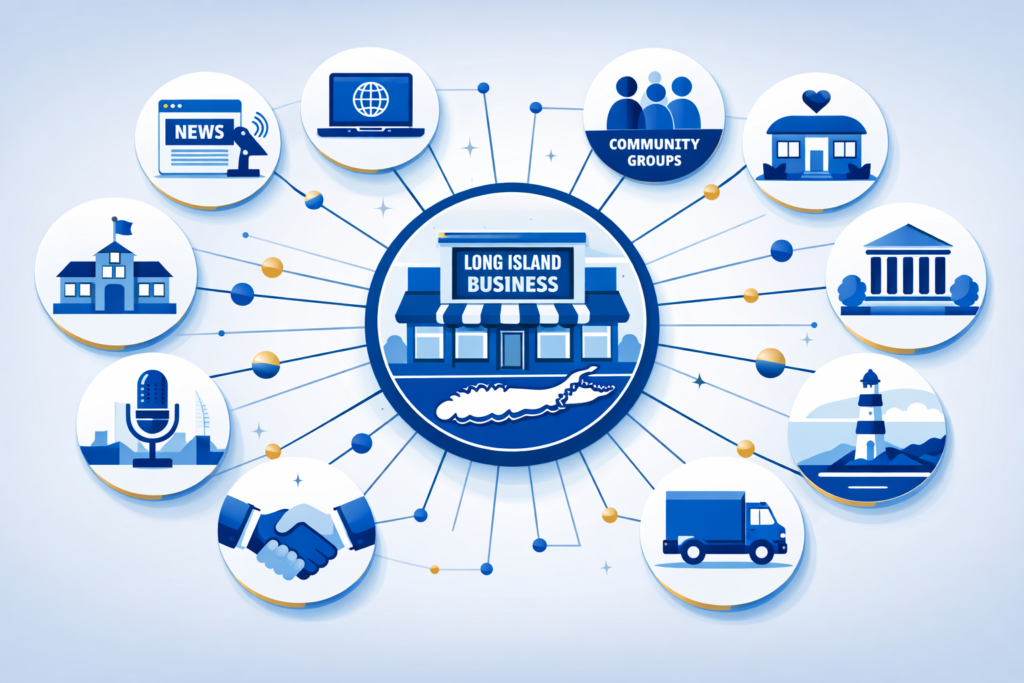
Google’s 2025 link quality crackdown rewrote how local businesses earn backlinks, and in 2026, the work increasingly belongs to social media managers. The directory-and-guest-post grind no longer moves rankings. What does move them is publishing reference-worthy content and pushing it through the social channels brands already own, so journalists, partners, and local sites cite it on their own.
Why It Matters
Backlinks remain one of search’s strongest ranking signals, but the cost of getting them wrong climbed sharply this year. Google’s March 2025 spam update and the link quality refinements that followed measurably tanked sites that leaned on private blog networks, paid placements, and mass directory submissions. Per Google Search Central’s spam policies, the algorithm now reads context, whether a link sits inside genuine editorial content, whether the referring domain is topically relevant, and whether the relationship behind the link looks real.
For social media managers running content across TikTok, Instagram, LinkedIn, YouTube, X, and Pinterest, that’s a structural shift. The same audience-building behaviors that grow a feed, original data, expert commentary, useful tools, community involvement, are now the same behaviors that earn links. Social is no longer the distribution layer beneath SEO. It’s where link-earning content gets its first audience, its first shares, and the first signals that something is worth citing.
What’s New / How It Works
The strategic shift is from link building (asking) to link earning (being asked). The 2026 framework comes down to a single test: every piece of content you publish should pass it, would someone reference this even if you never asked them to?
That test maps cleanly onto social work. The formats that pass it are the same ones that perform on social:
- Original local or industry data, quarterly market reports, seasonal trend data, survey results from your audience
- Comprehensive resource guides, exhaustive references that consolidate scattered information
- Expert commentary on regional or industry trends, fast, plain-language breakdowns of news
- Tools that solve a specific problem, calculators, checklists, templates
In 2026, the content that earns links is the content that demonstrates firsthand expertise and local knowledge that no language model can generate on its own. That’s the part social teams are uniquely positioned to deliver. AI can help organize and edit. The substance has to come from the brand’s actual operating experience, and the social team is closest to the audience that confirms what’s actually interesting.
The Numbers
The shift is visible in what’s working and what’s getting penalized:
- Ten topically relevant links from local or industry sites typically outperform a hundred generic blog links with no contextual connection
- One deeply researched piece per month beats four weekly thin posts for link earning over a year
- .edu and .org backlinks from genuine sponsorships and partnerships carry outsized authority weight
- Speed and specificity, publishing within days of a news event, is now a defining competitive advantage
“Stop asking for links and start creating reasons for them to happen. Every piece of content you publish should answer the question: would someone reference this even if I never asked them to?”
What Comes Next
The measurement layer is shifting in lockstep. Tools like Ahrefs, Semrush, and Google Search Console still surface referring domains, anchor text, and authority scores, but the metric that matters most in 2026 is topical relevance. A handful of links from local news outlets, industry trades, and community organizations now drive more visibility than huge volumes of generic links ever did.
Consistency is the second compounding factor. Social media managers already run editorial calendars. The 2026 link-earning move is to bend that calendar around the intersection of brand expertise and community interest, pick the formats that attract citations, double down, and monitor competitors’ backlink profiles for openings. If a local publication linked a competitor’s data study, that publication is probably open to your angle on a related topic.
What This Means for You
If you manage social for a brand, your own or a roster of clients, the link-earning shift changes three concrete things about how you work.
First, your content cadence should anchor on linkable assets, not just engagement bait. One quarterly data report, one annual industry survey, or one definitive resource guide per quarter will earn more authority over twelve months than fifty trending Reels. The Feedsta scheduling stack is built for exactly this kind of multi-brand, multi-platform distribution, a single linkable asset reformatted into a TikTok teaser, a LinkedIn long-form post, an Instagram carousel, a YouTube breakdown, and a Pinterest pin, all calendared in one place.
Second, your link infrastructure has to do real work. Every social post that points back to your linkable asset is a chance to track attribution. Inside the Feedsta app, branded short links, link-in-bio, and QR codes connect each social touch back to the asset journalists and partners eventually cite. If you haven’t audited how your link infrastructure interacts with redirects yet, our breakdown on 301 vs 302 redirects for social media managers covers the traps that quietly kill attribution.
Third, your analytics should track which assets are actually getting cited, not just liked. Pair your social analytics with backlink monitoring so you can connect a viral LinkedIn post to the local-news pickup that followed. If you want the broader playbook on how social drives search visibility in 2026, our complete SEO guide for social media managers sits next to this one.
Stop asking for links. Start being the source. Every linkable asset you publish is a piece of social-distributed authority your competitors can’t outsource to AI.
The Bigger Picture
Link earning sounds like an SEO problem, but in 2026 it’s a content distribution problem, and content distribution is the social team’s home turf. The brands that win the backlink game next year won’t be the ones with the biggest outreach lists. They’ll be the ones whose social managers built a publishing engine that turned firsthand expertise into linkable assets, pushed them across every relevant platform on a steady cadence, and tracked which ones earned citations. That’s not a side project bolted onto a content calendar. That is the content calendar.