NAP Consistency for Social Profiles: The 2026 Discovery Playbook
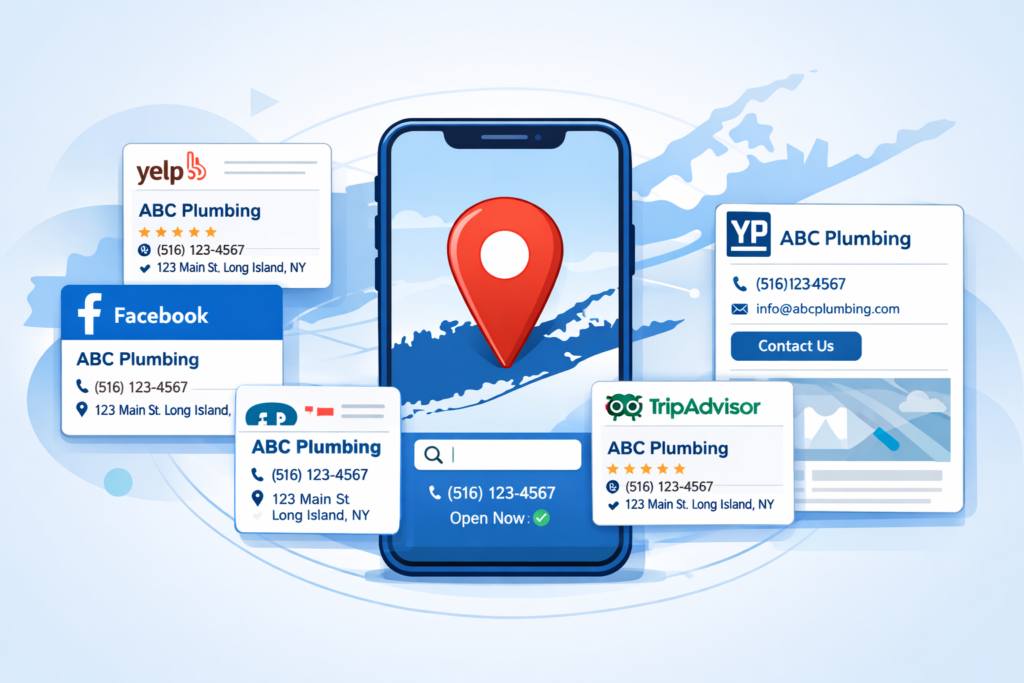
If your local business can’t be found in 2026, the culprit probably isn’t your keywords, it’s the fact that your name, address, and phone number look different across TikTok, Instagram, your Google Business Profile, your link-in-bio, and the QR codes on your last flyer. NAP consistency used to be a website hygiene issue. Today it’s a cross-platform publishing problem, and social media managers own it.
Why It Matters
Most local discovery in 2026 happens before someone ever loads your website. They tap your Instagram bio, scan a QR code on a postcard, ask ChatGPT for “best plumber near me,” or pinch through a TikTok comment thread hunting the brand handle that’s running the deals. Every one of those surfaces is pulling the same business identity from a different signal, and every mismatch is a quiet trust hit.
Put bluntly: search engines in 2026 are smarter than ever at cross-referencing business data and measuring how real people interact with your website. That cross-referencing isn’t limited to old-school citations on Yelp and Bing Places anymore. AI search systems are stitching together your Instagram bio, your Facebook About page, your YouTube channel description, your TikTok contact card, and your link-in-bio landing page into a single entity profile. If those don’t agree, you don’t win.
What’s New: NAP Consistency Is Now a Social Publishing Problem
Google’s entity-resolution work has matured to the point where a single mismatched suite number on one network can fragment your knowledge-graph identity. That isn’t theoretical. Apple Intelligence, Google’s AI Overviews, Perplexity, and ChatGPT search all pull from the same broad web of business signals, and they weight social platform data heavily because that’s where the freshness lives.
That has pushed three problems onto social media managers’ plates that they didn’t own three years ago:
- The “About” sections, contact fields, and pinned-comment templates across every network need to match the version on the Google Business Profile, character for character.
- Link-in-bio landing pages, short links, and QR-code destinations need to point to URLs that load fast, work on a phone, and surface the same NAP block prominently.
- Multi-brand and multi-location teams have to enforce the same standard across every account they manage, with versioning controls that don’t fall over the first time a junior manager edits a profile.
The Numbers: What Inconsistency Costs You
Several real, recurring failure patterns are worth pulling out:
- Even minor formatting differences (“St.” vs. “Street,” a tracking phone number vs. the main line, an outdated suite number) measurably weaken citation strength.
- Data aggregators like Data Axle, Localeze, and Foursquare feed information to dozens of smaller directories, so one bad entry can propagate errors across the entire web.
- Multi-location brands need separate NAP management per location, a dental practice with offices in two different towns can’t share one profile record.
- Interaction to Next Paint (INP) has replaced First Input Delay as the responsiveness signal Google measures, and it applies to whatever page your social links point to.
Google has made it clear that user experience isn’t just a nice-to-have, it’s a measurable ranking signal, a shift that pulled Core Web Vitals from a developer concern into a marketing-team KPI.
For a social media manager, that translates directly: the landing page behind your bio link is now ranking infrastructure. Google’s INP guidance and the Core Web Vitals documentation are reading material for anyone who owns the link in the bio.
In 2026, your link-in-bio is a ranking surface, your social profiles are citations, and consistency is the only growth hack left.
What Comes Next
The trajectory is obvious if you’ve watched the last two algorithm cycles. AI search engines are getting better at entity resolution every quarter, which means they’re getting harsher about disagreement between sources. The brands that win the next eighteen months are the ones that treat their social presence the way they used to treat their website footer, as a single source of truth, published the same way, in the same format, across every surface a customer might touch.
Expect three things to accelerate:
- AI Overviews and ChatGPT-style answers will lean harder on social platform metadata, not just traditional citation directories.
- Engagement quality on the page behind a social link (time-on-page, INP, conversion) will feed back into how often that link gets surfaced organically.
- Multi-brand and multi-location teams without a centralized publishing layer will lose ground to operators who automated the consistency problem.
What This Means for You
If you’re running social for a local brand, or ten of them, this is a workflow problem you fix once and reap from for years. Three concrete moves:
First, audit every profile you own against your Google Business Profile and pick the canonical version. Same business name (no extra “LLC” on one network and not another), same phone number, same address formatting. Centralize that record so every future edit pulls from it. Pair the audit with the moves in our GBP citations vs. paid services playbook so you know where your citation budget should actually go.
Second, get your link-in-bio, short links, and QR-code destinations pointing to pages that load fast, look right on a phone, and reinforce the NAP block above the fold. That’s where the UX-as-ranking-signal work pays off, your social links are now UX-graded by the same system that grades your website.
Third, build the consistency into your publishing process so it doesn’t decay. Feedsta’s multi-brand workspace exists for exactly this, one profile record, scheduled across every network, with version control so a typo on Tuesday doesn’t fragment your citation graph by Friday. Layer in the migration steps from how URL changes break your social stack and you’ve covered the three failure modes that account for most local-discovery losses in 2026.
The Bigger Picture
Local search and social media used to be different jobs. They aren’t anymore. The same trust signals that decide whether you appear in Google Business Profile results now decide whether ChatGPT recommends you, whether Instagram surfaces your handle to nearby users, and whether the QR code on your truck door actually converts. The social media manager who owns NAP and UX as part of the publishing workflow is the one keeping the brand findable, across every surface, in every format, every day.