How to Build a Content Marketing Strategy That Actually Works for Local Small Businesses in 2026
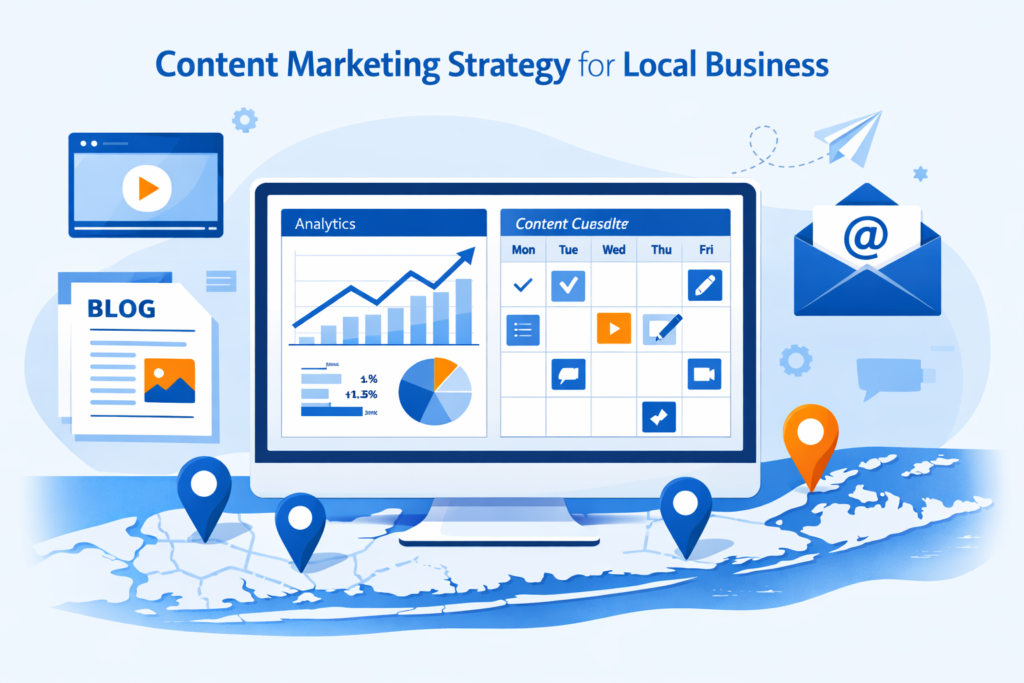
Most small businesses in 2026 are growing audiences and pipeline by running a deliberate, audience-first social content marketing strategy measured by conversions rather than vanity metrics. The brands winning today pick two platforms where their customers actually live, map content to buying-stage intent, and publish on a consistent cadence for at least six months before judging results. The gap between random posting and strategic publishing is where competitive advantage now lives.
Why It Matters
The average SMB juggles four to six social platforms simultaneously, TikTok, Instagram, Facebook, Pinterest, LinkedIn, X, YouTube, each with different formats, audiences, and algorithm quirks. According to Pew Research Center, the large majority of U.S. adults use at least one social platform, and a growing share of buying journeys now starts on social long before anyone touches a Google search box.
Most operators publish reactively. They never look at what their audience actually searches for or asks. The result is predictable: low reach, no conversions, and a vague sense that social isn’t working. The strategy is missing.
What’s New / How It Works
An effective social content marketing strategy in 2026 rests on four pillars. These principles are often framed for local businesses, but they also apply to anyone managing brand or creator accounts at scale.
Audience before product. The biggest mistake brands make is starting with what they want to say instead of what their customers need to hear. Start with the questions your sales team or DM team actually receives. Pull the objections that come up before purchase. Those inputs build a content backlog that outperforms keyword research on its own.
Intent over keywords. A query like “best HVAC company near me” sits at a very different stage than “how often should I replace my air filter.” Both deserve content. One is bottom-funnel; the other is top-funnel. A strategic calendar covers every stage of the journey, not just the easy commercial-intent terms.
Native format mix. The 2026 core mix is long-form (blog or LinkedIn article), short-form video (Reels, Shorts, TikTok), and email. Trying to be everywhere destroys consistency. Pick two platforms where your audience actually lives, and dominate them.
Measurement loop. Publish, measure, learn, refine. Track visibility (reach, search rankings, AI Overview citations), engagement (saves, comments, scroll depth), and conversions (DMs, link clicks, form fills, sales). Everything else is noise.
The Numbers
- 800 words: the minimum recommended length for a long-form blog post that earns search visibility
- 60 seconds: the hook window for Reels, Shorts, and TikTok in 2026
- 1-2: substantive content pieces per week, minimum cadence
- 6 months: minimum runway before evaluating whether a content strategy is actually working
- 3: metric categories that matter, visibility, engagement, conversions
- 4-6: platforms the average SMB now juggles simultaneously
“A strategy without execution is just a wishlist”, a line that lands harder in social publishing than in traditional SEO, because publishing cadence is where most content strategies actually die.
Content marketing isn’t a posting contest, it’s an audience-first system that compounds across every social platform you publish to.
What Comes Next
The shift now is toward AI-assisted drafting paired with human editing. AI is a strong drafting assistant for outlines, captions, and first-pass video scripts. It is a weak final author. Google’s helpful content guidelines explicitly reward original perspective and demonstrated expertise, and the same signals are surfacing in TikTok and Instagram ranking behavior. Thin, undifferentiated AI output gets buried; AI plus a real point of view ranks.
Repurposing is the second compounding move. A single well-researched pillar piece can become a Reel, a carousel, an email, a LinkedIn post, and three YouTube Shorts. The play isn’t to create more content, it’s to create one strong piece of source content and atomize it across formats. That’s where multi-brand teams using a unified calendar pull ahead of competitors managing each platform manually.
Expect platform-side investment to accelerate too. Meta, TikTok, and Pinterest are all rolling out native AI editing, scheduling, and analytics throughout 2026. Teams that consolidate onto a single social management platform instead of jumping between native apps will move faster every week, and the gap will widen each quarter.
What This Means for You
If you’re managing more than one brand, more than two platforms, or more than one stakeholder, your strategy lives or dies in the planning and scheduling layer. That’s the practical work, and it’s where most agencies and SMBs lose hours every week to swivel-chair publishing.
A few moves to put into your workflow this quarter:
Build a real content calendar instead of posting reactively. Map two to four pillar topics that match what your audience actually asks, then atomize each one across the formats your platforms reward. If you need a structured starting point, the 6-step social media content marketing process for 2026 breaks the cycle into research, calendar, creation, optimization, distribution, and measurement.
Treat scheduling like a strategic asset, not a chore. Batch a week or month of content in one session, queue it with proper UTM tags, and let platform-specific timing handle itself. Feedsta, an AI-powered social media platform, was built specifically to handle multi-brand and multi-platform queueing without forcing you to log into each native app and re-paste the same caption five times.
If you serve a geographic market, the local content strategy 2026 playbook covers ways to add geographic context to posts without sounding robotic or templated.
Measure monthly, not weekly. Most social KPIs are noisy at the week scale. Look at the trend over 30 days, kill what isn’t producing, and double down on the formats that are. A piece that ranks on page two for a valuable query should be updated and strengthened, not abandoned for the next shiny topic.
The Bigger Picture
The brands compounding in 2026 aren’t outspending competitors, they’re out-systemizing them. A documented content strategy, a calendar that maps to real audience questions, a format mix that matches platform-native behavior, and a measurement loop that kills dead weight is what separates social accounts that grow from the ones that plateau. Content is still the long game. Social is just where the game is now played.
FAQ
What is a social content marketing strategy?
A social content marketing strategy is a documented plan for what you publish on each platform, who it’s for, why you’re publishing it, and how you measure whether it’s working. It maps audience questions and buying-stage intent to specific formats like long-form posts, short-form video, and email on the two or three platforms where your audience actually spends time.
How often should a local small business post on social media in 2026?
For most SMBs and creator brands, the minimum cadence is one to two substantive content pieces per week per committed platform, plus daily lightweight engagement like stories, replies, and shares. Quality beats volume, and consistency over six-plus months matters more than raw output, so pick a cadence you can sustain and hold it.
How long does it take a content marketing strategy to actually work?
Plan for a minimum of six months of consistent publishing before evaluating results. Compounding effects on social and search typically don’t appear in the first quarter, and most brands quit at month three, right before the trajectory turns.