Why Social Media KPIs Mislead in the AI Search Era
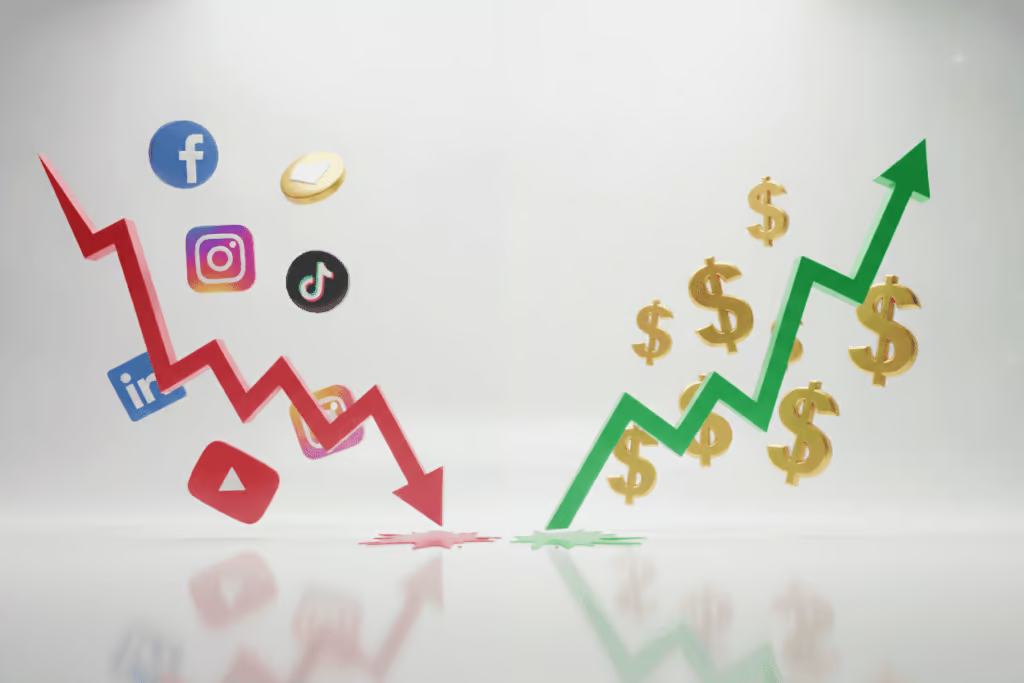
Social media KPI dashboards built on reach and raw clicks are misleading in the AI search era. Year-on-year organic traffic is sliding while sales stay flat or climb, because the research stage of the buying journey has moved off-site into search results pages, product grids, AI Overviews, and LLM chats. The clicks you used to count as proof of work are being absorbed upstream, and the click that survives often carries more intent than three that came before it.
Why It Matters
For more than a decade, the playbook for search and social assumed that more reach produced more clicks, and more clicks produced more results. If the number grew, you were winning. If the number fell, something was wrong. The clean line is getting hard to defend, because people now learn about products earlier in their journey, on channels you don’t control.
This isn’t a fringe theory. We saw it directly when DuckDuckGo logged a 28% traffic spike as users fled AI-stuffed search experiences, evidence that discovery behavior is fragmenting fast. Google itself now folds summaries directly into results through its AI features in Search, which means a shopper can compare options, read review snippets, and check prices before a single click reaches anyone’s page or profile.
What’s New: The Research Click Is Disappearing
Picture how someone shopped ten years ago. They’d start broad, “best leather belts”, and bounce through a string of pages. That older journey would send them to review sites, category pages, maybe some affiliate pages calling themselves review sites. Then they would refine the search. Every one of those steps was a click you could count. Awareness, interest, consideration, most of it happened somewhere measurable.
Now the modern results page does that work itself. On mobile especially, a user sees sponsored products, organic product grids, star ratings, prices, discounts, and an AI Overview before they reach any website. Google is starting to behave like the product listing page. If someone uses an LLM, they may ask a hyper-specific question and get a shortlist before visiting a single site. Awareness, interest, and consideration now happen off your turf. The click still comes, it just arrives later, and from a far more decided person.
That changes what a click does. The person landing on your page or tapping your link-in-bio may not be browsing six other tabs anymore. By the time they arrive, they may already know what they want. They’re not at the start of the journey; they already want to act.
The Numbers and Signals That Actually Matter
If reach and raw traffic are losing meaning, what takes their place?
- Clicks to your conversion page (product pages, landing pages, link-in-bio destinations), where intent actually shows up.
- Conversion rate on that page, if a ready buyer arrives and bounces, something is missing.
- Click-through rate in crowded surfaces where you sit beside competitors selling the same thing.
- Revenue attributable to organic and social, the language leadership actually understands.
- Merchant and feed signals, titles, images, pricing, promotions, and reviews that decide whether your product even earns the tap.
“Winning may now look like fewer clicks, but better clicks.”
That single line reframes the whole dashboard. A person who lands after seeing your product in a grid, scanning an AI summary, and comparing prices is not the same as someone who clicked a top-of-funnel post out of idle curiosity. The first visitor is motivated. The landing page is now the conversion page, and it has to work far harder than it used to, answering the last questions a buyer used to resolve elsewhere.
Reach was never the prize. The new scoreboard ranks posts higher when they reach a buyer at the moment of decision.
What Comes Next
The bigger warning is about how we prove any of this works. Most teams still rely on before-and-after reporting: make a change, wait, compare. The problem is that everything else changes too, a sales season, a competitor’s price cut, a core algorithm update, a SERP redesign. You can never cleanly answer “what happened while our change was live?” That’s why controlled A/B testing, with proper control groups and multiple metrics, is becoming the only honest way to attribute results in a noisy environment.
There’s also a tempting set of AI-native metrics on the horizon, brand sentiment inside AI models, share of voice in AI chats, query clusters from LLM tools. The advice is to watch them but not to build board reporting on them yet: outputs vary, personalization skews answers, and there’s no reliable volume data the way classic search offers. We’ve made a similar case about how posting cadence is becoming a discovery signal rather than a vanity stat, the measurement layer is still catching up to the behavior.
What This Means for You
When a reach chart starts falling, resist the panic. Reach softening while sales hold can mean the funnel is rearranging itself, not that the effort is failing. The job is to rebuild reporting around intent and revenue and to make sure the destination is ready for a buyer who already decided.
Practically, that means three moves. First, treat your link-in-bio and landing pages like conversion pages, not afterthoughts, they may be the first and only surface a buyer touches. Feedsta, an AI-powered social media platform, describes itself as built for exactly this: scheduling and publishing across TikTok, Instagram, LinkedIn, Pinterest, and more, then routing every post to trackable landing pages, short links, and link-in-bio destinations so you can see which content actually drives action, not just impressions. Second, instrument the whole path so you can report revenue, not reach. Third, audit how discoverable you are on the surfaces now doing the research work, because if AI assistants are shortlisting products before anyone clicks, you need to know whether they recommend you at all.
The Bigger Picture
Ecommerce isn’t shrinking and neither is social, the money is still there, the journey just changed shape. The clicks you used to count as proof of work are being absorbed by AI summaries, shopping modules, and chat assistants, but commercial demand hasn’t evaporated, and the click that survives often carries more intent than three that came before it. Teams that succeed over the next few years will stop defending an old narrative to leadership and start measuring the moment that matters: not who looked, but who arrived ready to buy.
FAQ
Why are my clicks falling while revenue stays steady?
Because the research stage of the buying journey has moved off your site. Shoppers now compare products, read reviews, and check prices inside search results, product grids, AI Overviews, and LLM chats before they ever click through. The early, low-intent research clicks you used to count are being absorbed by those surfaces, so a smaller traffic number can sit right next to stable or rising revenue. It reflects the funnel rearranging itself rather than performance dropping.
Which social media KPIs should I track instead of reach?
Shift attention to intent and revenue signals. Watch clicks into your conversion pages (product pages, landing pages, and link-in-bio destinations), the conversion rate on those pages, click-through rate in crowded competitive surfaces, and revenue attributable to organic and social traffic. Feed and listing quality, including titles, images, pricing, promotions, and reviews, also matter because they decide whether your product earns the tap at all.
Are AI search metrics like share of voice ready to report?
Not yet. Metrics like brand sentiment inside AI models, share of voice in AI chats, and query clusters from LLM tools are worth watching, but they are too early to anchor board reporting. AI outputs vary between runs, personalization changes the answers, and there is no reliable query-volume data comparable to classic search. Keep your core reporting built on intent, conversion, and revenue signals you can verify and defend to leadership.