Social Media Landing Pages: The Conversion Math You’re Missing
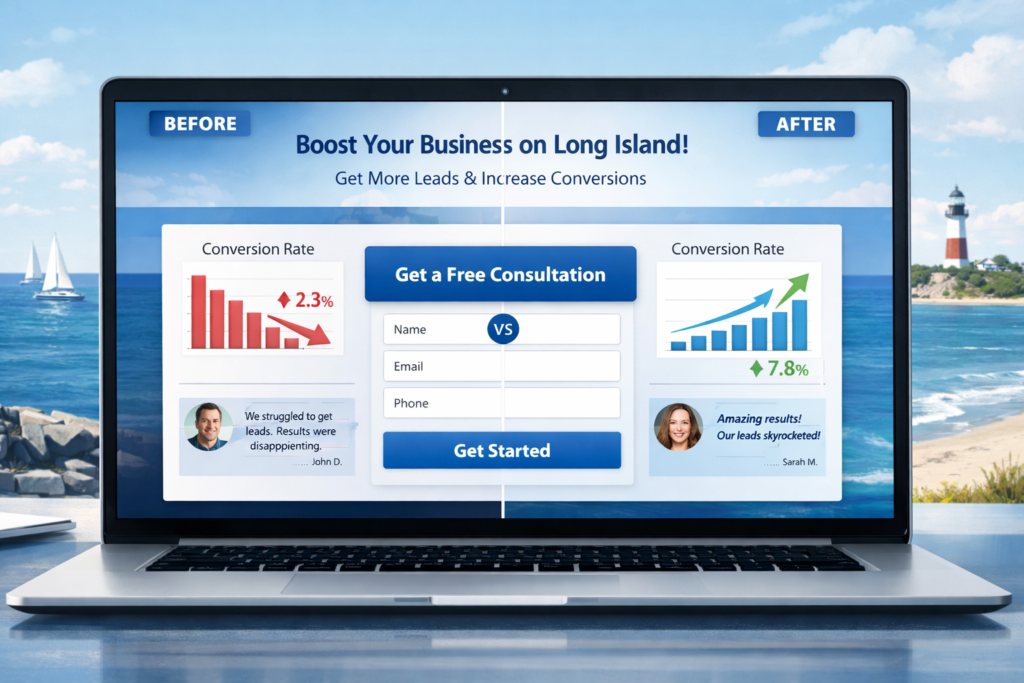
Social ads drive traffic to landing pages that load in five seconds and convert at 3.3%, when a one-second load converts at 9.6%. For campaigns pushing paid traffic from TikTok, Meta, Pinterest, and LinkedIn, that 1-vs-5-second gap, and a handful of equally fixable page issues, is the difference between a campaign that prints customers and one that quietly burns budget.
Why It Matters
If you run social, you live in mobile. Sixty-one percent of local searches happen on mobile, and mobile conversion rates run 40-51% lower than desktop. That is the default, not a worst case. Almost every click from a TikTok bio link, an Instagram Story swipe, or a Pinterest pin lands on a phone screen. If your landing pages were not built for that, your campaigns are not converting at their potential.
The industry median landing page conversion rate sits at 6.6%, and top performers hit 10% and above. That gap is real revenue left on the table, and unlike algorithm shifts or platform changes, it is something you can fix this week.
How the Best Landing Pages Actually Work
There are dozens of landing page best practices floating around. Most are filler. These six have the largest documented impact on conversion, ordered by how fast you can ship them.
Cut Form Fields to the Essentials
Eighty-one percent of visitors abandon forms mid-entry, and the number one cause is too many fields. Trim from 10-12 fields down to five or fewer and completion rates can jump more than 120%. Ask for name, phone, email, and one qualifier. Everything else belongs in the follow-up conversation, not the form.
Make the Headline Earn the Click
Eighty percent of visitors read only the headline before deciding whether to stay or bounce. A headline that does not immediately answer "what’s in it for me, right now" loses people no matter how good the rest of the page is. The pattern that works: lead with the offer, not the brand. "Same-Day Emergency Plumbing, Available Today" outperforms "Your Trusted Local Plumber Since 1995" because the first answers search intent and the second answers nothing.
Fix Page Load Speed
The 1-second rule is not soft guidance. Pages loading in one second convert at 9.6%. Pages loading at five seconds convert at 3.3%, a 190% gap most teams never measure. Run your landing pages through Google’s PageSpeed Insights and treat anything below 70 on mobile as an active conversion problem. Compress images, kill heavy scripts, and consider a CDN if you are running ads in multiple regions.
Move Social Proof Next to the CTA
Eighty-three percent of consumers trust a business more when reviews appear on the page, yet most brands bury reviews in the footer. Move one or two specific testimonials directly beside your call-to-action button. A specific quote does work a star-rating graphic can’t:
"I called at 9 PM and they fixed the leak by 11. Worth every penny., Jim R., verified customer"
That is social proof. A generic "great service, would recommend" is filler.
One CTA, Not Three
Landing pages with a single CTA convert at 13.5%. Multiple CTAs fragment attention and drop conversions significantly. Pick one goal per page: call, quote, book, download. Design everything toward that action. If you have multiple offers, the answer is not a more complicated page. It is more pages.
Mobile Optimization That Isn’t Just Responsive
Responsive design is not mobile optimization. Responsive scales a page down to fit a phone. Optimization rebuilds it for thumbs and cellular. Larger tap targets, click-to-call buttons, abbreviated forms, fast loads on real networks, and tested on an actual phone, not a desktop browser emulator. That is where your paid social clicks are landing.
The Numbers
Here is the data set worth keeping in front of you:
- 6.6%: industry median landing page conversion rate
- 10%+: what top performers consistently hit
- 81%: visitors who abandon forms mid-entry
- 120%+: completion lift from cutting fields below five
- 80%: visitors who read only the headline
- 9.6% vs. 3.3%: conversion at a 1-second load vs. a 5-second load
- 13.5%: conversion rate for single-CTA pages
- 16-28%: conversion drop when navigation menus are left on landing pages
- Up to 400%: performance lift from AI-personalized pages over static ones
- 17%: share of marketers who A/B test regularly
"Personalized pages outperform static pages by up to 400%. Personalized CTAs outperform generic CTAs by 202%."
What Comes Next: AI-Personalized Pages
Static landing pages, one version for every visitor, are the current standard. They are also moving away from where conversion is going. AI-powered personalization changes what a visitor sees based on their search query, location, device, source platform, and prior behavior. Different visitors, different pages, no manual work.
Tools like Unbounce and Optimizely now bake AI optimization directly into their platforms, running tests across hundreds of headline, CTA, and layout combinations simultaneously, something no human A/B testing process can match. The lift over static pages is documented at up to 400%, with personalized CTAs alone outperforming generic ones by 202%.
This changes campaign math. A visitor clicking a TikTok ad targeted at Gen Z creators should not see the same landing page as a LinkedIn click from an agency director. The page can adapt. The window to make that an advantage is still open in 2026; it will not stay open in 2028.
Your TikTok ad headline and your landing page headline need to say the same thing. Message match is the cheapest conversion lift you will ever ship.
What This Means for You
If you are spending on social ads, Meta, TikTok, Pinterest, LinkedIn, YouTube, you are already paying to drive traffic. The audit is whether the page that traffic lands on is earning the click.
Start with the four-step pre-flight every campaign needs:
- Match your headline to the ad. Open the ad creative, then open the landing page. Do they say the same thing? If not, fix it before your next post.
- Trim the form. Five fields, maximum. The follow-up call is where you qualify.
- Test load speed on mobile. PageSpeed Insights. Anything under 70 on mobile means you are losing TikTok and Instagram traffic on page one.
- Strip the navigation. Your landing page is not your homepage. Keep the logo, kill the menu.
This also extends to the spaces between your ads and your conversion pages. Your link-in-bio is a landing page. Your branded short link is a landing page. Your campaign QR code lands somewhere, and if that destination is a slow, cluttered, multi-CTA mess, you are undoing the work of every piece of content you posted to drive that scan.
The same logic behind a hyperlocal local-SEO strategy belongs in your landing-page playbook: specificity wins. And as AI agents start visiting brand pages on behalf of users, AI contactability means your landing pages need to be readable by machines too: clear copy, structured CTAs, mobile-first, fast.
Feedsta, an AI-powered social media platform, covers the publishing side of that equation. The landing page is the other half, and most teams treat it as someone else’s problem.
The Bigger Picture
The platforms keep shifting. Algorithms reshuffle. Ad costs climb. The one variable you fully control is what happens after the click. A faster page, a sharper headline, a shorter form, and a single clear CTA can double or triple your conversion rate without changing your ad spend by a dollar. Most of your competitors are not testing this. That is the opening.
FAQ
What’s a good conversion rate for a social media landing page?
The industry median landing page conversion rate is 6.6%, with top performers reaching 10% or higher. For social traffic specifically, expect to land at the lower end of that range because mobile conversion rates run 40-51% lower than desktop and most social clicks come from phones. If your page is converting under 3% on paid social traffic, you are below baseline for almost every category and have a page problem, not a traffic problem.
How long should a landing page form be for social ad traffic?
Five fields or fewer. Eighty-one percent of visitors abandon forms mid-entry, and trimming a form from 10-12 fields down to five or fewer can lift completion rates more than 120%. For social traffic this matters more because users are on mobile, on cellular, and typing with thumbs. Ask only for the contact information you need to start a conversation: name, phone, email, and one qualifying question.
Can AI personalization actually improve landing page conversion rates?
Yes, and significantly. AI-personalized landing pages outperform static pages by up to 400%, and personalized CTAs outperform generic CTAs by 202%. Tools like Unbounce and Optimizely now bake this into the platform itself, running tests across hundreds of headline, CTA, and layout combinations in parallel and serving the best variant to each visitor based on source platform, device, search query, geography, and prior behavior.