Social Media Marketing Strategies That Actually Work in 2026
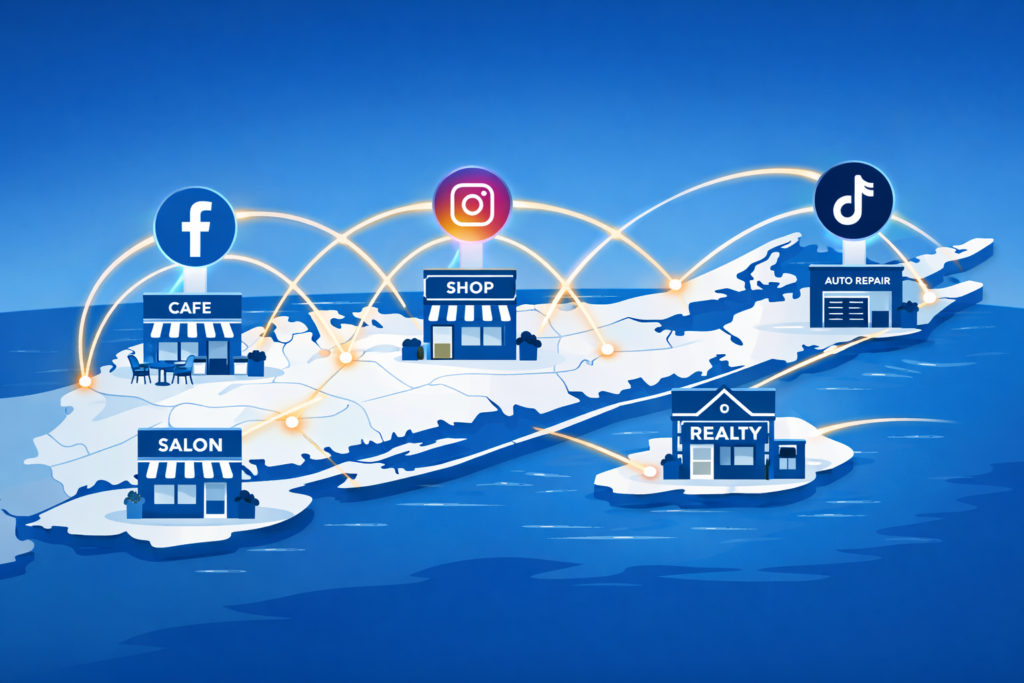
The social media playbook working for small and local brands in 2026 is narrower than most teams assume. Two platforms run with discipline, geo-tagged short-form video, AI-assisted batching, and a $300-$800 monthly Meta ad budget aimed inside a fifteen-mile radius is the operating system filling calendars right now. Sprawling across every network and posting stock-photo grids is what is burning hours with nothing to show.
Why does platform discipline beat multi-network sprawl in 2026?
For any brand running multi-platform programs, whether a single SMB or an agency book of twelve brands, the temptation to be everywhere is the single biggest drag on output. Local buying decisions now run through Facebook, Instagram, and TikTok before a customer ever opens a search engine. Town-specific Facebook groups drive enormous referral traffic across local markets, Instagram serves as the visual storefront for the 25-to-45 spending demographic, and TikTok has matured into a discovery channel where users actively search for businesses in their area.
The trouble is that most teams spread thin across four or five networks instead of concentrating effort where the audience converts. The brands winning right now made a discipline decision, not a tooling decision.
Two carefully managed platforms outperform four poorly managed ones.
What does the 2026 framework look like in practice?
The 2026 framework rests on three execution shifts: platform discipline, geo-specific content, and AI-assisted batching. Pick the two platforms that match your audience and run them exceptionally well rather than four platforms done poorly. If your customers are homeowners and families, Facebook and Instagram are the foundation. If you are targeting a younger demographic or your work is highly visual, salons, fitness studios, food service, add TikTok to the mix.
Geo-specific creative is now table stakes. Generic, polished, stock-feeling content gets scrolled past. What stops the scroll is a 30-second vertical video shot on a phone at a job site in a recognizable town, a carousel saved by an audience that sees themselves in the image, or a behind-the-scenes Story that signals you are part of the community. Customers want to hear from real people, not AI-generated scripts that could have come from any business anywhere.
AI-powered tools, CapCut, Canva’s AI suite, and the native scheduler inside Meta Business Suite, have collapsed production overhead enough that a single operator can batch a full week of content in one sitting. Use the tools for editing and formatting; keep the ideas and voice yours.
What do the numbers actually look like?
- Two-platform focus consistently outperforms four-platform sprawl for local and SMB brands.
- $300-$800 per month in Meta ad spend can deliver measurable ROI when targeting and creative are dialed in.
- 15-mile radius geo-targeting is standard for service-area businesses on Meta.
- Short-form vertical video outperforms static images on Reels, TikTok, and Facebook video.
- Carousel saves and shares remain the strongest engagement signal for Instagram reach expansion.
- Lead-generation ads reduce friction by collecting contact info inside the platform, no website visit required.
“The key takeaway: pick two platforms to do exceptionally well rather than four platforms done poorly. If you serve homeowners and families, Facebook and Instagram should be your foundation.”
What is coming next for local social media in 2026?
The next wave is sharper retargeting, tighter geo-targeting, and TikTok local search becoming a primary discovery channel. The buying cycle for service categories, a homeowner researching kitchen remodelers, a family vetting med spas, can stretch for days. The brand that stays visible through retargeting ads is the brand that gets the call.
Lead-generation ad formats are pulling more spend because they cut the website hop entirely. Expect Meta and TikTok to invest further in native lead capture and AI-assisted creative inside their ad managers, which means scheduling stacks need to integrate with both organic and paid workflows. Track the Meta Pixel installation, UTM parameters on every link you push to social, and cost-per-lead reporting monthly. These are the inputs that separate teams scaling profitably from teams hoping. Review the analytics weekly and adjust based on what is actually driving business, not what is collecting hearts.
What does this mean for your brand right now?
If you manage one brand or twelve, the operating principle is the same: cadence beats sprawl. Build your calendar around geo-tagged short-form video and carousels, batch creative with AI for the heavy lift, and keep voice and ideas authentic to each brand. A single unified scheduler that handles Meta, TikTok, and the rest of your stack is the difference between a two-platform discipline that holds and one that collapses the first time a campaign goes sideways. Feedsta, an AI-powered social media platform, offers scheduling with measurable link tracking so posts may be attributable back to clicks, leads, and revenue.
For the deeper operating model behind a calendar that does not burn out, our 6-step social media content marketing process walks through research, calendar, creation, and how content is optimized, distributed, and measured as one loop. And if your audience is geographically concentrated, the 2026 local content strategy playbook covers the cadence and location-signal work that separates a feed that converts from a feed that decorates.
What is the bigger picture for social media in 2026?
The brands scaling social media in 2026 are the ones treating it as a measurable marketing channel, not a vibes activity. Pick two platforms, batch your content with AI assistance, target ads tight, and measure what actually moves customers: leads, calls, direction requests, DMs, instead of hearts and follower counts. That is the discipline, and the tools have finally caught up to make it executable for teams of one.
FAQ
Which two social media platforms should small businesses focus on in 2026?
For most SMBs and local brands, the highest-ROI combination is Facebook plus Instagram, with TikTok added when the audience skews younger or the work is highly visual. Facebook still dominates the 35-and-older demographic and remains the strongest tool for community engagement through town-specific groups, while Instagram is the visual storefront for 25-to-45 spenders. The rule is two platforms done exceptionally well, not four done poorly.
How much should an SMB budget for paid social ads each month?
The variables that matter more than dollar amount are 15-mile radius geo-targeting, short-form video and lead-gen creative, and tracking infrastructure (Meta Pixel and UTM parameters on every link).
What content formats are driving the most engagement right now?
Short-form vertical video, Instagram carousel posts, and behind-the-scenes Stories are the three formats consistently outperforming everything else in 2026. A 30-second Reel, TikTok, or Facebook video with a phone-shot, well-lit setup and a clear hook routinely beats overproduced content, while carousels generate the saves and shares that expand reach algorithmically.