Social Media SEO in 2026: The Questions Marketers Actually Ask
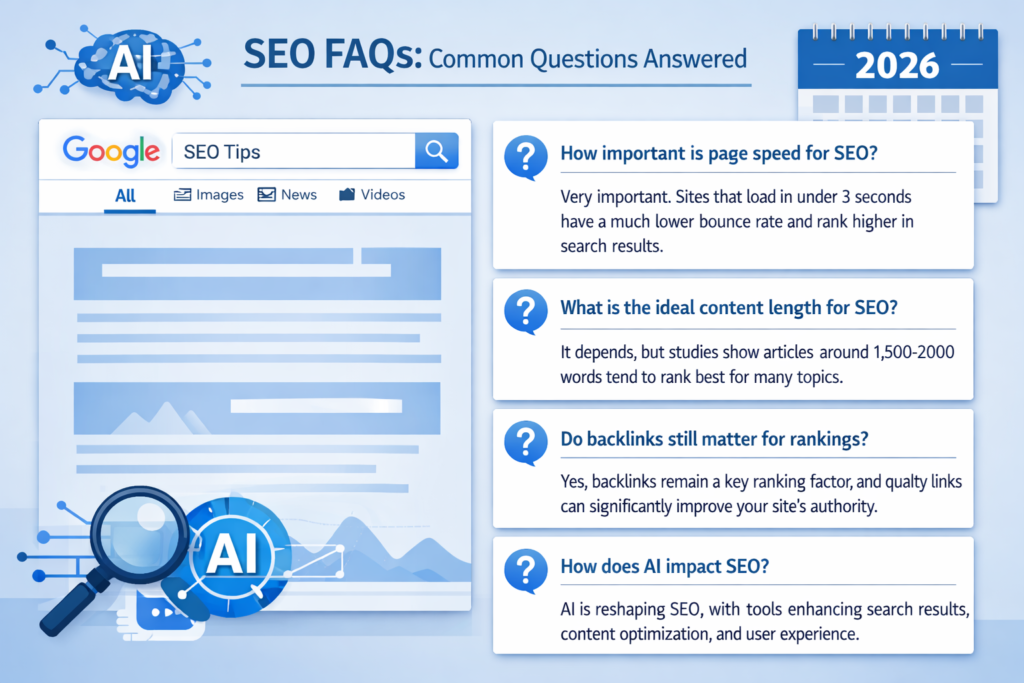
Social media SEO and traditional SEO collapsed into one discipline in 2026, and the marketers asking the sharpest questions are no longer choosing between them. Google still owns 81.6% of all searches and sends 190 times more traffic to websites than ChatGPT, but how that traffic arrives, and how AI search engines decide who to surface, has fundamentally shifted. The signals that win Google rankings now win AI search recommendations, and most of those signals live across the social profiles brands already run.
Why It Matters
Marketers are being pulled into SEO conversations they didn’t sign up for, and search specialists are suddenly responsible for review velocity and platform-native content. The collision is happening because AI Overviews and chat-based search treat your business as an entity, and entities are defined by the consistency, recency, and authority of the signals you broadcast across platforms, profiles, and listings.
That’s a fundamentally social-media-shaped problem. Industry data on Google’s generative AI search shows organic click-through rates drop by an average of 34.5% when AI Overviews appear, which means earning the citation inside the summary matters more than ranking just below it. The brands winning in 2026 are the ones treating their Google Business Profile, social profiles, and review pipeline as one connected presence rather than three departments fighting for budget.
How Social Signals Now Power Search
SEO mechanics shifted in three ways that drew social into closer focus.
AI Overviews cite sources instead of sending clicks. Optimizing for citation means structured content, demonstrable expertise, and entity signals that an AI can verify across the open web, which means your profiles, About pages, and review consensus all carry SEO weight now. The summary is the new front page.
Google Business Profile signals influence both local pack ranking and organic ranking for local queries. GBP completeness, post recency, category accuracy, and review volume send "entity confidence signals" that a website alone cannot provide. The GBP is no longer a separate channel; it’s the canonical record AI search engines audit against.
Every major AI search platform has a different grounding source. Gemini grounds in Google Maps data. ChatGPT and Perplexity grade businesses on entity consistency across directories, reviews, and authoritative mentions. What gets you cited in one improves your odds across the others, but only if your signals stay consistent.
In practice: every social profile, every Google post, and every fresh review is an SEO signal. Brands that publish across platforms consistently, same name, same address, same brand voice, same visual identity, get rewarded by all three search systems at once.
In 2026, your profiles aren’t separate from your SEO; they’re the entity signals AI search engines use to decide who to recommend.
The Numbers Marketers Need
Headline metrics from the 2026 search landscape that should reshape a content calendar include the following.
- 81.6% of all searches still happen on Google
- Google sends 190x more traffic to websites than ChatGPT
- Organic CTR drops 34.5% when an AI Overview appears
- Initial ranking improvements typically land at month 3-4 of consistent work
- Meaningful lead volume changes show up at month 5-6
- Full ROI usually becomes measurable at 6-12 months
- Local landing pages need at least 400-600 words of genuine area-specific content to rank
In 2026, reviews are the most directly actionable ranking factor. Volume matters, but recency matters more, a business getting 5 new reviews per month is outperforming one with 200 reviews from 2022.”
For anyone running social, the implication is operational. If recency is the lever, then review request automation, response cadence, and the platforms where customers leave feedback all belong on your content calendar, not buried in a customer-service queue.
What Comes Next in 2027
AI search visibility is the next frontier, and the work feeds itself: the same signals that improve Google ranking, GBP completeness, reviews, and expert content also improve AI search visibility. They are not competing strategies.
For Gemini, that means your Google Business Profile is the foundation. An incomplete or inactive GBP is invisible to one of the fastest-growing search interfaces on the planet, regardless of how strong your traditional SEO is.
For ChatGPT and Perplexity, the lever is entity consistency: matching name, address, phone number, hours, and category across every directory and social profile the model crawls. Inconsistency reads as noise, and noise gets filtered out of the recommendation set.
Expect the compound effect to accelerate through 2027. Brands that build review velocity, post consistently across social platforms, and keep their entity data clean will pull ahead in both traditional search and AI-driven discovery, while brands treating these as separate disciplines will keep losing ground without understanding why.
What This Means for Your Team
If you run a brand or an agency, the practical shift is to stop treating social as a separate motion from your SEO. Every post is an entity signal. Every review reply is a freshness signal. Every consistent NAP across your TikTok, Instagram, LinkedIn, and Facebook profiles compounds into something an AI search engine can verify and recommend.
The recency and consistency signals that win local pack rankings are the same ones that win AI search citations, so publish across every platform your brand needs to show up on, keep your profile data identical everywhere, and respond to reviews as they land. If you want to see how consistent your entity signals actually are right now, a free BizScoreAI visibility scan checks your listings, reviews, and AI-answer presence across the web, so you know which signal to clean up first.
For the specifics of how social-first signals translate to local rankings, our deep-dive on local SEO for SMBs in 2026 walks through what to prioritize first, and our breakdown of local search ranking signals covers exactly how the GBP-and-social loop influences ranking. If your gap is consistency across profiles, the NAP consistency playbook is the audit checklist to start with.
The Bigger Picture
Search marketing and social media marketing collapsed into one discipline in 2026, and most teams haven’t restructured around it yet. The brands that win the next twelve months aren’t the ones with the biggest content budgets; they’re the ones treating every social profile, every review, and every Google post as part of a single presence that AI search engines can verify and recommend. The work isn’t new. The integration is. Whoever understands that is the most important hire in a marketing org.
FAQ
How long does social-first SEO take to show results?
For most businesses, initial ranking improvements can appear at month 3-4 of consistent posting, profile optimization, and review generation. Saturated markets like legal or healthcare run on the longer end of that range, while service categories with less competition move faster.
Do Google Business Profile signals really affect social media performance?
Indirectly, yes, and the relationship runs both ways. A complete, active, accurate GBP sends entity confidence signals that improve organic visibility for local queries, which drives more profile and website traffic, including users who check your social profiles before contacting you. In the other direction, consistent social posting reinforces the entity signals AI search engines use to verify your business. Treat GBP and social profiles as one unified presence rather than two channels managed separately.
How do reviews factor into AI search visibility?
Reviews are the most directly actionable ranking factor in 2026, and they matter more for AI search than for traditional search. Volume helps, but recency dominates: a business earning 5 new reviews per month outperforms one with 200 reviews from years ago. For Gemini, ChatGPT, and Perplexity, review consensus, what reviews collectively say about your business, is reported to be a primary signal each platform uses to decide whether to recommend you. Build a continuous review request workflow, respond to every review, and treat review velocity as part of your weekly content calendar.