Bing Webmaster Tools Adds AI Performance Dashboard for Generative Answer Visibility
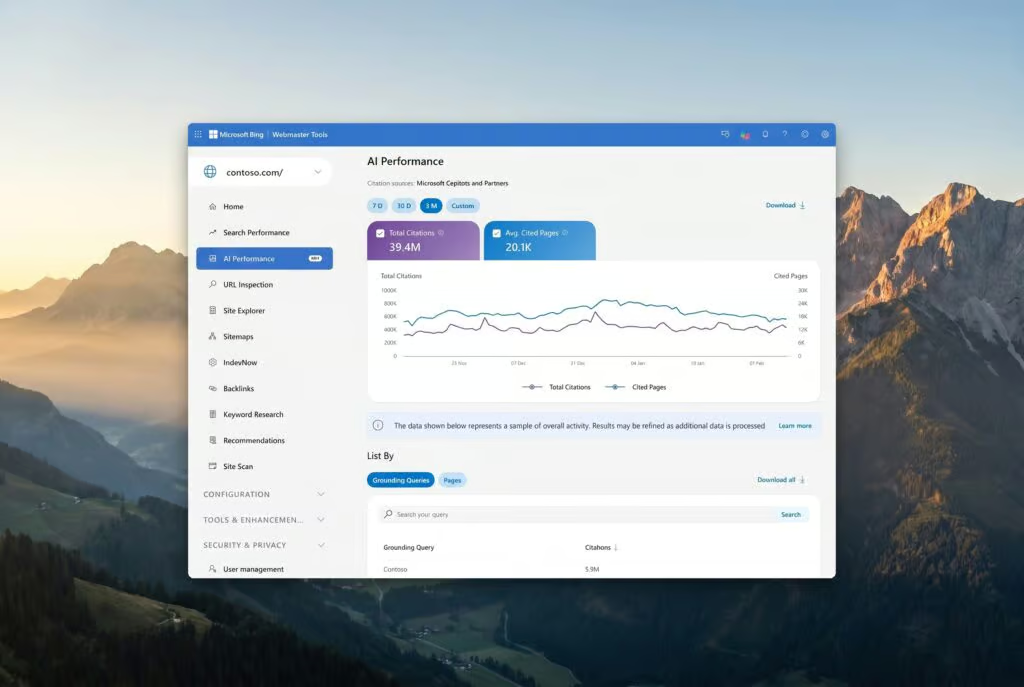
Microsoft has launched AI Performance in Bing Webmaster Tools, a new dashboard that shows how publisher URLs are cited across Microsoft Copilot, AI-generated summaries in Bing, and select partner integrations. Announced on February 10, 2026, the feature is now in public preview and gives site owners their first structured view of citation activity in generative answers over time.
The release is positioned as an early step toward broader Generative Engine Optimization (GEO) tooling inside Bing Webmaster Tools, which until now has focused on indexing, crawl health, and traditional search performance.
What does the AI Performance dashboard track?
The new dashboard offers a consolidated view of when a site is cited in AI answers, broken down into several specific metrics.
- Total Citations: The total number of citations displayed as sources in AI-generated answers during the selected time frame. This measures how often content is referenced, without indicating placement within a specific answer.
- Average Cited Pages: The average number of unique pages from a site displayed as sources in AI-generated answers per day over the selected range. Data is aggregated across supported AI surfaces and reflects overall citation patterns rather than ranking or authority.
- Grounding Queries: The key phrases the AI used when retrieving content referenced in AI-generated answers. Microsoft notes the data shown represents a sample of overall citation activity and will be refined as additional data is processed.
- Page-Level Citation Activity: Citation counts for specific URLs, making it easier to see which individual pages are most often referenced across AI-generated answers during the selected date range.
- Visibility Trends Over Time: A timeline showing how citation activity changes over time across supported AI experiences.
Microsoft also emphasized that Bing respects all content owner preferences expressed through robots.txt and other supported control mechanisms.
How should publishers use these insights?
By reviewing cited pages and grounding query phrases, publishers can validate which pages are already being used as references in AI answers, identify content that appears frequently across AI answers, and spot opportunities to improve clarity, structure, or completeness on pages that are indexed but less frequently cited.
Seeing which pages and topics are cited can help publishers improve their content.
- Pages cited for specific grounding query phrases often focus on a clear subject, so adding related content can reinforce authority.
- Improve structure and clarity: Clear headings, tables, and FAQ sections help surface key information and make content easier for AI systems to reference accurately.
- Examples, data, and cited sources help build trust when content is reused in AI-generated answers.
- Keep content fresh and accurate: Regular updates help ensure AI systems reference the most current version of a page.
- Reduce ambiguity across formats: Align text, images, and video so they consistently represent the same entities, products, or concepts.
For more detailed guidance on structuring content for inclusion in AI-generated answers, Microsoft points publishers to its resource on optimizing content for AI search answers.
How does IndexNow keep cited content fresh?
Accurate and up to date content matters for inclusion and citation in AI-generated answers, and Microsoft highlights IndexNow as a way to maintain that freshness. IndexNow notifies participating search engines whenever content is added, updated, or removed, which helps ensure that AI systems reference the most current version of a page when generating answers. Publishers not already using the protocol can get started at the IndexNow website.
What about local business visibility?
For local businesses, accurate business information carries extra weight when AI experiences surface answers to location-based queries. In addition to using Bing Webmaster Tools, businesses can register with Bing Places for Business to help ensure that details such as address, hours, and contact information remain current and eligible for inclusion in AI-generated responses.
What comes next?
Microsoft describes AI Performance as an important step toward greater transparency between AI systems and the open web, and says the team will continue working with publishers and the webmaster community to improve inclusion, attribution, and visibility across both search results and AI experiences.
The feature was introduced by Product Managers Krishna Madhavan, Meenaz Merchant, Fabrice Canel, and Saral Nigam on the Microsoft AI team.
FAQ
What is AI Performance in Bing Webmaster Tools?
AI Performance is a new dashboard in Bing Webmaster Tools, announced on February 10, 2026, and now in public preview. It shows how often publisher URLs are cited across Microsoft Copilot, AI-generated summaries in Bing, and select partner integrations.
Which metrics does the AI Performance dashboard include?
The dashboard includes Total Citations, Average Cited Pages, Grounding Queries, Page-Level Citation Activity, and Visibility Trends Over Time, covering citation counts, the phrases AI used to retrieve content, and changes across the selected date range.
How can publishers improve citation in AI answers?
Microsoft recommends strengthening depth and expertise, improving structure with clear headings and FAQ sections, supporting claims with evidence, keeping content fresh (using IndexNow), and aligning text, images, and video so they consistently represent the same entities. Local businesses can also register with Bing Places for Business.
Related coverage