Google’s New AI Search Rules: A Social Media Manager’s Playbook
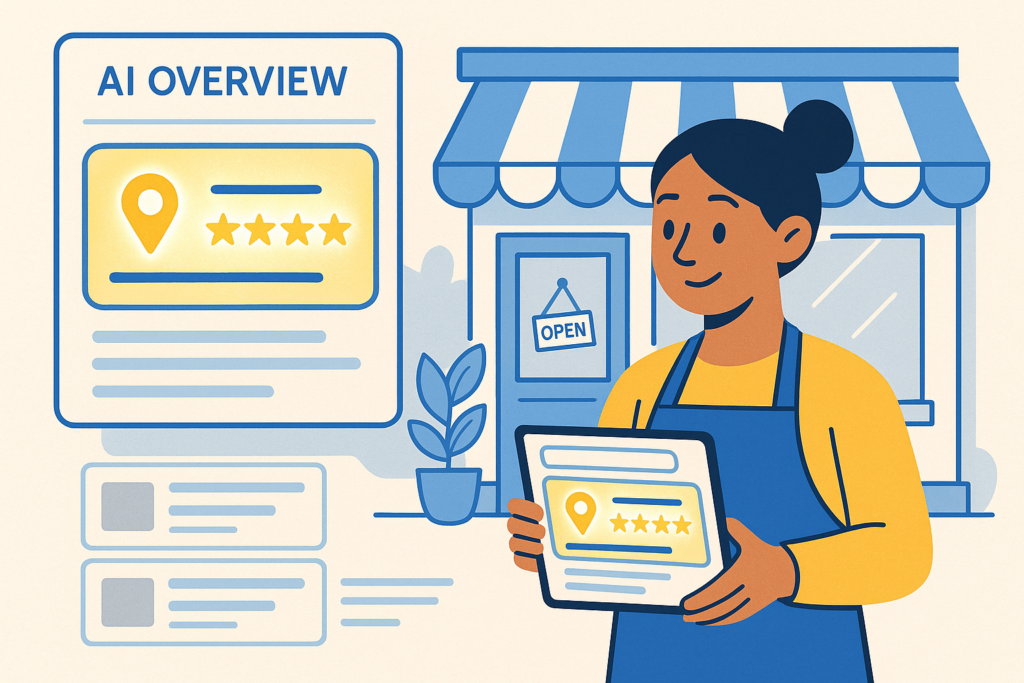
On May 15, 2026, Google published its first official rulebook for AI Overviews and AI Mode, and the headline for social media managers is simpler than the AI-optimization vendors have been letting on. The content that gets cited inside an AI answer isn’t your most polished campaign. It’s the content only you could have written. Google calls it non-commodity content, and the rule now applies to every page in your social stack: landing pages, link-in-bio destinations, blog content, and Google Business Profile posts.
Why It Matters
AI search isn’t a side door anymore. According to Google’s own search updates, AI Overviews now sit above the organic results on a growing share of queries, and AI Mode answers full questions inside the search box without sending a click anywhere. For social media managers, that means your audience increasingly meets your brand through a synthesized AI answer before they ever reach your TikTok, your Instagram, or your link-in-bio.
The pages that get pulled into those answers are now your front line. And for the last year, vendors have been selling “AI search optimization” as an expensive black-box service to anyone with a marketing budget. Google’s new guide says, in plain language, that most of what’s been pitched isn’t required. That’s a refund-check moment for every team that’s been quoted a five-figure subscription for AI visibility they could build with better copy.
What’s New / How It Works
The guide centers on one distinction: commodity content versus non-commodity content. Commodity content is the generic stuff anyone could write. “5 tips for choosing a plumber.” “Best times to post on TikTok.” “What to look for in a contractor.” Every brand in every city has a version. None of them stand out, and the synthesizer behind AI Overviews is sophisticated enough to know it.
Non-commodity content is the opposite: content that proves a human actually did the thing being described. Google’s own example contrasts a generic article titled “7 Tips for First-Time Homebuyers” against a different piece titled “Why We Waived the Inspection and Saved Money: A Look Inside the Sewer Line.” Same topic. Same audience. But only the person who actually bought that house can write the second one. It has a real story, a real number, a real decision, and a real outcome.
That is the entire shift in three sentences. AI search rewards content that proves a human actually did the thing. It punishes content that could have been written by anyone, anywhere, about any brand in your category. For social media managers, the implication is sharp: every landing page, every link-in-bio destination, every blog post you point a Reel at is now graded on the same scale.
Your social content isn’t competing for feed attention anymore, it’s competing to become the answer inside an AI search result.
The Numbers
Three things Google specifically told small businesses they do not need to pay for:
- llms.txt files. You do not need a special file on your website to be visible to AI search.
- Special AI schema markup. You do not need a custom schema layer just for AI features.
- Content chunking. You do not need to chop your pages into small AI-readable pieces.
If a vendor has been quoting you for any of those as a standalone AI search service, you now have official documentation to push back. What Google does want is specificity. The guide highlights the kind of sentence AI Overviews quote back to a searcher:
“We helped a Conway dental practice add 41 new patient calls in 90 days.”
Compare that to the generic version, “We help local businesses grow”, and the difference is obvious. One is a fact AI Overviews can cite. The other is filler that disappears.
What Comes Next
The May 15 guide is the first of what Google says will be ongoing documentation. Expect more clarity over the next year on how AI Overviews source content from social profiles, video, and image-first formats. Google specifically called out two inputs that should already be on a social media manager’s radar:
- Google Business Profile, named directly in the guide as an input to AI answers about local queries. Hours, services, photos, and posts all feed in.
- Merchant Center feeds, named as an input to AI answers about shopping queries. Your product feed quality directly affects whether your brand surfaces.
Both of those sit inside the social stack now, not the SEO team’s silo. The post you schedule to GBP this week is part of the same content layer the AI is reading. Google’s Search Central documentation will continue to be the source of truth as the guidance expands through 2026.
What This Means for You
For social media managers, four things change immediately.
1. Audit your link-in-bio destinations. The pages you send TikTok and Instagram traffic to are exactly the kind of content AI Overviews now pull from. If your link-in-bio page reads like every other creator’s, “Welcome! Check out my latest”, rewrite it with the real outcomes, named clients, and specific numbers that only your brand can supply.
2. Treat landing pages like AI citations, not just conversion funnels. The same rule applies to every campaign landing page in your stack. Generic copy disappears in AI Mode. We broke down the exact structure of content that gets cited in Short or Long? Social Content That AI Overviews Actually Cite. Build your landing pages with that same logic.
3. Schedule Google Business Profile posts like the rest of your channels. GBP is now explicitly named as an AI search input. If it’s not in your weekly cadence, you’re leaving citations on the table. We covered the workflow in Google Posts: The Social Channel You’re Not Scheduling Yet.
4. Bring receipts to your social copy. “Brand voice” in 2026 means specific outcomes, named clients, and real numbers, not clever taglines. Pull the actual results from your analytics and put them into the captions, the bio, and the landing page copy. The brand that says “41 new patient calls in 90 days” wins the citation. The brand that says “trusted local partner” disappears.
The Bigger Picture
The honest read: Google isn’t a neutral party here. They benefit when the open web is full of expensive, high-quality content, because they’re the ones serving ads against it. That’s worth saying out loud. But the underlying advice tracks with what’s working in real visibility data. The brands pulling AI citations right now are the ones with specific, opinionated, experience-backed pages. The brands losing visibility are running on AI-generated filler. For social media managers, the move is clear: stop publishing pages that could be swapped between any two brands in your category. Your content is no longer competing for feed attention alone, it’s competing to be the answer the AI gives. The brands that win that fight are the ones with something to say that nobody else can.