Google AI Studio Builds Android Apps From Text: A Social Playbook
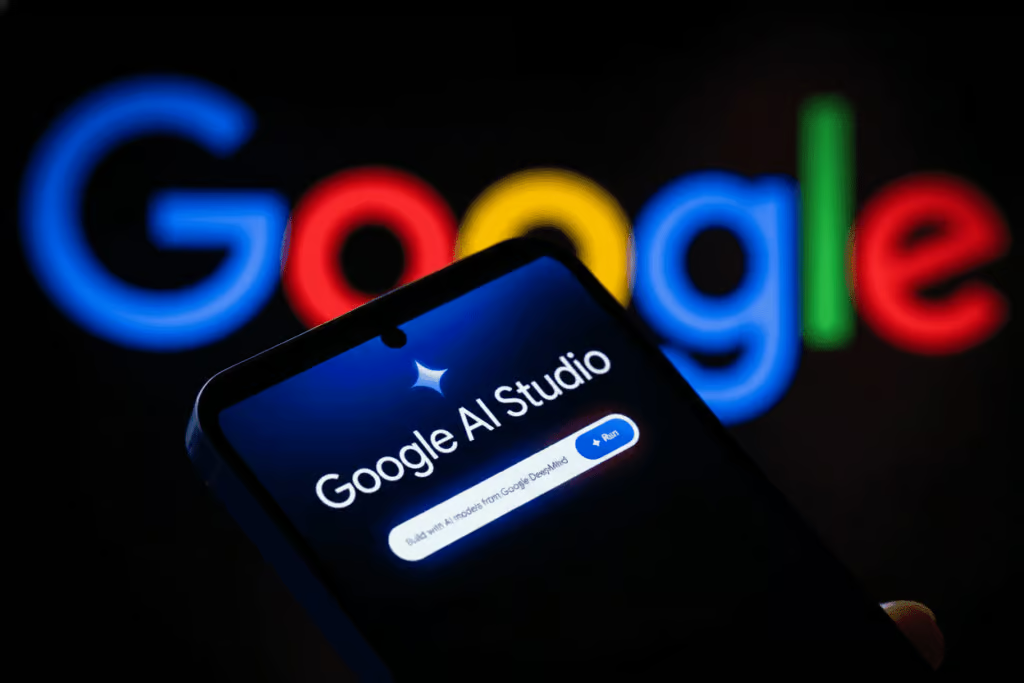
Google AI Studio can now build native Android apps from a plain-text description, no coding required. Announced at Google I/O 2026, the feature lets anyone with a Google account describe an app idea and walk away with a working prototype, ready to install on a real phone, in under five minutes. For social media managers running presence across six, ten, or twenty platforms, that quietly redraws the line of what “your brand’s surface area” actually means.
Why It Matters
For years, the question “should our brand have a mobile app?” came with a six-figure answer. A native Android build needed a developer, a designer, Play Store paperwork, and quarterly maintenance, costs only the biggest brands and agencies could absorb. Yet according to Statista, smartphone owners now spend roughly 90% of their mobile time inside apps rather than mobile browsers, and the vast majority of small and mid-sized brands still rely entirely on social platforms and a website to reach those users.
Google AI Studio’s new app builder erases the cost barrier that kept apps out of reach. It puts a previously inaccessible owned channel within reach of any social manager who can write a paragraph, and it ships at a moment when platform algorithms are squeezing organic reach harder than ever. An app is one of the last surfaces where you, not Meta or ByteDance, decide who hears from you.
What’s New / How It Works
Google AI Studio is a browser-based environment that uses Gemini to generate “production-quality Kotlin code”, the same language professional Android engineers use to ship apps on the Play Store. The workflow is deliberately bare:
- Open AI Studio and select Build an Android app
- Describe the app in plain English
- Preview it in a built-in Android emulator with no install required
- Install it on a real Android phone over USB for live testing
- Publish to Google Play’s Internal Test Track with one click
Google Workspace is integrated end-to-end, so the apps you generate can pull live data from Sheets, Drive, or Docs. A creator selling courses could build an app that reads class schedules from a shared Sheet. A multi-brand agency could spin up a client-facing portal in an afternoon that mirrors a Google Drive folder. A restaurant could keep its menu in a Sheet and let the app stay in sync automatically.
The Numbers
Headline stats from the launch:
- Native Android apps generated as production-grade Kotlin code
- Plain-text-to-prototype time measured in minutes, not weeks
- One-click publish to Google Play’s Internal Test Track
- Direct integration with Google Sheets, Drive, and Docs for live data
- Available now to anyone with a Google account at aistudio.google.com
The example Google demoed at I/O set the tone for the kind of build that’s suddenly accessible:
“A booking app for a hair salon with a service menu and appointment calendar.”, Google AI Studio demo prompt, Google I/O 2026
That sentence, under twenty words, produced a usable booking app live on stage. Anyone whose brand currently runs appointments, classes, or service requests through Instagram DMs already has the next sentence written for them.
What Comes Next
This announcement is the opening move, not the finished game. The Internal Test Track integration suggests a fast path from AI prompt to public Play Store listing, and Google has signaled that iOS support is on the roadmap, though no date has been confirmed. The Workspace tie-in points to a future where every Google Sheet becomes a potential app backend, and where small operators can build the same custom workflow tools that previously required a $4,000-per-month SaaS subscription.
Expect the next twelve months to bring deeper analytics hooks so your social tools can read app engagement, template marketplaces for common business apps, and, most usefully for social managers, tighter integration with link-in-bio and landing-page tools so an app install button can sit right next to your TikTok shop link or short URL.
What This Means for You
If you manage social for a brand, the practical question isn’t “can we build an app”, it’s “what should the app do that our social channels can’t?” Three honest answers for most operators:
- Bypass the algorithm. A push notification reaches 100% of the people who installed your app. An Instagram post reaches 4-6% of your followers on a good day.
- Capture the data you can’t get from platforms. Your TikTok analytics show views and saves. Your own app shows you who, when, and what they did next.
- Extend the link-in-bio. Right now your bio link points to a landing page. The next version points to an install button for an app that bundles your store, your booking, your content drops, and your community in one icon on the home screen.
You don’t have to ship a public-facing app to win here. Even a single internal app, a content calendar, a multi-brand asset library, a posting checklist, pays for itself in time saved across the team. Start with a problem you already have, build the rough version this week, run it past the team, and iterate. If you’re already coordinating posts and short links inside Feedsta, an app becomes one more surface to schedule into, not a parallel strategy.
Two recent Feedsta reads worth pairing with this one: Google’s AI Search Box made your posting cadence a ranking signal, your app shows up in AI search the same way your profiles do, and discoverability now compounds across owned and earned surfaces. And Meta’s Ads AI Connector for context on where the broader “describe-it-and-the-AI-builds-it” pattern is heading across the social stack. The team is tracking these shifts inside the Feedsta app, and short-link, QR, and landing-page workflows for any app launch are already supported via fsta.li.
When an app costs a paragraph instead of a project, every brand with a story to tell becomes a brand with a home-screen icon.
The Bigger Picture
Two years ago, the only brands with proprietary apps were the ones that could afford a six-month development cycle. As of this month, that gate is gone. The brands that move first, not the biggest, not the most technical, but the ones who treat “we built an app this afternoon” as a normal Tuesday, will be the ones owning home-screen real estate when their competitors are still arguing whether the cost is justified. Social managers who already know what their audience wants and how it talks are the best-positioned people in the building to lead that build.