Google’s Gemini 3.5 Flash Search: What Changes for AI Visibility
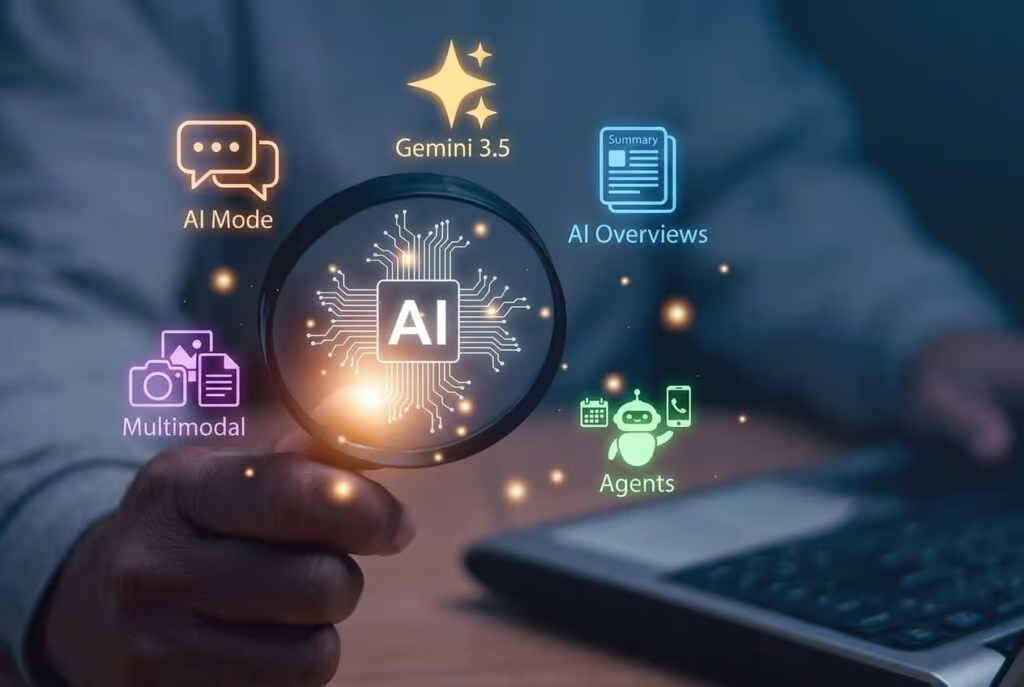
Google just rolled out the biggest redesign of its Search box in over 25 years, now running on Gemini 3.5 Flash and introduced at I/O 2026. It turns every query into a dynamic, multimodal conversation that can proactively surface web and social posts, monitor blogs, and build custom mini-apps on the fly. For businesses, this is not a minor UI tweak; it is a fundamental shift in how audiences discover and engage with content, and it lands when 68% of Google searches already end without a click.
Why It Matters
Search and social have never been fully separate, but the new AI-powered Search box erases the remaining boundaries. People already encounter your brand through TikTok videos, Instagram Reels, LinkedIn carousels, and YouTube Shorts. Now, Google can ingest those same assets directly into the search experience, via file uploads, Chrome tabs, or real-time web monitoring, and serve a synthesized answer that may include your content without a single click to your profile.
In early 2026, the SparkToro Zero-Click Search Study found that 68% of Google searches ended without a click. Only 2.8% of search sessions led to a visit to a social media site. The new Search box makes zero-click even more likely, because the answer is assembled from multiple sources, often including social posts, right inside the results page. The playing field has moved from earning clicks to earning mentions inside AI-generated answers.
What’s New: An AI Agent That Lives Inside Search
At I/O 2026, Google detailed several layers of change, all powered by the newly default Gemini 3.5 Flash model:
- Intelligent Search box. The old keyword field is replaced by an expanding canvas that accepts text, images, files, videos, and even open Chrome tabs as inputs. AI-powered suggestions help users formulate complex, multi-part questions.
- Conversational back-and-forth. Any AI Overview can become a thread. Users ask a follow-up, and the context carries forward. The links and supporting articles grow more relevant as the conversation deepens.
- Information agents (24/7). Users can create agents that continuously scan the web, including blogs, news sites, and social posts, for specific criteria. The agent sends a synthesized alert when it finds a match, like a sneaker collab announcement or an apartment listing.
- Agentic booking and actions. Search can now book local services, find a karaoke room with late-night food, or even call businesses on the user’s behalf, drawing on real-time availability and signals from reviews and posts.
- Generative UI and custom apps. Google’s Antigravity coding agent can build interactive dashboards, fitness trackers, or visual simulations directly in the search page, pulling from live sources including local weather, maps, and user-connected apps like Gmail and Google Photos (with Personal Intelligence now expanded to 200 countries).
The rise of AI-powered search means content now has to earn its place in conversational results.
The Numbers: Why Zero-Click Is Only Half the Story
The raw search stats show a drop in visits for anyone who relied on link-in-bio or referral traffic alone.
- 68% of Google searches ended without a click in early 2026, up from ~64% in 2024 (SparkToro).
- Only 2.8% of U.S. Google search sessions sent a visitor to a social media site (SparkToro).
- AI Mode has grown so fast that Google reported an all-time high in overall query volume last quarter, as people searched more when answers became richer.
- Personal Intelligence, which can now connect Gmail, Google Photos, and soon Google Calendar, is available in 98 languages across nearly 200 countries, no subscription required.
You are no longer just optimizing for a blue link. If your content is structured clearly and presented with authority across platforms, it is more likely to be pulled into a synthesized answer or flagged by an information agent.
What Comes Next
Google will roll out the intelligent Search box globally to all countries where AI Mode operates, starting immediately. Information agents launch first for Google AI Pro & Ultra subscribers this summer, while agentic booking expands to all U.S. users. Generative UI and the Antigravity-powered mini apps will follow in the coming months, initially for U.S. Pro/Ultra subscribers. Throughout the year, expect deeper integrations that let agents monitor more dynamic signals, such as trending audios on TikTok or real-time event chatter on X, turning Search into a persistent listening tool rather than a one-off lookup.
What This Means for You
Search now pulls answers from the content you publish and lets users refine them in conversation.
- Structure your posts for machine understanding. Clear captions, descriptive alt-text, and consistent branding help AI models parse your content correctly. If an information agent is scanning for "sustainable sneaker drop," your caption needs to say those exact words, not just show a cryptic emoji sequence.
- Publish everywhere, but keep it consistent. You cannot manually optimize for every platform and every new AI search surface. A cross-platform publishing workflow helps your content land on TikTok, Instagram, YouTube, LinkedIn, and Pinterest consistently, in the format each platform expects.
- Monitor your AI visibility. You cannot improve what you cannot measure. Run a BizScoreAI visibility scan to see where your content is, or is not, appearing in AI answers.
For a deeper dive, read our breakdowns: Zero-Click Searches Reach 68%: What It Means for Businesses and AI Mode vs. AI Overviews: What the New Study Found. Together, they give you the full picture of how AI search behavior is fracturing, and where to focus your content efforts.
The Bigger Picture
The Search box that knows your calendar, scans competing feeds, and builds you a booking tool in five seconds is not a demo, it is shipping. For businesses, the implication is clear: your content has to be discoverable, machine-readable, and valuable enough to be the source an AI agent cites. The brands that treat every TikTok, every LinkedIn post, and every YouTube Short as a building block for AI answers will lead the next era of discovery.
FAQ
What is Google Gemini 3.5 Flash Search?
It is the new default AI model powering Google’s Search box and AI Mode, introduced at I/O 2026. Gemini 3.5 Flash enables multi-modal input (text, images, files, videos, Chrome tabs), conversational follow-ups, and the ability to create custom agents and mini-apps directly inside Search.
How will the new AI Search box impact content discovery?
It can ingest posts as sources for synthesized answers, and information agents may continuously scan blogs and social platforms to alert users about relevant content. Your content can appear inside AI-generated results without a click-through, so discoverability now depends on how well AI models understand and trust your content.
Can public social posts appear in AI Overviews or search agents?
Yes. Google confirmed that information agents will look across blogs, news sites, and social posts, while the intelligent Search box can accept a Chrome tab containing a feed as input. AI Overviews can also incorporate social content when it is relevant to the query, similar to how they already pull from product reviews or news snippets.
Related coverage
- Google Gemini 3.5 Pro Delayed as Coding Performance Falls Short
- Google’s Generative AI Search Guide Signals What Content Will Survive