Google Gemini and Local Business Visibility in 2026
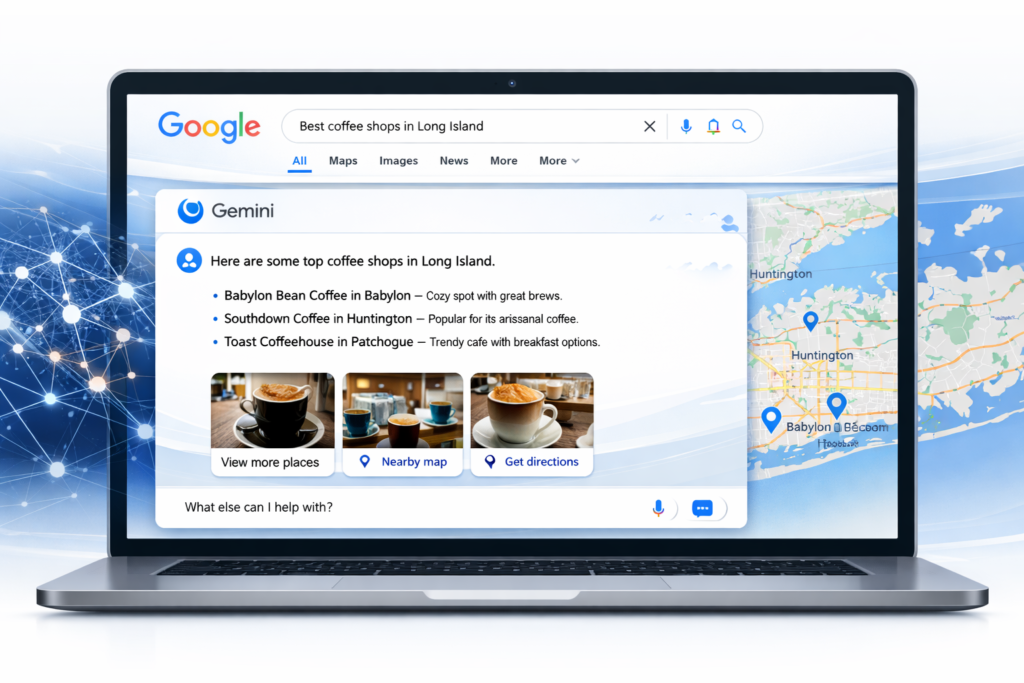
Google Gemini surfaces only about 11% of qualifying businesses when it answers a local search query, and some estimates place that figure at roughly a third the volume of the traditional Google 3-pack. That math reshapes how every listing, review, and profile mention gets weighted in 2026. The businesses that win Gemini citations aren’t the ones with the most polished website. They’re the ones with the most consistent, active, and credible entity profile across the web.
Why It Matters
Gemini is no longer a chatbot you opt into. It’s the AI model family running underneath Google Search, Google Workspace, and Google Cloud, the same engine powering the AI Overviews that now show up in more than 40% of local business queries. When a customer searches for a service, plenty of those queries get answered before the user ever scrolls to a traditional listing.
The change is structural. Google isn’t just ranking pages anymore; it’s synthesizing recommendations. And it’s drawing on a much wider set of signals than the old SEO checklist, including the activity, reviews, and entity consistency that live across profiles and directories. According to Google’s search documentation on generative AI, AI Overviews are designed to surface sources the model considers authoritative across the open web, not just indexed HTML.
How Gemini Picks Which Businesses to Cite
Gemini Advanced runs on Gemini Ultra, Google’s most capable model. It replaced Bard in early 2024 and has been embedding itself into Google’s ecosystem ever since. As of early 2026, 70% of Google Cloud customers actively use Gemini features, and the model is bundled inside Google Workspace Business Standard at $14/user/month and above. Gemini isn’t a separate product you opt into, it’s infrastructure that’s already embedded in tools you may already use.
Gemini synthesizes its recommendations from three signal layers:
- Google Business Profile data, name, address, phone, hours, services, categories, and recent photos. A fresh photo cadence is part of keeping this profile alive.
- Look at the consensus across reviews, including recurring themes and language, not just star ratings. Substantive reviews beat generic five-stars.
- Entity consistency across the web, your brand as a documented entity the model can confidently reference. Profiles, directory listings, and citations all feed this signal.
That third layer is where businesses earn or lose ground. A brand that presents itself inconsistently, names itself differently across platforms, or lets profile data go stale becomes harder for Gemini to verify. The model defaults to safer answers, meaning competitors with cleaner entity data get cited instead.
The Numbers
- 40%+ of local business queries now display a Gemini-generated AI Overview at the top of results.
- 70% of Google Cloud customers actively use Gemini features as of early 2026.
- ~35% of qualifying businesses surface in the traditional Google 3-pack.
- ~11% of qualifying businesses surface in Gemini-powered AI results, three times more selective.
- $14/user/month, the Workspace Business Standard tier where Gemini features are bundled at no extra cost.
“Gemini-powered AI results surface only about 11% of qualifying businesses, three times more selective. The businesses that appear there are those with the most complete, consistent, and authoritative information profiles.”
When Gemini picks 11% instead of 35%, the brands with the most consistent entity profile get cited, and the rest disappear from view.
What Comes Next
Gemini isn’t a static product. Google is layering vertical-specific summaries (legal, medical, home services), conversational follow-ups, and tighter integration between Search, Maps, and Workspace agents. The selection model gets more refined with every iteration, and real-world activity signals get weighted more, not less, as the model leans on them as a trust check.
The next twelve months will also bring more Workspace agents into customer-facing roles. Larger businesses are already deploying Gemini-powered chat assistants for FAQs, appointment intake, and routing. That means inbox automation, AI-drafted responses, and analytics summaries are about to converge with the same model deciding whether your brand gets surfaced in search at all.
Brands that build entity authority now, through review velocity, profile completeness, and a consistent posting cadence, are the ones compounding visibility as the AI layer grows. The businesses waiting are watching a window close.
What This Means for You
You can’t directly edit how Gemini picks its citations. But you own three of the signals it weights most, and the first step is knowing where you stand today. A free BizScoreAI visibility scan shows how your business currently surfaces across AI answers and local results. Here’s how to put that ownership to work.
1. Treat every profile as an entity signal. Name, bio, contact info, category, link destination, all of it needs to match exactly across Google, Facebook, Instagram, LinkedIn, X, Pinterest, and YouTube. Inconsistency creates entity confusion. Keeping profiles aligned across every channel keeps the entity coherent enough for the model to trust.
2. Build review velocity systematically. Recency matters as much as count. A 24-48 hour post-service review prompt, sent via text or email with a direct review link, keeps fresh, specific reviews flowing. Aim for 4-6 net new reviews per month to stay competitive in AI selection.
3. Keep photo and post cadence visible. Gemini reads activity as a trust signal. A brand that posts twice a month looks dormant next to one publishing four times a week. Scheduling consistent content, including short-form video repurposed across platforms, keeps that activity signal strong.
If you want the structural picture of how these signals feed AI search, our breakdown on AI search visibility and the signals that pick winners walks through the citation mechanics. And if you’re trying to get cited by name in AI answers, our LLMO playbook for getting cited in AI answers is the next step.
The Bigger Picture
Gemini isn’t replacing search, it’s tightening the funnel. The same brands that already win the local 3-pack don’t automatically win Gemini citations. The new selection criteria reward entity discipline: consistent identity, active presence, and credible reviews across every surface where customers (and AI models) look. Feeding the funnel is no longer enough. In 2026, the businesses that win are the ones keeping their brand legible enough to be cited at all.
FAQ
Is Google Gemini the same thing as Bard?
Gemini replaced Bard in early 2024 and is now Google’s primary AI model family. Bard was the consumer chatbot brand; Gemini is the underlying model that powers Google Search, Workspace, Cloud, and the AI Overviews that appear in over 40% of local business queries. Gemini Advanced runs on Gemini Ultra, Google’s most capable tier. The practical difference is scope: Bard was a separate tool, while Gemini is infrastructure woven through Google products you and your customers already use every day.
How does Google Gemini decide which businesses to recommend?
Gemini synthesizes recommendations from three signal layers: Google Business Profile completeness, review consensus (themes that repeat across reviews, not just star ratings), and entity consistency across the open web. The model surfaces about 11% of qualifying businesses in AI Overviews, roughly a third of what the traditional 3-pack shows. Profiles, directory listings, and citations all feed entity authority, which means inconsistent names, addresses, or stale bios across platforms reduce the chance Gemini cites your brand.
Do social posts actually affect Gemini’s AI Overviews?
Indirectly but meaningfully. Gemini doesn’t crawl your Instagram feed and copy captions into answers, but it does read activity, recency, and entity consistency as trust signals. A brand with active, on-brand profiles across multiple platforms reinforces the model’s confidence that the business is legitimate and worth recommending. A dormant or inconsistent footprint creates entity confusion, and Gemini defaults to safer competitor citations. Cadence and profile hygiene matter as much as content quality.
What percentage of local searches now show Gemini AI Overviews?
More than 40% of local business queries currently display a Gemini-generated AI Overview at the top of results, and that share is still climbing. The math has shifted: AI Overviews increase how often a brand can appear in search, but they reduce click-through to websites because users get answers in the summary. Businesses that appear inside the Overview keep the awareness; businesses that don’t lose ground even when they rank well in traditional results.
How often should a business update Google Business Profile content?
Plan a photo refresh every 2-3 weeks across exterior, interior, team, and recent work shots. Review velocity should hit 4-6 new reviews per month at minimum, ideally driven by a 24-48 hour post-service prompt. Hours, services, and category fields need quarterly audits to catch drift. Treat GBP as a living profile, not a one-time setup, Gemini reads recency as a freshness signal, and stale profiles get filtered out of AI Overview eligibility before they ever get evaluated for content quality.
What’s the difference between ranking in Google and being cited by Gemini?
Traditional ranking is positional: you compete for a slot in the blue-link results or the local 3-pack. Gemini citation is selective: the model synthesizes one authoritative answer and picks roughly 11% of qualifying businesses to include. Ranking rewards keyword optimization and backlinks; citation rewards entity authority, complete profiles, review consensus, and consistent business identity across the open web. Brands need both, but the citation game is where profile discipline has the most direct influence in 2026.
Does Gemini use my LinkedIn or Instagram data when recommending businesses?
Gemini doesn’t pull captions verbatim from social platforms, but it does treat publicly visible profiles as part of the entity graph that confirms a business is legitimate, active, and consistent. A LinkedIn page that lists a different address than your GBP, or an Instagram bio with an outdated phone number, weakens the entity signal. The cleaner and more uniform your brand identity reads across every public-facing surface, the more likely the model is to surface you in an AI answer.
Related coverage
- How Consumers Search for Local Businesses in 2026: Mobile, Google, and the Role of AI
- Google Gemini 3.5 Pro Delayed as Coding Performance Falls Short