Web Design for Small Businesses: What Actually Drives Results
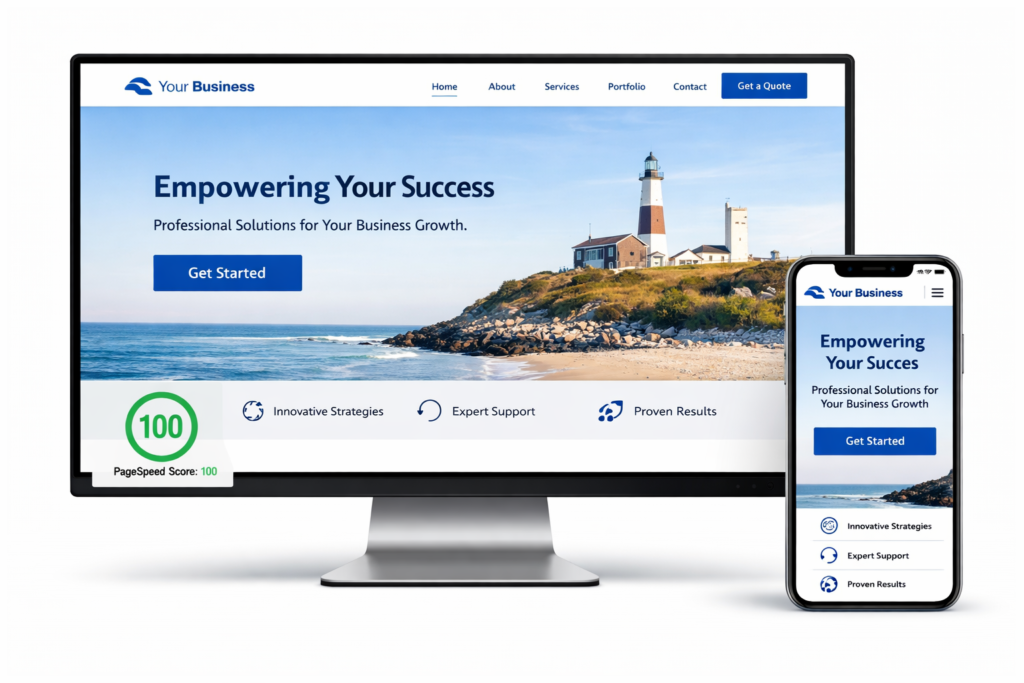
A website that loads in one second may convert at 9.6%. The same site at five seconds can convert at 3.3%. That single metric, load speed, quietly throws away nearly two-thirds of the traffic your campaigns work all month to earn. For small businesses routing social media clicks into a website, the destination page, not the post, decides whether the funnel converts or leaks.
Why It Matters
Social media is a mobile channel. The overwhelming majority of time spent on Instagram, TikTok, Facebook, and X happens on a phone, and according to Google’s web performance documentation, the probability that a visitor bounces increases by 32% as mobile load time goes from one to three seconds. By five seconds, bounce probability climbs past 90%. Every dollar of paid social and every hour of organic content effort terminates at a URL. If that URL underperforms, the rest of the funnel doesn’t matter.
The math is identical for anyone who routes social traffic to a website. Google’s mobile-first indexing bakes page speed directly into ranking, which means a slow site is also an invisible one, in both search and AI answers.
What Actually Drives Results
Each one tends to matter more for social-driven traffic than for organic search, since social clicks have no patience.
Is page speed really the foundation?
Speed determines whether visitors stay, whether Google ranks the page in mobile search, and whether the paid social spend driving traffic to it actually produces calls or signups. The common culprits are predictable: unoptimized images, heavy page-builder plugins, too many tracking pixels and chat widgets, cheap shared hosting. Often those decisions are made by someone else, a designer, an agency, a previous marketing team, but the consequences land in your conversion column.
Should you design for conversion or for awards?
There’s a sharp line between award-winning design and high-converting design: they are not the same category. Sites that consistently convert have a clear headline that answers the search intent, a phone number above the fold on mobile, a contact form with five fields or fewer, and one or two specific testimonials near the call to action. A headline like “Emergency Plumbing, Your City, 24/7” beats a generic “Quality Plumbing Solutions” because it answers what the searcher actually needs in the first two seconds.
For social traffic specifically, this means your landing-page headline should match the promise of the post that drove the click. If the Instagram caption said “Free 15-minute audit,” the headline on the landing page should also say “Free 15-minute audit.” Mismatch is the single most common reason for healthy click-through rates and dismal conversion rates on social campaigns.
Does responsive design mean mobile-optimized?
“Responsive design” means a site scales down to fit a phone screen. “Mobile-optimized” means it was designed for phone users first, larger tap targets, simpler menus, click-to-call that works without zooming, forms that don’t require precise tapping. These are different things, and most websites are only the first. Social traffic is overwhelmingly mobile. If you can’t tap the form on a real iPhone without zooming, your visitor can’t either.
Should SEO be built in or bolted on?
Even pure social campaigns benefit when the destination page has proper heading structure, schema markup, and clean URLs, because AI search engines and Google now treat that markup as part of how they decide whether to surface your brand at all. Social posts feed branded search demand. Branded search lands on websites. A web build that breaks SEO turns every viral post into a lost lookup.
Your link destination affects the campaign whether your team built it or not.
The Numbers
The headline stats, restated:
- A 1-second mobile load may convert at 9.6%; a 5-second load may convert at 3.3%, a 190% conversion gap driven by speed alone.
- 61% of local searches happen on mobile devices.
- Mobile bounce probability jumps 32% when load time slips from 1 to 3 seconds (Google).
- Forms with five or fewer fields outperform longer forms on mobile by a wide margin.
- Sites that signal geographic authority, location pages, service-area maps, consistently outrank generic competitors in local search.
The design priority, put plainly:
Award-winning web design and high-converting web design are not the same thing.
That sentence belongs above every campaign brief.
What Comes Next
Mobile-first is no longer an emerging trend; it is the default. Google’s mobile-first indexing has been fully rolled out for years, and AI search engines like ChatGPT, Gemini, and Perplexity now weigh page experience signals when deciding which sources to cite in answers. The next layer is conversational and visual search, users asking an AI assistant for a recommendation and clicking through to whichever page loads fast enough to be the answer.
The destination strategy must change in step with the source strategy. Cross-platform publishing, AI-assisted content creation, and creator-driven traffic are all changing rapidly. The next 12 months may reward teams that treat web design as part of their social workflow, not as someone else’s department.
What This Means for You
Stop treating your link destinations as a separate team’s problem. Audit the URLs your campaigns currently send traffic to, starting with whatever sits behind your link-in-bio, your tracked short links, and your paid social landing pages. Then fix the three things that almost always need fixing:
- Open every destination on a real phone, on normal mobile data, and time the load. If it’s over three seconds, that’s your top priority.
- Match the landing-page headline to the promise of the post. If they don’t match, the conversion rate will never match either.
- Cut the form. Five fields max. Click-to-call above the fold.
This is where Feedsta, an AI-powered social media platform, earns its keep. Spin up campaign-specific destinations that match each post’s offer with the landing page builder, instead of forcing every click to a slow homepage. Route clicks through link-in-bio blocks that may load fast on mobile and let you A/B test in hours, not weeks, according to Feedsta. Track clicks through the fsta.li URL shortener so you can see which platform, post, and creative produced the visit that converted.
For the deeper conversion math, see our breakdown of social media landing pages and the broader playbook in social media conversion rate optimization.
The Bigger Picture
In 2026, the website your traffic lands on is part of your campaign, whether you own it or not. Even when you publish polished content on every platform, you can still lose because the click ends at a destination you didn’t design. Requiring speed, mobile-first builds, and conversion-focused layouts is no longer just a web team concern; it is a basic requirement for anyone whose performance is measured by results.
FAQ
How does web design affect social media conversion rates?
Web design sits at the end of every social media funnel. A post can earn the click, but the destination page decides whether that click becomes a lead, sale, or follow. The biggest design factors are mobile load speed, headline match with the post, form length, and visible click-to-call. Research cited by the team suggests that conversion rates can drop with each additional second of load time, and a one-second mobile load has been measured at roughly 9.6%, while a five-second load has been measured at 3.3%. That means the landing page can quietly cancel even the best-performing campaign creative.
What load speed should a small business landing page hit?
Aim for under two seconds on mobile, measured on real 4G or 5G, not on office Wi-Fi. Google’s data shows bounce probability climbs 32% between one and three seconds, and 90%+ once you cross five. Test with PageSpeed Insights and a real phone. If you can’t hit under three seconds, the biggest fixes are usually image compression, removing unused tracking scripts, and dropping heavy page-builder plugins. For paid social campaigns specifically, a slow landing page also raises your cost per result because platforms penalize destinations that hurt user experience.
Should social traffic go to the homepage or a dedicated landing page?
Almost always a dedicated landing page. Homepages are designed to serve every audience and every intent, which means they serve no specific campaign well. A dedicated landing page lets you match the headline to the post’s promise, strip away the navigation, and keep the form short. Industry reports suggest conversion lifts of 2× or more can occur when teams switch a campaign from homepage to landing page.